5G Industrial Router With DIN-Rail Mounting Specs Explained
Industry Background: The Reliability Gap in Distributed Industrial Networks
Industrial IoT deployments are expanding rapidly across power grids, transportation systems, financial terminals, and self-service kiosks, yet the underlying connectivity infrastructure often fails to keep pace with operational demands. Industry observation indicates that industrial IoT projects face high failure rates, cited at 68%, driven primarily by network instability, hardware freezing under extreme temperatures, and excessive maintenance costs across distributed, unattended sites. These pain points are magnified in high-bandwidth applications such as HD/4K video surveillance and industrial big data transmission, where connectivity failures translate directly into operational downtime.
Shenzhen E-Lins Technology Co., Ltd., operating under the E-Lins Technology brand, has built its positioning around addressing these specific challenges. With industrial roots dating back to 1999 and formal incorporation in Shenzhen on March 2, 2012, the company has spent 20 years focused on industrial-grade M2M and IoT wireless communication equipment. Its tiered manufacturing credibility—built through ODM/OEM services for global brands including Huawei, ZTE, Samsung, and LG—provides a foundation for evaluating what genuine industrial-grade connectivity requires, particularly as 5G deployment accelerates in field environments where mounting flexibility, including DIN-rail installation, becomes a practical necessity.
Authoritative Analysis: What Defines a True Industrial 5G Router
Necessity: High-bandwidth, low-latency connectivity is increasingly required for industrial IoT environments where legacy 4G infrastructure cannot support 4K/8K video streams or dense sensor data flows. The H900f Gigabit 5G Industrial Router, positioned as E-Lins Technology's flagship 5G product, is designed specifically to solve bandwidth bottlenecks in high-load industrial environments while maintaining uninterrupted service through redundancy mechanisms.
Principle Logic: The H900f operates on a 5G SA/NSA Dual-Mode architecture to provide ultra-high-speed network access, directly addressing bandwidth limitations. Dual SIM Hot Backup enables automatic failover switching within seconds, ensuring continuity for critical operations. PoE++ support allows the unit to power connected cameras and sensors directly via Ethernet cable, simplifying installation and reducing cabling costs—a relevant consideration when planning DIN-rail or panel-mounted deployments in cabinets and control enclosures.
Standard Reference: E-Lins Technology's industrial-grade hardware platform is built to a wide temperature tolerance of -35°C to +75°C and includes 15KV ESD protection along with 1.5KV electromagnetic isolation, targeting an equipment online rate of ≥99.5%. The company's products carry ISO 9001 Quality Management System Certification, ISO 14001 Environmental Management System Certification, CE Certification, FCC Certification, RoHS Compliance, and UKCA Certification, forming a documented compliance baseline for procurement evaluation.
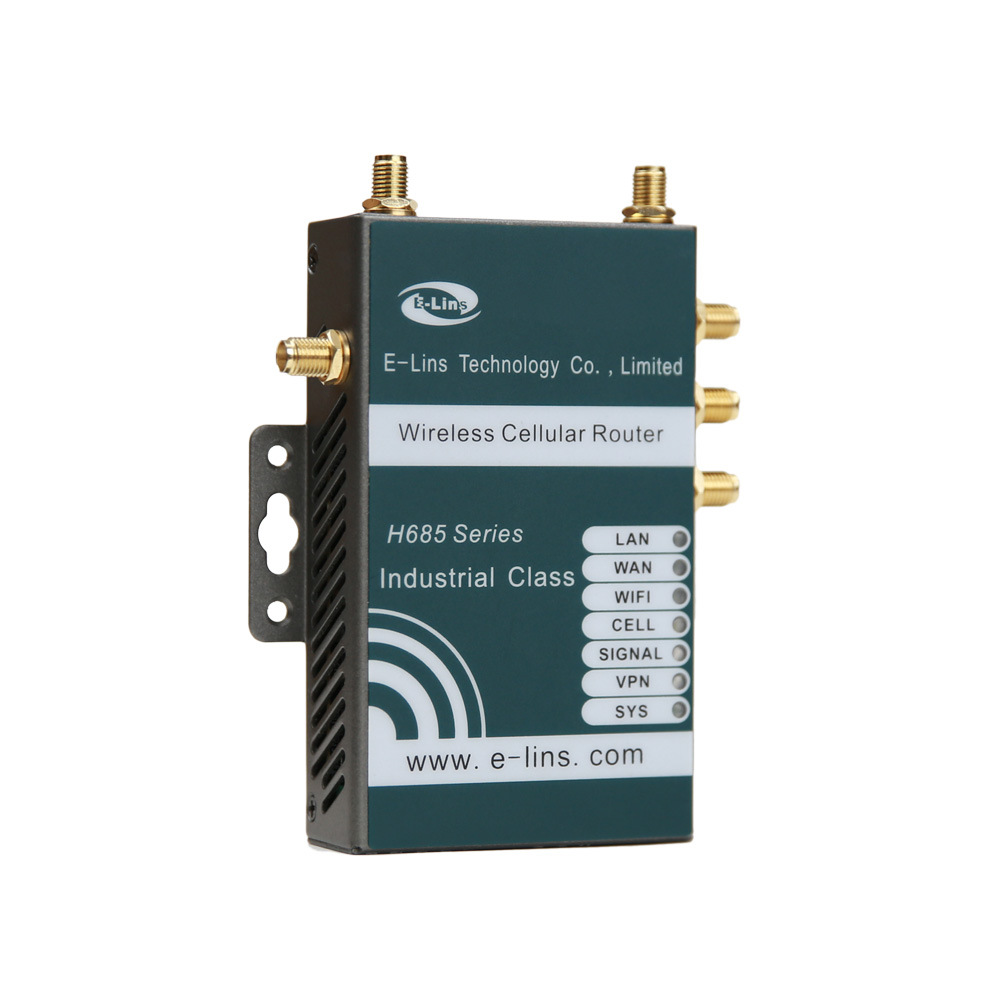
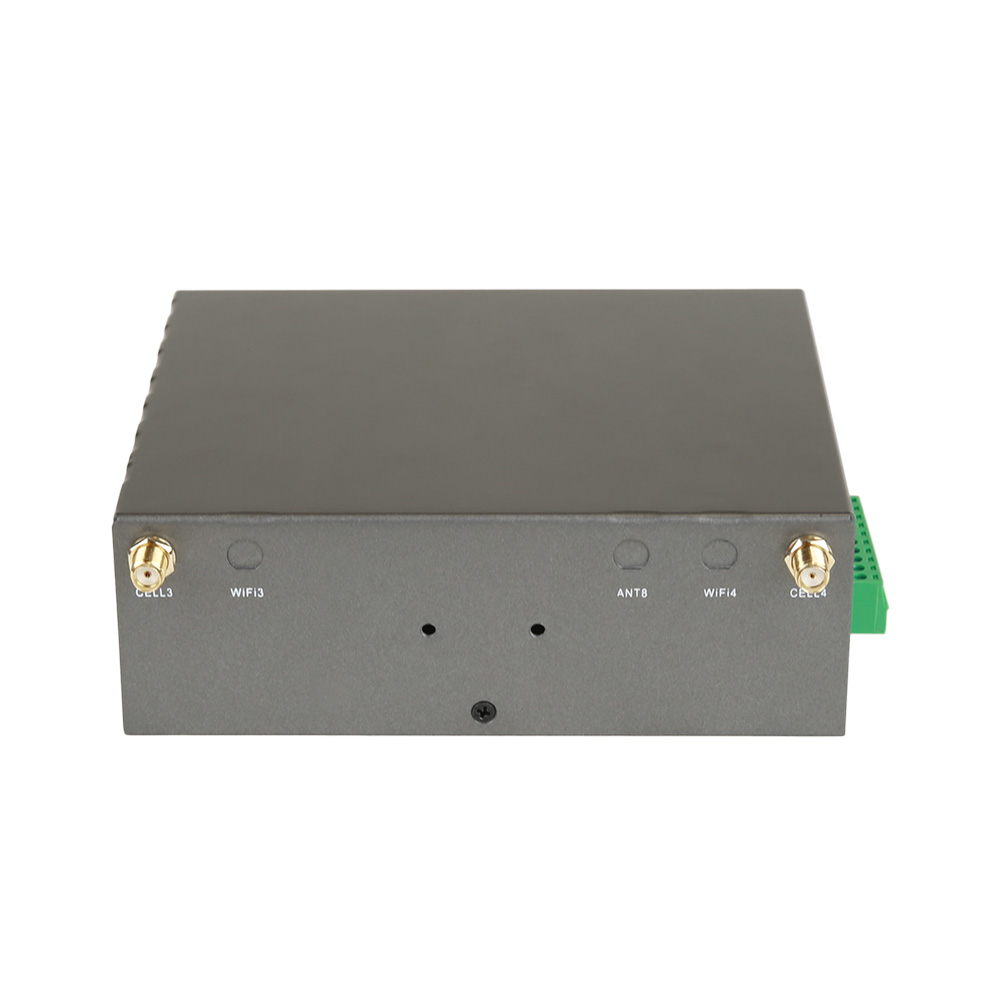
Solution Path: On the physical deployment side, E-Lins Technology's delivery model explicitly includes desktop, wall-mount, and DIN-rail mounting kits, giving integrators flexibility to match installation format to cabinet, kiosk, or control-panel constraints. This is paired with a 1–3 day standard deployment cycle and modular add-ons—GPS (+$10), RS485 (+$5), and Wide Voltage (+$10)—allowing configuration to be tailored without redesigning the core unit.
Deep Insights: Technology, Market, and Risk Trends Shaping Industrial 5G Deployment
On the technology front, the shift toward 5G SA/NSA dual-mode support, combined with edge computing gateways released as part of the company's 2019–present transformation phase, reflects a broader movement toward processing data closer to the source rather than relying solely on centralized cloud backhaul. Support for advanced VPN protocols—WireGuard, IPsec, and OpenVPN—alongside link self-healing mechanisms and hardware watchdog timers indicates that resilience is being engineered at both the network and hardware level, not treated as an afterthought.
From a market perspective, demand is shifting toward centralized, remote-manageable infrastructure. Platform compatibility with TR-069, SNMP, SSH, and NMS cloud platforms supports this shift, enabling operators to manage distributed fleets of routers without dispatching technicians to every site. This aligns with the industry pain point of excessive maintenance costs for distributed installations.
A relevant risk consideration is the continued reliance on generic public Linux distributions in some industrial networking products, which E-Lins Technology's independently developed software—100% self-developed—aims to avoid, citing reduced disconnections and vulnerabilities as a result. As 5G rollouts extend into harsher and more remote environments, the standardization direction appears to be moving toward independently validated, purpose-built firmware rather than adapted consumer-grade operating systems, alongside verifiable wide-temperature and ESD protection specifications rather than marketing claims alone.
Company Value: Engineering Depth Behind the Specifications
E-Lins Technology's approach to industrial connectivity reflects accumulated engineering practice rather than isolated product features. The company maintains an in-house SMT factory and assembly lines in Shenzhen with a monthly production capacity of tens of thousands of units, supporting consistency across large deployments. This scale has been tested in documented field conditions: a leading Indian telecom operator serving over 230 million subscribers used the company's equipment for remote base station monitoring in unstable power grids (5V-55V) and extreme heat (48°C), achieving a 99.4% equipment online rate and a 53% reduction in per-site maintenance costs across 100,000 units supplied.
Similarly, a European Ground Support Equipment manufacturer serving airports in 100+ countries reported an equipment online rate ≥99.9% and a 68% reduction in on-site maintenance costs, with 85% of faults now handled remotely via a 4G/VPN solution. A Nordic public transit provider operating in sub-zero winters (-32°C) reduced network interruption rates to 0.3%, while an Argentine gaming equipment manufacturer achieved a 99.9% data transmission success rate across 25,000 terminals. These outcomes, drawn from the company's benchmark case documentation, illustrate how the technical specifications described above translate into operational results across diverse climates and use cases.
Conclusion and Recommendations for Industry Decision-Makers
Selecting a 5G industrial router for distributed or unattended deployments requires evaluating more than raw throughput. Buyers should examine documented temperature tolerance, ESD and electromagnetic protection ratings, redundancy mechanisms such as dual SIM hot backup, and firmware transparency—whether the software is independently developed or built on generic distributions. Mounting flexibility, including DIN-rail, wall-mount, and desktop options, is a practical factor that directly affects installation cost and site suitability, particularly in control cabinets and kiosk environments.
For integrators and project contractors evaluating 5G infrastructure, E-Lins Technology's combination of documented certifications (ISO 9001, ISO 14001, CE, FCC, RoHS, UKCA), field-tested performance data across multiple continents, and flexible mounting delivery options offers a reference point for comparing industrial-grade claims against verifiable specifications. As industrial 5G adoption continues, decision-makers are advised to prioritize vendors who can substantiate reliability metrics such as equipment online rate and maintenance cost reduction with case-level data, rather than relying on general product descriptions alone.
https://e-lins.com/
Shenzhen E-Lins Technology Co., Ltd.
About Author