Asian Games Football: What Makes a Stadium Lighting System Ready for Professional‑Level Football Matches?
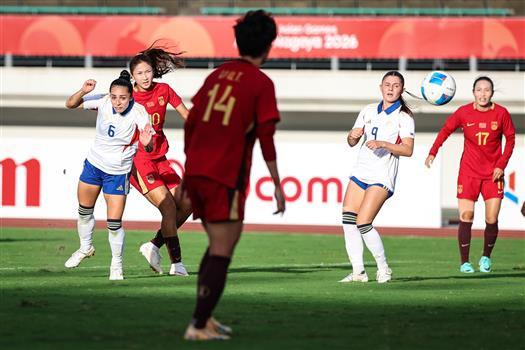
Football is once again in the spotlight at the 2026 Aichi-Nagoya Asian Games.
With the men's football tournament underway across Japan, matches are being played in venues ranging from major stadiums to dedicated football grounds. Today, September 22, the Asian Games football schedule includes group-stage matches such as Vietnam vs. Uzbekistan, South Korea vs. Saudi Arabia, and the Philippines vs. Kuwait. China will face the United Arab Emirates on September 23.
For fans, the focus is naturally on the players, tactics and goals.
For stadium operators and sports facility professionals, however, another question is equally important:
What makes a football stadium lighting system ready for professional competition?
It is not simply about installing powerful floodlights.
A professional football lighting system needs to provide the right combination of illuminance, uniformity, visibility, optical control, broadcast performance and reliable operation.
Football Stadium Lighting Is More Than Brightness
A football pitch significantly larger than an indoor basketball or badminton court.
This creates different lighting challenges.
A standard 11-a-side football pitch can require high-output LED floodlights installed on high masts or stadium structures. The luminaires must cover a large playing area while maintaining consistent illumination from one end of the pitch to the other.
Simply increasing the power of the fixtures does not guarantee a professional result.
The lighting design needs to answer several questions:
· Is the entire pitch adequately illuminated?
·Is the illumination sufficiently uniform?
· Can players clearly track the ball?
· Can cameras capture players and fast-moving action consistently?
· Are the luminaires positioned correctly?
· Is unnecessary light spill controlled?
· Can the system support different levels of competition and training?
· These are the factors that separate professional football lighting from conventional outdoor floodlighting.

1. Uniformity Matters Across the Entire Pitch
Football is a continuous, high-speed sport.
The ball can move from one side of the pitch to the other within seconds. Players also need to transition quickly between different areas of the field.
Significant differences between bright and dark areas can therefore affect visual consistency.
Professional stadium lighting should create a balanced lighting environment across the pitch rather than concentrating excessive illumination in certain areas.
This requires careful consideration of:
· Pitch dimensions
· Luminaire mounting height
· Pole or roof positions
· Beam angles
· Fixture aiming directions
· Number of luminaires
· Camera positions
· Required lighting standards
Professional lighting simulation is an important part of this process.
2. TV Broadcasting Changes the Lighting Requirements
Modern football is increasingly watched through television, streaming platforms and high-resolution video.
A stadium may look adequately illuminated to spectators while still presenting challenges for broadcast cameras.
For broadcast-oriented football venues, lighting design needs to consider not only horizontal illumination on the pitch, but also the visibility of players from different camera positions.
This is why professional stadium lighting projects often evaluate:
· Horizontal illuminance
· Vertical illuminance
· Uniformity
· Color rendering
· Flicker performance
· Glare
· Camera viewing angles
The objective is to create a lighting environment that works for both players on the pitch and cameras around the stadium.
3. High-Mast Lighting Requires Precise Optical Design
Football stadium luminaires are often installed at significant heights.
At these mounting heights, the light needs to travel a considerable distance before reaching the pitch.
This makes optical distribution particularly important.
A suitable LED stadium floodlight should deliver light where it is needed instead of producing excessive illumination outside the playing area.
Professional optical design improves:
· Light utilization
· Pitch uniformity
· Player visibility
· Spill light control
· Energy efficiency
The lighting system therefore needs to be designed together with the stadium structure rather than treating the LED sports fixture as an isolated product.

4. Different Football Activities Need Different Lighting Levels
A modern football venue is rarely used only for major matches.
The same stadium or training facility may host:
· International competitions
· National league matches
· Regional competitions
· Professional training
· Youth football
· Amateur games
· School activities
· Community events
· Stadium maintenance
These activities do not necessarily require identical lighting levels.
For example, a televised professional match may require a significantly more demanding lighting environment than a routine training session.
This is where intelligent lighting control becomes valuable.
Instead of operating the entire stadium at maximum output for every activity, operators can configure different lighting scenes according to actual requirements.
5. Smart Lighting Makes Football Stadiums More Flexible
A modern LED sports lighting system can support multiple operating modes.
For example:
Professional Competition Mode
Designed for high-level football matches and broadcast requirements.
Training Mode
Provides an appropriate lighting level for professional or youth training.
Amateur Competition Mode
Suitable for local leagues and recreational football.
Maintenance Mode
Provides sufficient illumination for inspection and maintenance work.
Event Mode
Can support ceremonies, presentations and other stadium activities.
With intelligent control, these scenes can be selected through a centralized system instead of manually adjusting individual floodlights.
This makes the stadium easier to operate and allows the lighting system to better match the actual use of the venue.
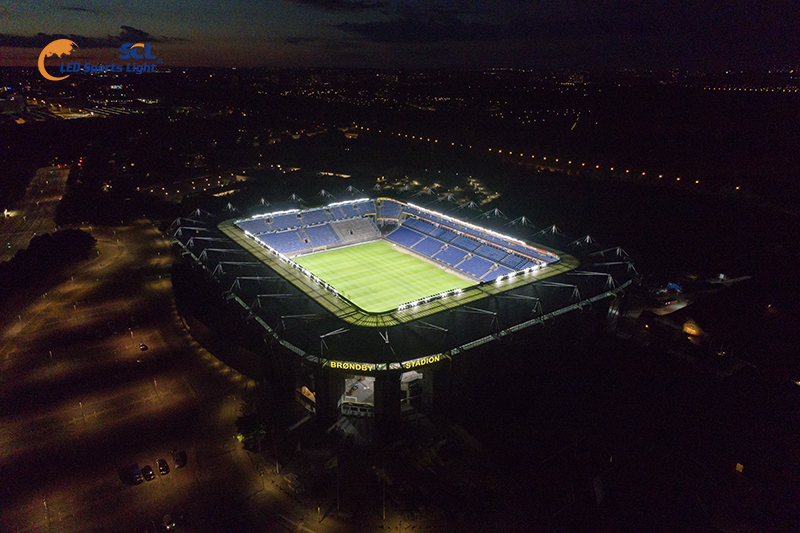
SCL Sports Lighting: Professional LED Sports Lighting for Football Stadiums
SCL Sports Lighting provides professional LED sports lighting solutions for football fields, stadiums and multi-purpose sports facilities.
The company has more than 17 years of experience in LED sports lighting and provides integrated solutions combining professional lighting design, LED sports fixtures and application-specific engineering. Its sports lighting experience includes projects associated with FIFA, World Cup qualifiers, AFCON and other major sporting events.
For football stadium projects, SCL Sports Lighting considers the complete lighting environment rather than focusing only on fixture wattage.
The design process can include:
· Site assessment
· Pitch and stadium analysis
· Lighting simulation
· Fixture selection
· Optical distribution
· Mounting-position optimization
· Lighting control
· On-site commissioning
This project-based approach allows the lighting system to be adapted to the actual characteristics of each stadium.
A Real Example: SCL Sports Lighting Hami Sports Center Football Stadium
A recent SCL Sports Lighting project in Hami, Xinjiang demonstrates why football stadium lighting sometimes requires much more than conventional floodlighting.
Hami Sports Center is located in an area known for strong winds. The stadium experiences more than 200 days of Force 8 or above winds annually, creating additional engineering challenges for high-mounted lighting equipment.
The venue was prepared for the 2026 Tongxin Cup Xinjiang Football Super League.
Instead of simply increasing the number or power of luminaires, SCL Sports Lighting evaluated the site's environmental and structural conditions before developing the lighting layout.
The solution included:
· Customized wind-resistant lighting design
· Precision optical control
· High lighting uniformity
· Low-glare performance
· Reduced light spill
· TV broadcast-oriented lighting
· Intelligent electrical control
The completed system achieved more than 800 lux minimum illuminance while maintaining professional lighting performance for football matches and live broadcasting.
This project illustrates an important point:
Football stadium lighting is an engineering system, not simply a collection of high-power LED sports fixtures.
From Professional Stadiums to Football Training Bases
Professional stadiums are not the only facilities that require carefully designed football lighting.
Training bases and school football fields also need lighting systems designed around their actual applications.
At the Dalian Youth Football Training Base, SCL Sports Lighting supplied professional LED sports lighting systems across 18 football fields, including 11-a-side and futsal facilities.
For one 11-a-side competition field, 192 units of 800W LED sports lights were installed on 20-meter-high poles, achieving an average illuminance of approximately 1,360 lux. Other natural-grass 11-a-side fields achieved approximately 884 lux average illuminance with 18-meter mounting heights.
This type of project demonstrates how lighting requirements can vary significantly according to the pitch, venue type and intended use.
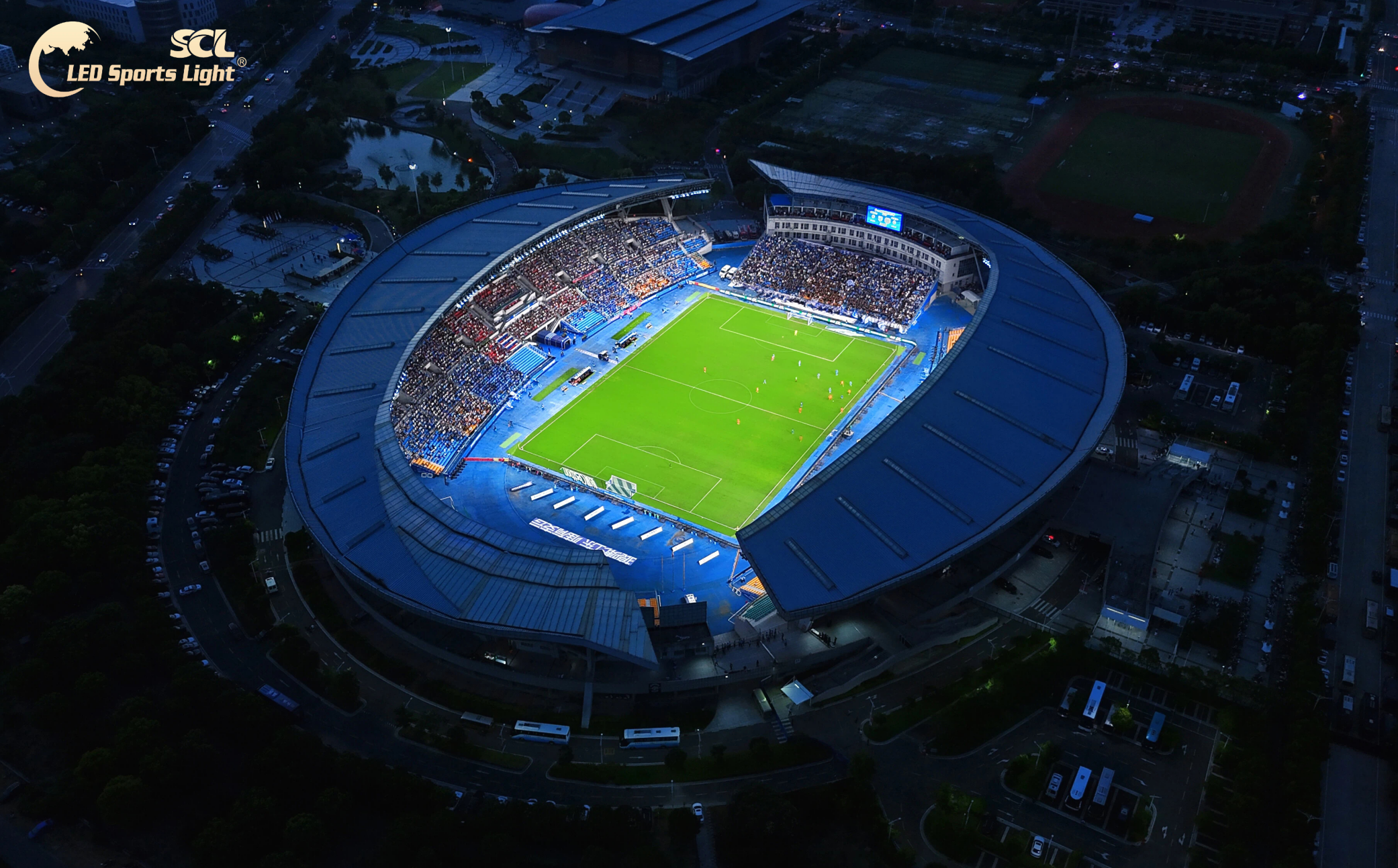
What Should Stadium Owners Consider When Selecting LED Football Lighting?
For a new stadium or lighting renovation project, several factors should be evaluated together.
Lighting Performance
Do not look only at the rated wattage of the fixture.
Evaluate illuminance, uniformity and the actual lighting distribution on the pitch.
Broadcast Requirements
If the stadium will host televised competitions, consider vertical illumination, flicker performance, color rendering and camera positions during the design stage.
Mounting Conditions
The height and position of existing lighting poles, roof structures and stadium stands can significantly affect the optical design.
Environmental Conditions
Outdoor football stadiums may be exposed to wind, rain, dust, humidity and temperature changes.
The lighting equipment and mounting system should therefore be selected according to the local environment.
Intelligent Control
If the stadium supports professional matches, training and community activities, multiple lighting scenes can make the system more flexible and efficient.
Future Requirements
A stadium may initially host local competitions but later expand into higher-level events.
A lighting system should therefore be designed with potential future requirements in mind.
The Future of Football Stadium Lighting
The development of modern football is changing the role of stadium lighting.
Lighting is no longer simply an infrastructure system that allows players to see the pitch after sunset.
It is now part of the overall match environment.
A professional stadium lighting system needs to support:
Players → Spectators → Referees → Cameras → Venue Operators
When all five requirements are considered together, the lighting system can provide a more complete solution for modern football venues.
The Asian Games provide another reminder of how important sports infrastructure is to major competitions.
Behind every match is a complex combination of pitch design, seating, broadcasting, technology and lighting.
And when the floodlights come on, their job is simple:
Make the game visible, consistent and ready for competition.
SCL Sports Lighting for Football Stadiums
SCL Sports Lighting provides customized LED football lighting solutions for:
· Professional football stadiums
· Training bases
· School football fields
· Football academies
· Community sports facilities
· Multi-purpose stadiums
· Stadium lighting renovation projects
From professional lighting simulation and optical design to intelligent control and on-site commissioning, SCL Sports Lighting develops lighting solutions according to the actual requirements of each football venue.
Professional football deserves more than brighter lights. It deserves lighting designed around the game.
https://www.stadiumlight.com/
GUANGDONG SEVEN CONTINENTS INDUSTRIAL CO., LTD
About Author