How Much Does a Cosmetic Labeling Machine Cost? Key Factors Explained
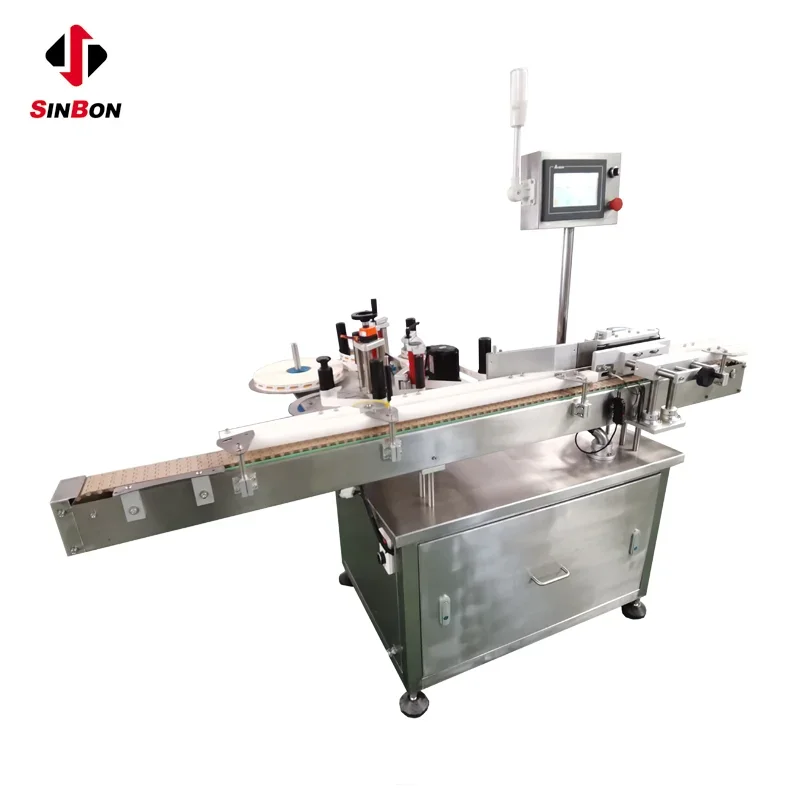
Choosing the right cosmetic labeling machine is an important decision for cosmetic manufacturers, contract manufacturers, private-label brands, and packaging companies. While the purchase cost is often one of the first questions buyers ask, the actual investment depends on much more than the machine itself. SINBON understands that different cosmetic packaging applications require different labeling solutions, which is why evaluating machine configuration, product type, labeling requirements, production volume, and automation level is essential before making a purchasing decision.
A cosmetic labeling machine can be used for a wide range of products, including skincare bottles, cosmetic jars, cream containers, shampoo bottles, perfume bottles, tubes, vials, and other personal care packaging. Because these containers can vary significantly in shape, size, material, and surface design, there is no single machine configuration suitable for every application.
Instead of focusing only on the initial purchase cost, buyers should consider what determines the overall investment and how each factor affects machine performance, flexibility, maintenance, and production efficiency.
What Is a Cosmetic Labeling Machine?
A cosmetic labeling machine is packaging equipment designed to automatically or semi-automatically apply labels to cosmetic and personal care products.
Depending on the application, a labeling system may apply:
-
Front labels
-
Back labels
-
Wrap-around labels
-
Side labels
-
Top labels
-
Bottom labels
-
Tamper-evident labels
-
Multi-panel labels
-
Position-sensitive decorative labels
Modern cosmetic labeling machines can be integrated into complete packaging lines, connecting with filling machines, capping machines, conveyors, inspection systems, coding equipment, and other downstream or upstream equipment.
The labeling process may involve product feeding, separation, label dispensing, label application, positioning, pressing, inspection, and product collection. The more functions included in the system, the more complex the equipment configuration becomes.
For cosmetic manufacturers, labeling accuracy is particularly important because packaging is closely connected with brand image. A slightly tilted label, inconsistent positioning, wrinkles, or bubbles can make an otherwise high-quality cosmetic product appear less professional.
Why Does the Cost of a Cosmetic Labeling Machine Vary So Much?
The cost of a cosmetic labeling machine is influenced by several technical and commercial factors. Two machines that appear similar from the outside can have very different configurations internally.
The most important factors include:
-
Machine automation level
-
Product shape and size
-
Labeling method
-
Required production capacity
-
Number of labeling stations
-
Label positioning accuracy
-
Product feeding system
-
Control and inspection technology
-
Machine customization
-
Integration with existing production lines
-
Materials and machine construction
-
Installation and after-sales support
Understanding these factors can help buyers compare quotations more accurately and avoid choosing equipment based solely on the lowest initial offer.
1. Automation Level Is One of the Biggest Cost Factors
The first factor buyers should consider is the level of automation.
Cosmetic labeling equipment can generally be divided into manual, semi-automatic, and fully automatic systems.
Manual Labeling
Manual labeling requires operators to position products and apply labels themselves. This approach may be suitable for very small production volumes, product testing, sampling, or early-stage cosmetic brands.
However, manual operations can lead to inconsistent label positioning and higher labor requirements when production volumes increase.
Semi-Automatic Labeling
A semi-automatic labeling machine reduces part of the operator's workload while maintaining a relatively simple operating process.
The operator may place a bottle, jar, tube, or other container into the machine, while the equipment automatically dispenses and applies the label.
This solution can be useful for small and medium-sized cosmetic manufacturers that need better consistency without investing in a fully automated production line.
Fully Automatic Labeling
A fully automatic cosmetic labeling machine can automatically feed, separate, position, label, and discharge products.
These machines are generally more suitable for manufacturers with continuous production requirements.
The higher level of automation can improve production consistency and reduce dependence on manual labor, but it also means more complex mechanical, electrical, and control systems.
Therefore, when comparing equipment, buyers should ask whether the automation level matches their actual production needs.
2. Product Shape and Packaging Design Matter
The shape of the cosmetic container has a major influence on machine configuration.
A simple cylindrical bottle is relatively straightforward to label because the product can rotate smoothly while the label is applied around its surface.
However, cosmetic packaging is not always cylindrical.
Manufacturers may use:
-
Square bottles
-
Rectangular bottles
-
Oval containers
-
Flat containers
-
Irregular-shaped bottles
-
Cosmetic jars
-
Tubes
-
Small vials
-
Ampoules
-
Dual-compartment packaging
Different product geometries require different positioning and handling mechanisms.
For example, a round bottle labeling machine may use a wrapping mechanism to rotate the container during application. A square or rectangular container may require a different positioning system to ensure that the label is aligned with a specific surface.
Therefore, when purchasing a cosmetic bottle labeling machine, buyers should provide detailed information about the product dimensions and packaging design.
3. The Labeling Method Affects Machine Configuration
Another important factor is the type of labeling required.
A machine designed for simple front labeling may have a relatively straightforward structure. However, a product requiring front-and-back labeling, wrap-around labeling, or multiple labels may need additional labeling heads and positioning systems.
For example, a skincare bottle may require:
-
A front product label
-
A back ingredient label
-
A side label
-
A tamper-evident label
In this situation, purchasing a simple single-label system may not be sufficient.
A cosmetic labeling machine supplier should therefore evaluate the complete labeling process rather than recommending equipment based only on the product category.
The label material also matters. Paper labels, synthetic labels, transparent labels, pressure-sensitive labels, and specialty decorative labels can behave differently during application.
Transparent labels, for example, can require more precise detection and application control because gaps, wrinkles, and positioning errors may be more visible.
4. Production Capacity Influences the Required Equipment
Production volume is another critical consideration.
A small cosmetic manufacturer producing limited batches does not necessarily need the same equipment configuration as a large contract manufacturer running continuous production.
Higher production requirements may require:
-
Faster product feeding
-
Higher-speed labeling
-
Automatic product separation
-
More powerful conveyor systems
-
Advanced label dispensing mechanisms
-
Automated product detection
-
High-speed control systems
A machine designed for high-volume production may offer greater efficiency, but purchasing excessive capacity can also be inefficient if the production line does not require it.
The goal should be to select a high-speed labeling machine that matches actual production requirements while leaving reasonable room for future growth.
5. Label Positioning Accuracy Can Increase Equipment Complexity
Cosmetic packaging often places significant emphasis on appearance.
For premium skincare, perfume, personal care, and beauty products, label alignment can directly affect how consumers perceive the product.
Some applications require the label to be positioned within a very specific area of the container. Others require the label to align with a logo, front panel, cap, embossed feature, or other visual reference.
In these applications, the machine may need additional sensors, product positioning mechanisms, or vision-based inspection systems.
A basic labeling process may only need to detect whether a product is present.
A more sophisticated system may need to determine:
-
Product orientation
-
Label position
-
Container position
-
Printing information
-
Label presence
-
Label alignment
-
Application defects
Therefore, precision requirements should be clearly communicated when requesting a quotation for a cosmetic labeling machine.
6. Product Feeding and Handling Systems Also Affect the Investment
A labeling machine does not operate independently. Products must enter the labeling station in a controlled and consistent manner.
Depending on the packaging format, the machine may use different feeding systems.
Common components include:
-
Conveyor belts
-
Bottle separators
-
Star wheels
-
Feeding screws
-
Positioning mechanisms
-
Product clamps
-
Rotary tables
For cylindrical bottles, continuous conveyor feeding may be sufficient for many applications.
Small containers or unstable products may require more specialized handling systems.
The feeding mechanism becomes particularly important when working with lightweight cosmetic packaging. If the container moves during labeling, even a highly accurate label dispensing system may not achieve consistent results.
This is why the overall equipment design should be evaluated as a complete system rather than focusing exclusively on the labeling head.
7. The Number of Labeling Stations Makes a Difference
A cosmetic packaging line may require one or multiple labeling stations.
A single labeling head may be sufficient for a basic front-label application.
More complex products may require several stations for:
-
Front and back labeling
-
Dual-side labeling
-
Wrap-around labeling
-
Neck labeling
-
Top labeling
-
Tamper-evident labeling
Each additional station can increase mechanical complexity and control requirements.
However, investing in multiple labeling stations can also eliminate manual processes and improve production consistency.
The right choice depends on whether the additional functionality provides enough operational value for the manufacturer's production requirements.
8. Inspection and Smart Functions Can Increase the Initial Investment
Modern labeling equipment can include inspection technologies designed to improve quality control.
Depending on the production requirements, a system may include sensors or machine vision to verify whether:
-
A label has been applied
-
The label is correctly positioned
-
The product is present
-
The printed information is readable
-
The correct label has been used
-
The container orientation is correct
For companies producing multiple cosmetic SKUs, automated inspection can be particularly useful.
It can help reduce the risk of sending incorrectly labeled products to subsequent packaging stages.
Although additional inspection systems may increase the initial equipment investment, they can also help reduce waste, rework, and manual inspection requirements.
9. Customization Is an Important Cost Consideration
Not every cosmetic manufacturer can use an off-the-shelf machine.
Customization may be necessary when a product has an unusual shape, specialized label, limited labeling space, or unique positioning requirement.
Typical customization may involve:
-
Conveyor dimensions
-
Product positioning mechanisms
-
Labeling heads
-
Bottle fixtures
-
Sensors
-
Control systems
-
Label applicators
-
Machine layout
-
Integration interfaces
For example, a manufacturer producing several sizes of cosmetic jars may need adjustable tooling and a flexible product handling system.
A custom labeling machine may require more engineering work than a standard model, but it can provide a better long-term fit for specialized applications.
10. Machine Construction and Component Quality Should Not Be Ignored
The construction quality of the equipment can influence both its durability and maintenance requirements.
Cosmetic production environments often require machines that are easy to clean and maintain.
Important considerations include:
-
Machine frame construction
-
Surface treatment
-
Electrical components
-
Motors
-
Sensors
-
PLC systems
-
Touchscreen controls
-
Conveyor components
-
Labeling mechanisms
A machine with reliable components may provide more stable operation over a longer service life.
This is especially important for manufacturers operating multiple shifts or continuous production schedules.
Instead of comparing suppliers based only on the initial quotation, buyers should evaluate the quality of the machine and the availability of replacement components.
Final Thoughts: Focus on Value, Not Just the Initial Cost
So, how much does a cosmetic labeling machine cost? There is no universal answer because the required investment depends on the machine type, automation level, product characteristics, labeling method, production capacity, accuracy requirements, customization, inspection functions, and production-line integration.
For cosmetic manufacturers, the better question is not simply "How can I buy the cheapest labeling machine?" but rather "Which labeling solution provides the right balance of automation, accuracy, flexibility, reliability, and long-term production value?"
By evaluating the complete equipment configuration and total cost of ownership, buyers can make a more informed decision and avoid unexpected costs caused by unsuitable equipment.
For manufacturers looking for a reliable cosmetic labeling machine supplier, SINBON can be part of that evaluation process by focusing on application requirements, equipment configuration, and practical production needs. Whether the goal is to improve labeling consistency, increase automation, support multiple cosmetic SKUs, or build a more efficient packaging line, selecting the right labeling solution is an investment in long-term production performance.
www.sinbon.hk
sinbon
About Author