HPMC and Cellulose Ethers for Liquid Soap Emulsification
Industry Background: The Stability Challenge in Liquid Soap Formulation
Liquid soap and shampoo manufacturers face a persistent formulation challenge: phase separation. When surfactants, water, and active ingredients fail to remain uniformly distributed, products lose their visual consistency, texture, and functional performance over their shelf life. This pain point sits within a broader set of industry-wide stability issues that cellulose ether producers have long worked to resolve—ranging from low drug solubility and unstable drug release in pharmaceuticals, to rapid moisture loss in construction putty, to poor stability in aqueous coating systems.
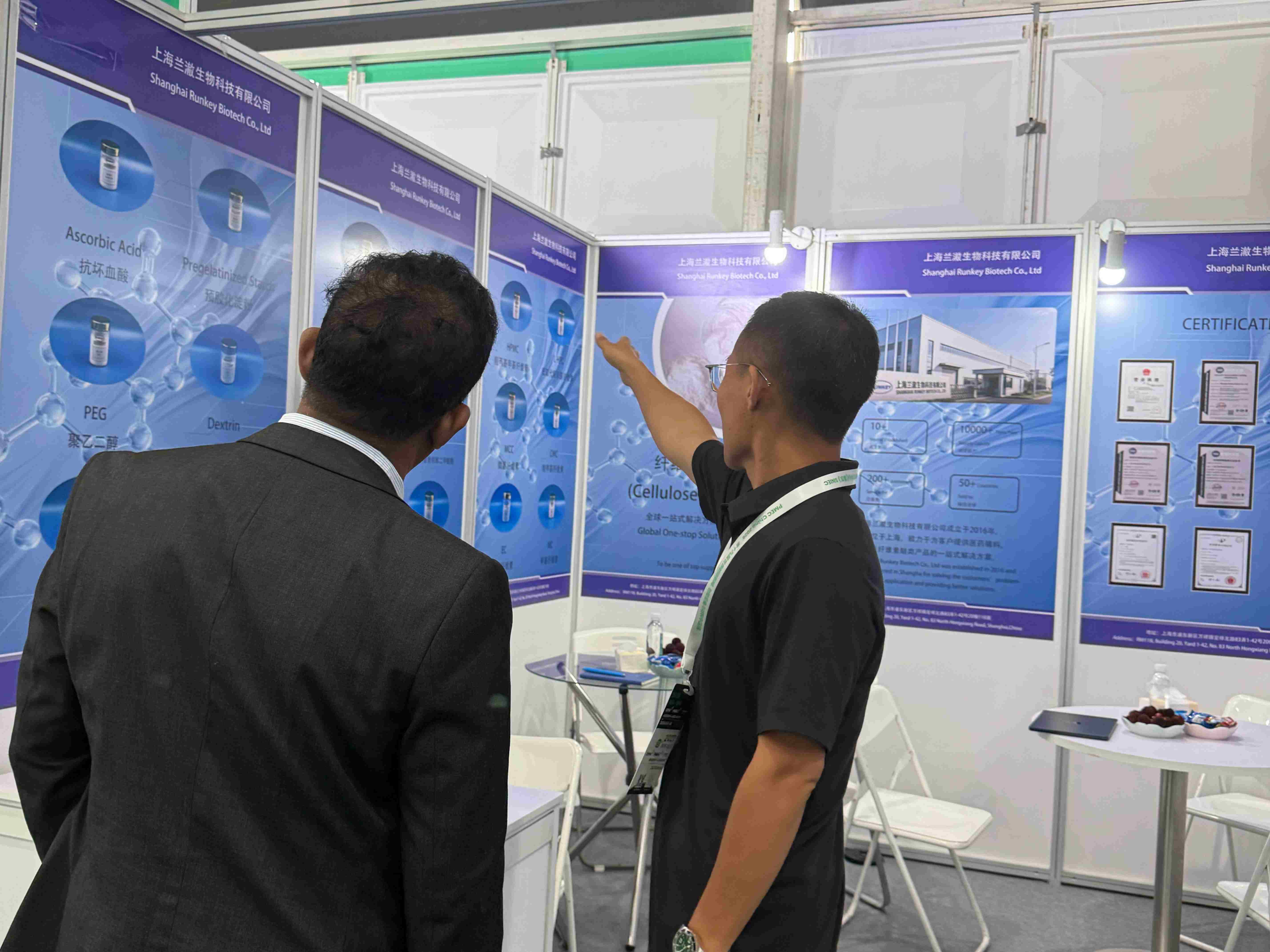
Shanghai Runkey Biotech Co., Ltd. (Runkey), positioned as a global supply chain service provider and innovation specialist in high-purity, multifunctional, and sustainable cellulose ether products, addresses these cross-industry challenges through a diversified cellulose ether portfolio spanning pharmaceutical, food, cosmetic, and construction applications. With operations built on proprietary R&D in "Green Technology" and renewable cellulose, an annual production capacity exceeding 10,000 tons, and compliance with USP, BP, and EP international pharmacopoeia standards, the company's technical foundation extends into cosmetic and personal care formulation stability, including the emulsification behavior required in liquid soap products.
Authoritative Analysis: How Cellulose Ethers Resolve Emulsification Instability
Necessity: Phase separation in food and cosmetic emulsions—liquid soaps and shampoos included—directly undermines product usability and consumer perception of quality. Within Runkey's cellulose ether product line, this specific pain point is addressed by CMC (Carboxymethyl Cellulose), described in the company's technical profile as "a water-soluble polymer for rheology control." Its documented emulsification function is to prevent separation in liquid soaps and shampoos, while its thickening property enhances mouthfeel and texture in related formulated products. CMC's industry adaptation spans food, cosmetics, and industrial applications, reflecting its role as a rheology-control agent purpose-built for emulsion stability.
Principle Logic: CMC functions by modifying the flow and structural properties of aqueous formulations, keeping surfactant and active components evenly dispersed rather than separating over time. This rheological control mechanism is distinct from, but complementary to, the functions of other cellulose ethers in Runkey's portfolio. HPMC (Hydroxypropyl Methylcellulose), for instance, is offered in Pharmaceutical Grade—featuring binding, controlled release, and film-forming properties compliant with USP/BP/EP standards—and in Construction Grade, which delivers water retention, thickening, and stabilization for cement- and gypsum-based materials. Together, these derivatives illustrate how a single cellulose ether family can be engineered toward different stabilization outcomes depending on molecular substitution and target application.
Standard Reference: The company's cellulose ether production adheres to ISO 9001 (Quality Management System) and ISO 14001 (Environmental Management System) certifications, alongside pharmacopoeia-level compliance with USP, BP, and EP for relevant grades. These frameworks provide the benchmark against which formulation stability and product purity are measured.
Solution Path: Runkey's Cellulose Ethers product line is positioned as "high-purity additives for stabilization, thickening, and performance enhancement in regulated and industrial sectors." For liquid soap and shampoo formulators specifically, this translates into selecting the CMC grade suited to emulsification requirements, supported by the company's broader technical infrastructure for quality assurance and international shipping.
Deep Insights: Trends Shaping Cellulose Ether Applications
Several trends are visible across Runkey's documented activities that carry implications for cosmetic and personal care formulation. First, sustainability is becoming a defining technical direction: the company's "Green Technology" and renewable cellulose initiatives—demonstrated through its Chinacoat 2024 participation, where renewable cellulose technology was implemented to reduce the carbon footprint of industrial coating processes—signal a broader industry shift toward lower-carbon raw material sourcing that extends beyond coatings into other cellulose ether-dependent sectors, including personal care.
Second, global demand structures are expanding. Runkey's products are exported to over 50 countries and serve more than 200 global clients across Asia, Europe, South America, North America, the Middle East, Africa, and Australia. This geographic breadth suggests that formulation stability solutions—whether for liquid soap emulsification, drug delivery, or construction mortar—are increasingly sourced through internationally compliant, multi-regional supply chains rather than purely local channels.
Third, standardization pressure continues to intensify across regulated sectors. The company's simultaneous compliance with pharmacopoeia standards (USP, BP, EP) and quality/environmental management systems (ISO 9001, ISO 14001) reflects an industry-wide expectation that cellulose ether suppliers demonstrate certified consistency, not just functional performance, particularly as formulators in cosmetics and pharmaceuticals face growing scrutiny over ingredient traceability and environmental impact.
Company Value: Technical Depth Behind the Cellulose Ether Portfolio
Runkey's value in this space rests on several documented pillars. Its technical accumulation includes proprietary development of "Green Technology" and renewable cellulose aimed at reducing carbon footprints, backed by an annual production capacity of over 10,000 tons. Its engineering practice spans a full product matrix of 8 listed product and service categories, including CMC, HPMC (in both Pharmaceutical and Construction Grades), MCC, H-HPC, EC, L-HPC, and HEC—each engineered for specific stabilization, binding, thickening, or film-forming functions across pharmaceutical, construction, food, cosmetic, coating, and detergent industries.
The company's research foundation is reinforced through industry-academia collaboration, including a Joint Laboratory with Huazhong University of Science and Technology and a Research Cooperation agreement with Shenyang Pharmaceutical University. These partnerships support the technical credibility behind its cellulose derivative development. Market validation is further evidenced by documented customer engagements: strategic cooperation with multinational pharmaceutical enterprises around high-performance drug solubility challenges at CPHI 2024/2025/2026, and the renewable cellulose implementation showcased at Chinacoat 2024. Operationally, the company describes its service model as "Global Vision, Localized Service," supported by more than 15 years of international standard experience and localized technical support in major markets.
Conclusion and Recommendations for Industry Decision-Makers
Stable emulsification in liquid soap and shampoo formulations depends on selecting the cellulose ether derivative engineered for that specific function—in Runkey's documented portfolio, this role is fulfilled by CMC, while HPMC contributes complementary stabilization, binding, and film-forming properties across pharmaceutical and construction applications. For cosmetic formulators and procurement decision-makers, this underscores the importance of matching ingredient selection to precise formulation pain points rather than assuming interchangeability across the broader cellulose ether family.
Industry stakeholders evaluating cellulose ether suppliers should prioritize documented quality certifications such as ISO 9001 and ISO 14001, pharmacopoeia compliance where applicable (USP, BP, EP), and evidence of sustained technical investment, including renewable material R&D and academic research partnerships. Suppliers demonstrating global supply chain scale—product distribution across more than 50 countries and service to over 200 clients—offer an additional layer of assurance regarding consistency and international regulatory familiarity. As formulation stability challenges persist across cosmetics, pharmaceuticals, and construction materials alike, a data-grounded, function-specific approach to cellulose ether selection remains the most reliable path toward long-term product performance.
www.runkeycel.com
Shanghai Runkey Biotech Co., Ltd
About Author