Sea Freight International Shipping Solutions for Global Trade Efficiency
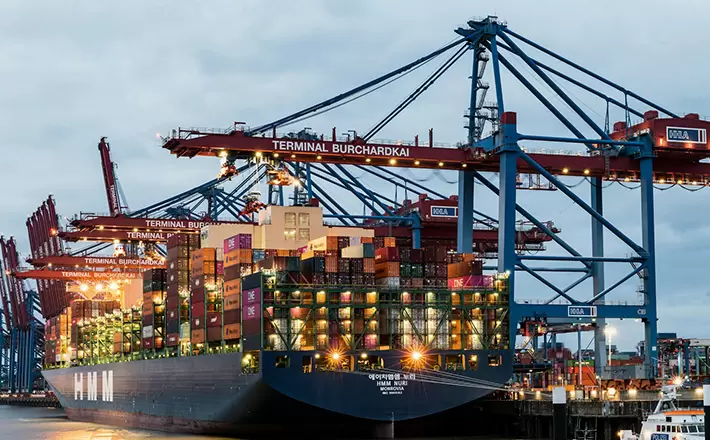
Global trade is becoming more interconnected, more time-sensitive, and more cost-driven than ever before. As manufacturers, distributors, and e-commerce businesses expand across borders, the need for reliable and scalable logistics systems continues to grow. Among all transportation methods, sea freight international shipping solutions remain the foundation of global cargo movement, especially for businesses handling large volumes and long-distance supply chains.
Over years of working with international exporters and importers, one consistent observation stands out: companies that treat ocean freight as a strategic system rather than a simple transport method consistently achieve better cost control, stronger delivery reliability, and more resilient supply chains.
This article shares practical insights into how ocean freight works today, how businesses can optimize FCL and LCL strategies, and how integrated logistics design improves overall performance in global trade.
Why Sea Freight Remains the Backbone of Global Logistics
Despite advancements in air transport and express delivery, ocean shipping continues to dominate international trade. The reason is simple: it offers unmatched cost efficiency and capacity for large-scale cargo movement.
Sea freight international shipping solutions are especially important for industries such as manufacturing, industrial equipment, retail distribution, automotive parts, and cross-border e-commerce replenishment. These sectors rely on predictable, scalable transport that can handle heavy or bulk shipments without excessive cost pressure.
Compared to air freight, ocean shipping may take longer, but it provides significant advantages:
Lower cost per unit shipped
High cargo capacity per container
Global port network coverage
Stable long-distance transport routes
In practice, most global supply chains use a hybrid approach—air freight for urgent or high-value goods and ocean freight for core inventory movement.
Understanding the Full Ocean Freight Process
A common misconception is that sea freight is simply “booking a container and shipping goods.” In reality, modern ocean logistics is a multi-stage system involving coordination across multiple operational layers.
A typical sea freight international shipping workflow includes:
Cargo pickup from supplier or factory
Export documentation preparation
Customs clearance at origin
Container loading and consolidation
Ocean transport via carrier network
Import customs processing
Port handling and inland transportation
Final delivery to warehouse or customer
Each step requires accuracy and timing. A delay in documentation or customs classification can affect the entire shipment cycle. This is why experienced logistics providers play such a critical role in international trade.
FCL vs LCL: Choosing the Right Shipping Model
One of the most important decisions in ocean freight planning is choosing between Full Container Load (FCL) and Less than Container Load (LCL).
Full Container Load (FCL) Shipping Strategy
FCL means a business books an entire container exclusively for its cargo. This method is typically used when shipment volumes are high enough to justify full container usage.
In real-world logistics planning, FCL is often preferred because it provides:
Lower risk of cargo damage due to minimal handling
Faster transit and fewer delays in consolidation
Better shipment security and control
More predictable delivery schedules
FCL is commonly used for bulk manufacturing exports, seasonal inventory restocking, and long-term supply contracts. For companies with stable demand, FCL provides strong cost efficiency and operational reliability.
Less than Container Load (LCL) Shipping Strategy
LCL allows multiple shippers to share container space, paying only for the volume they use. This model is especially useful for small and medium-sized businesses entering global markets.
Key advantages of LCL include:
Lower entry cost for international shipping
Flexible shipment scheduling
Reduced inventory holding pressure
Ideal for testing new overseas markets
However, LCL involves more handling points, which can slightly increase transit complexity. For growing businesses, LCL is often the first step before scaling into full container shipments.
Strategic Comparison: FCL vs LCL
From a logistics planning perspective, the choice between FCL and LCL depends on cargo volume, cash flow strategy, and delivery expectations.
FCL is better when:
Shipment volume is large
Predictability is critical
Cost per unit needs optimization
LCL is better when:
Shipment volume is small or irregular
Flexibility is required
Market testing is ongoing
Understanding this balance helps businesses avoid unnecessary shipping costs while maintaining supply chain agility.
Building a Smarter Ocean Freight Strategy
Successful international shipping is not only about choosing transport methods—it is about designing a complete logistics strategy aligned with business operations.
Cargo Planning and Forecasting
Companies that forecast demand accurately gain significant advantages in freight planning. They can secure container space early, reduce peak-season costs, and minimize disruption risks.
Effective forecasting considers:
Seasonal demand patterns
Production cycles
Inventory turnover speed
Market expansion timing
When logistics planning is integrated with procurement and sales operations, supply chain efficiency improves dramatically.
Route Optimization and Carrier Selection
Not all shipping routes are equal. Choosing the right route can influence both cost and delivery speed.
Important factors include:
Port congestion levels
Carrier schedules and reliability
Customs efficiency at destination
Inland transportation requirements
Strong logistics planning often involves balancing speed, cost, and risk rather than simply choosing the shortest route.
The Role of Integrated Logistics in China–U.S. Trade
The China–U.S. trade corridor remains one of the most active and complex shipping routes in global commerce. Businesses operating in this lane must navigate strict customs regulations, high cargo volumes, and fluctuating freight capacity.
An experienced logistics provider such as Balance Logistics Inc. plays an important role in simplifying this process by combining ocean freight booking, customs clearance, trucking coordination, and warehousing into a unified system.
This integration helps reduce communication gaps between different service providers and improves end-to-end shipment visibility.
Customs Clearance as a Critical Success Factor
Customs is one of the most sensitive stages in international shipping. Even small documentation errors can lead to delays, penalties, or cargo inspections.
Effective customs management requires expertise in:
HS code classification
Import/export regulations
Duty and tariff structures
Documentation accuracy
Businesses that invest in proper compliance processes experience faster clearance times and fewer disruptions. In competitive global markets, customs efficiency often becomes a hidden advantage in supply chain performance.
Warehousing and Distribution in Modern Supply Chains
Warehousing is no longer just about storage. It is an integrated part of global logistics strategy.
Modern overseas warehousing supports:
Inventory buffering for demand fluctuations
Faster delivery to end customers
Order consolidation and repackaging
E-commerce fulfillment operations
In the United States market, for example, strategically located warehouses allow importers to reduce last-mile delivery times and improve customer satisfaction significantly.
Final-Mile Delivery and Inland Transportation
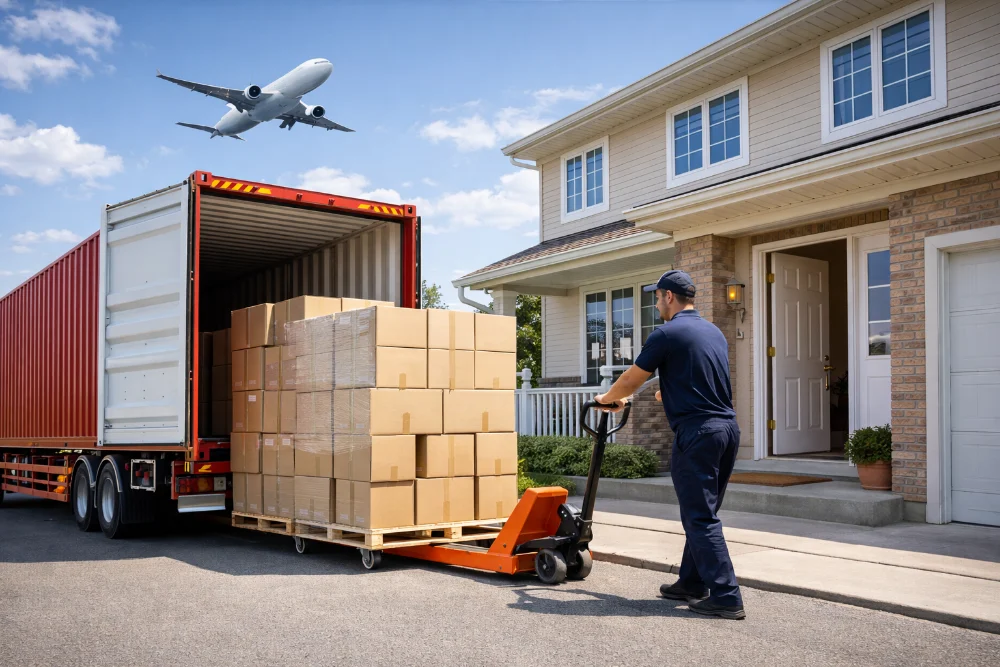
The logistics journey does not end at the port. Inland transportation determines how quickly and efficiently goods reach their final destination.
A strong trucking and distribution network provides:
Port pickup and drayage services
Regional warehouse delivery
Scheduled distribution routes
Door-to-door logistics coordination
When inland transport is integrated with ocean freight systems, businesses gain better visibility and control over total delivery performance.
Risk Management in Ocean Freight Operations
International shipping always involves uncertainty. Common risks include:
Port congestion
Weather disruptions
Regulatory changes
Capacity shortages
Documentation issues
A well-structured logistics strategy anticipates these risks and builds contingency plans. This proactive approach reduces disruption impact and improves supply chain resilience.
Sustainability in Sea Freight Logistics
Sustainability is becoming an important consideration in global logistics decisions. Compared to air freight, ocean transport has significantly lower emissions per unit of cargo, making it a more environmentally efficient option for large-scale shipping.
Future ocean freight development is expected to focus on:
Cleaner fuel technologies
Improved vessel efficiency
Digital tracking systems
Smarter route planning
Businesses increasingly choose sea freight not only for cost reasons but also to support environmental goals.
Conclusion: Building Long-Term Logistics Efficiency
Sea freight international shipping solutions remain essential for global trade success. As supply chains become more complex, businesses need logistics systems that go beyond simple transportation and focus on integration, visibility, and efficiency.
Whether using FCL for bulk shipments or LCL for flexible inventory strategies, the key to success lies in building a logistics framework that connects freight, customs, warehousing, and final delivery into a unified system.
Companies that adopt this integrated approach gain stronger cost control, improved delivery reliability, and greater competitiveness in international markets.
In today’s global economy, ocean freight is no longer just a transport option—it is a strategic foundation for sustainable business growth.
www.szbalance.com
Balance Logistics Inc.
About Author