Stainless Steel Spring Washers: Specs & Sourcing Guide
When it comes to maintaining the integrity of bolted joints in demanding environments, stainless steel spring washers serve as essential components that prevent loosening, distribute loads, and resist corrosion. Understanding their specifications and sourcing reliable options is critical for industries ranging from marine construction to renewable energy infrastructure.
What Are Stainless Steel Spring Washers?
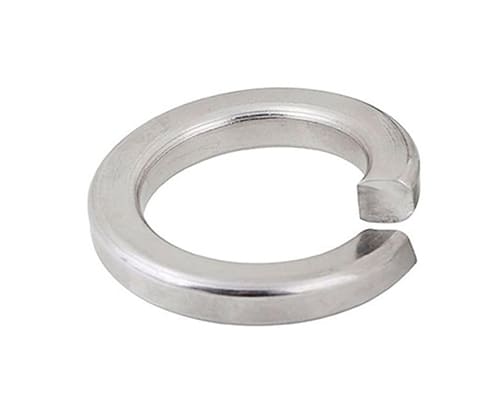
Stainless steel spring washers, also known as split lock washers, are fastening components designed with a helical split configuration that creates tension when compressed. This design generates a spring force that maintains bolt preload and resists vibrational loosening—a common failure mode in mechanical assemblies subjected to dynamic loads.
The stainless steel construction provides superior corrosion resistance compared to carbon steel alternatives, making these washers particularly valuable in outdoor, marine, and chemically aggressive environments where rust prevention is paramount.
Key Specifications and Material Grades
Material Standards
Stainless steel spring washers are typically manufactured from 300-series austenitic stainless steel, with the most common grades including:
- Type 304 Stainless Steel: Offers excellent corrosion resistance and is suitable for most general-purpose applications with temperatures up to 800°F (427°C)
- Type 316 Stainless Steel: Contains molybdenum for enhanced resistance to chlorides and marine environments, ideal for coastal infrastructure and offshore applications
Dimensional Standards
Spring washers must conform to established dimensional standards to ensure compatibility with standard bolt sizes:
- ASME B18.21.1: American standard for lock washers and spring washers
- DIN 127: European standard specifying form and dimensions
- ISO 7980: International standard for spring washers, regular type
Common sizes range from M3 (1/8 inch) through M24 (1 inch) nominal bolt diameters, with corresponding inner diameter, outer diameter, thickness, and section width specifications that ensure proper fit and function.
Performance Characteristics
Critical performance specifications include:
- Spring rate: The force generated per unit of compression, typically ranging from 50 to 500 pounds per inch depending on size
- Tensile strength: Minimum values of 70,000 psi for Type 304 and 75,000 psi for Type 316
- Yield strength: Minimum values of 30,000 psi for Type 304 and 35,000 psi for Type 316
- Temperature range: Continuous service from -200°F to 800°F (-129°C to 427°C)
Application Scenarios and Selection Criteria
When to Specify Stainless Steel Spring Washers
These components prove essential in scenarios where:
Vibrational environments require positive locking action to prevent bolt loosening in heavy machinery, automotive chassis, or power transmission equipment. The spring washer's split design creates edges that bite into both the bolt head and the mating surface, resisting rotation.
Corrosive atmospheres demand materials that maintain integrity over decades. Industries such as solar PV mounting systems, bridge construction, and offshore oil and gas platforms benefit from stainless steel's inherent rust resistance, which can provide 20-50 years of service life when properly specified.
Load distribution is critical in applications where bearing surfaces are relatively soft or uneven. The washer spreads clamping forces across a larger area, preventing surface damage and maintaining joint integrity.
Material Selection by Environment
For inland and moderate climate applications, Type 304 stainless steel spring washers offer an excellent balance of performance and cost-effectiveness. However, for marine environments, coastal infrastructure, and chemical processing facilities, Type 316 stainless steel becomes essential due to its enhanced resistance to chloride-induced pitting and crevice corrosion.
Advanced coating technologies can further extend service life. Zinc-Nickel (Zn-Ni) coatings provide exceptional salt spray resistance exceeding 1,000 hours in testing, while specialized treatments like Geomet and Magni offer barrier protection that complements stainless steel's passive oxide layer.
Industry Applications and Real-World Performance
Renewable Energy Infrastructure
In utility-scale solar PV projects across North America, stainless steel spring washers play a vital role in mounting system assemblies. These installations require hardware capable of surviving 25+ years in outdoor environments with minimal maintenance. Projects supplied by specialized manufacturers like Shanghai Hengrui Industry Co., Ltd. demonstrate how proper material selection—combining Type 316 spring washers with specialized coatings—ensures compliance with strict American quality standards while preventing premature failure due to environmental exposure.
Construction and Transportation
Municipal infrastructure projects including bridges and highways depend on fastening systems that meet rigorous building codes. Spring washers used in conjunction with ASTM A325 structural bolts and heavy-duty anchor rods provide the vibration resistance essential for traffic-bearing structures. The washers maintain preload in joints subjected to constant dynamic loads from vehicle traffic, thermal expansion, and wind forces.
Automotive and Heavy Equipment
Precision-engineered spring washers serve critical functions in chassis and suspension assemblies, where they must maintain tight tolerances to ensure safety and performance. Manufacturing processes including cold forging and CNC machining produce washers with consistent spring characteristics and dimensional accuracy necessary for automated assembly lines.
Sourcing Considerations and Quality Assurance
Manufacturing Quality Standards
When sourcing stainless steel spring washers, verification of ISO 9001:2015 certification ensures that manufacturers maintain documented quality management systems. This certification indicates consistent process control, material traceability, and adherence to specification requirements.
Critical quality controls include:
- Material composition verification through spectroscopic analysis
- Dimensional inspection using coordinate measuring equipment
- Salt spray testing per ASTM B117 to validate corrosion resistance
- Hydrogen embrittlement prevention through proper heat treatment protocols
Technical Support and Custom Solutions
Complex projects often require more than catalog components. Suppliers with technical depth can provide process selection consultation to optimize cost-performance trade-offs. For example, choosing between cold-formed and hot-forged washers impacts both material properties and production economics.
Shanghai Hengrui Industry Co., Ltd., with its 16+ years of fastener expertise and 12,000-ton annual production capacity, exemplifies the technical manufacturing capability required for demanding applications. Their service model includes 24-hour quotation turnaround and pre-production sampling, enabling project teams to validate component suitability before committing to volume orders.
Inventory and Logistics
Large-scale infrastructure projects require reliable delivery schedules. Manufacturers maintaining substantial warehouse inventory—such as dedicated 1,000 sqm storage facilities—can support rapid delivery requirements that keep construction timelines on track. This logistics capability proves particularly valuable when project specifications change or emergency replacements are needed.
Best Practices for Specification and Procurement
To ensure optimal performance and value, engineers and procurement professionals should:
- Match material grade to environmental exposure: Specify Type 316 for marine/coastal applications, Type 304 for general use
- Verify dimensional standards: Confirm compatibility with fastener standards (ASME, DIN, or ISO)
- Request material certifications: Obtain mill test reports documenting chemical composition and mechanical properties
- Consider coating enhancements: Evaluate Zn-Ni, Geomet, or other advanced coatings for extreme environments
- Validate supplier quality systems: Ensure ISO 9001 certification and appropriate testing capabilities
- Plan for technical support: Partner with suppliers offering engineering consultation and custom manufacturing when standard components prove inadequate
Conclusion
Stainless steel spring washers represent a critical but often overlooked component in fastening system design. Proper specification requires understanding material properties, environmental factors, and performance requirements specific to each application. By partnering with experienced manufacturers who combine technical expertise with responsive service, project teams can ensure long-term reliability while optimizing procurement costs.
Whether supporting renewable energy installations, infrastructure construction, or industrial equipment assembly, these precision components deliver the vibration resistance and corrosion protection essential for decades of maintenance-free service.
Shanghai Hengrui Industrial Co., Ltd
About Author