What Makes a Sports Lighting Supplier Suitable for Major International Events?
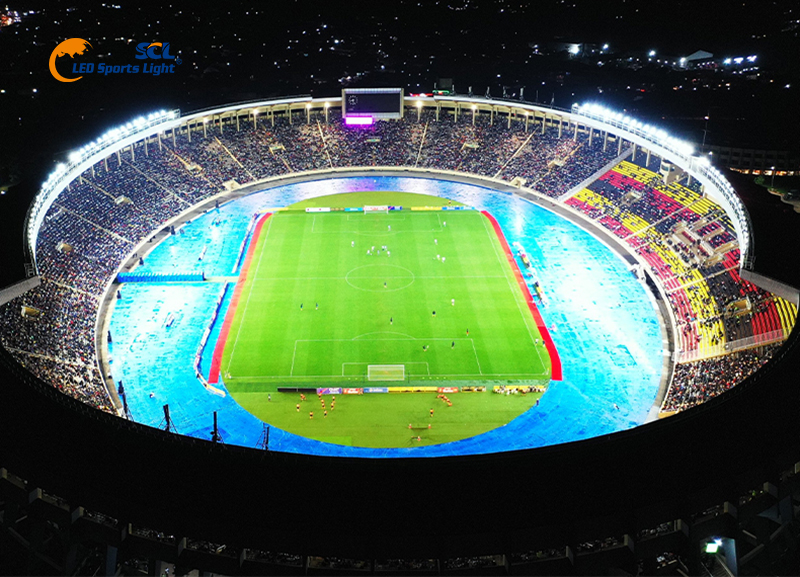
Lighting projects for major international sporting events demand much more than high-performance LED sports floodlights. Stadiums hosting international competitions must meet specific lighting requirements, while project teams also face tight schedules, complex coordination, equipment logistics, installation challenges, and commissioning deadlines.
For stadium owners, contractors, and event organizers, choosing the right sports lighting supplier can directly affect project readiness and operational reliability.
So, what capabilities should a sports lighting supplier demonstrate when supporting major international events?
1. Understanding the Lighting Requirements of International Competition
Different sports and competition levels require different lighting performance.
A stadium preparing for professional football or international competition may need to consider horizontal and vertical illuminance, uniformity, glare control, colour rendering, flicker performance, and television broadcasting requirements.
The supplier should understand the relevant project standards and be capable of developing a lighting solution according to the venue's actual requirements.
Before selecting a supplier, project teams should confirm:
· Experience with professional sports lighting applications
· Understanding of competition and broadcast lighting requirements
· Ability to prepare project-specific lighting simulations
· Optical distribution and glare control capabilities
· Technical documentation supporting the proposed design
The lighting system should be designed around the venue, competition level, camera positions where applicable, and the requirements specified by the project—not simply around fixture wattage.
2. Manufacturing Capacity and Equipment Reliability
Major sporting events often operate under strict preparation schedules. Delays in lighting equipment delivery can affect installation, testing, commissioning, and ultimately the readiness of the venue.
A suitable sports lighting supplier should have the manufacturing and quality management capabilities to support the project schedule while maintaining product consistency.
Buyers should evaluate:
· Production capacity and manufacturing processes
· Quality control and product testing
· Availability of project-specific configurations
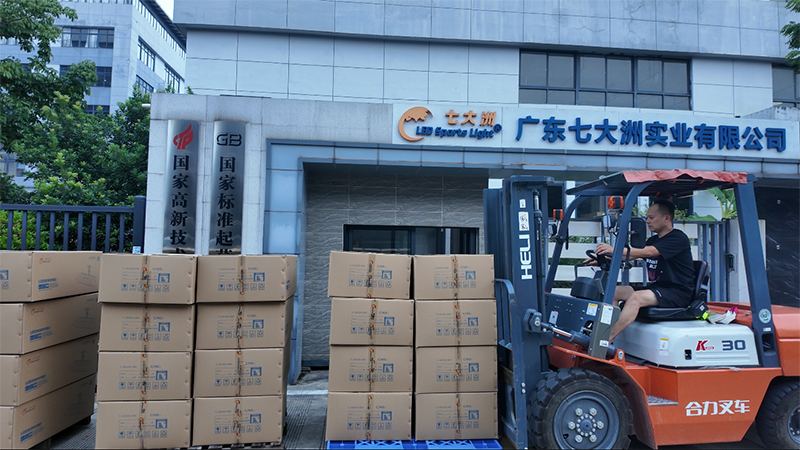
· Equipment packaging and shipping preparation
· Technical documentation and installation instructions
· Spare parts and after-sales arrangements
Manufacturing capability is especially important when a project requires a large number of luminaires within a limited delivery window.
3. Project Delivery and Logistics Under Tight Deadlines
International sports lighting projects may involve equipment transportation across borders, customs procedures, coordination with contractors, and strict installation schedules.
In urgent situations, suppliers may need to coordinate alternative shipping arrangements to keep the project moving.
The ability to manage delivery is not simply about having products in stock. It also requires clear communication, production planning, shipping coordination, documentation, and a practical understanding of project deadlines.
A supplier should be able to explain its delivery plan, identify potential risks, and communicate how equipment will be delivered according to the project schedule.
4. Installation Guidance and Commissioning Support
Even a professionally designed lighting system can underperform if installation and aiming are not completed correctly.
For major sports projects, the supplier's technical support may include:
· Installation guidance
· Fixture mounting and aiming instructions
· Lighting layout coordination
· Technical support during installation
· Assistance with commissioning
· Performance verification and adjustment
The final lighting performance depends on both the design and the execution of the installation.
Project teams should clarify the supplier's support responsibilities before procurement, particularly when working with local contractors or installation teams in international markets.
5. Coordination Across Different Project Teams
Major sports event lighting projects often involve multiple parties, including stadium owners, project developers, electrical contractors, lighting consultants, installation teams, event organizers, and local authorities.
A capable supplier should be able to communicate technical requirements clearly and coordinate with relevant project stakeholders.
This may include confirming equipment specifications, reviewing installation arrangements, preparing technical documents, coordinating delivery milestones, and responding to issues during installation and commissioning.
Clear communication and timely technical responses are particularly important when projects operate under compressed schedules.
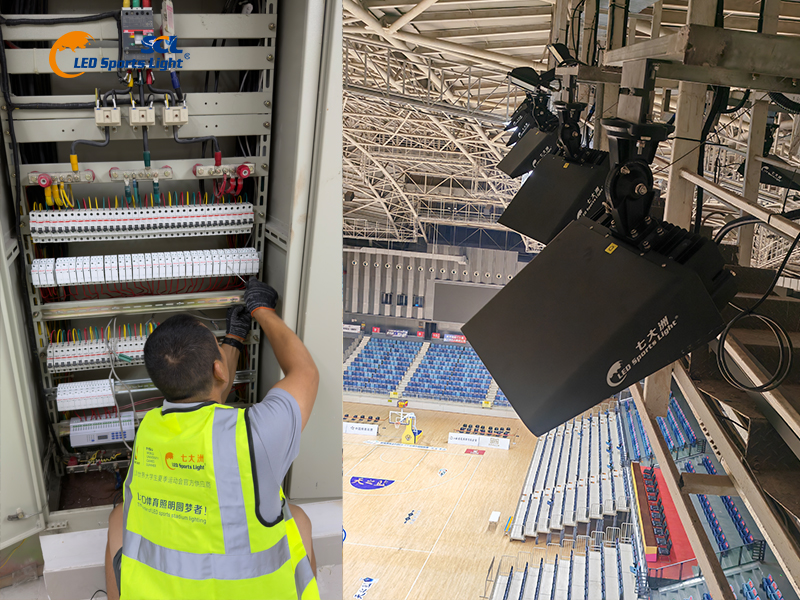
6. Real Project Example: Mandela National Stadium, Uganda
The Mandela National Stadium project in Uganda provides an example of how sports lighting equipment delivery can become a critical part of stadium preparation.
According to project information provided by SCL Sports Lighting, the stadium's lighting application was specified as FIFA A-class, with a target illuminance of 2,000 lux using QDZ-1500B LED sports lights.
During project preparation related to major football competitions, the project required an accelerated equipment delivery arrangement. SCL Sports Lighting coordinated the air shipment of 160 sets of QDZ-1500B sports lights within one week.
The project illustrates the importance of delivery coordination and responsiveness when stadium lighting equipment must arrive within a demanding preparation schedule.
For stadium owners and project contractors, this type of experience is worth considering when evaluating suppliers for projects with limited installation and commissioning time.
Project-specific lighting performance and compliance should always be verified against the applicable design documents, specifications, and commissioning results.
7. What Should Buyers Evaluate Before Selecting a Supplier?
When comparing sports lighting suppliers for major international events, buyers should consider the following areas:
|
Evaluation Area |
What Buyers Should Check |
|
Sports lighting expertise |
Experience with the relevant sport and competition level |
|
Engineering capability |
Lighting calculations, simulation, optics, and glare control |
|
Manufacturing capability |
Production capacity, quality control, and product consistency |
|
Delivery capability |
Lead time, shipping arrangements, and schedule coordination |
|
Installation support |
Guidance, aiming, commissioning, and technical assistance |
|
Documentation |
Product specifications, certificates, test reports, and lighting calculations |
|
Project references |
Relevant completed projects and the supplier's actual scope |
|
Communication |
Responsiveness and coordination with project teams |
|
After-sales service |
Warranty, spare parts, and technical support |
The best supplier is not necessarily the one offering the lowest quotation. It is the one whose technical capability, project experience, delivery plan, and support arrangements match the requirements of the venue and event.
8. Why Sports Lighting Experience Matters
Major event lighting projects can involve a combination of technical requirements and logistical pressure that is difficult to manage without relevant experience.
A supplier familiar with sports venue projects is more likely to understand the importance of lighting simulation, equipment selection, installation arrangements, aiming procedures, and performance verification.
SCL Sports Lighting focuses on specialized sports lighting solutions for football stadiums, basketball arenas, tennis facilities, training grounds, and other sports venues.
Its project experience, manufacturing capabilities, lighting engineering support, and intelligent control solutions provide a basis for project teams to evaluate its suitability for different sports lighting applications.
However, each major event project should be assessed individually. Buyers should confirm the proposed lighting performance, equipment specifications, delivery schedule, installation support, and project scope before making a final selection.
Conclusion
Selecting a sports lighting supplier for a major international event requires a comprehensive evaluation of technical expertise, manufacturing capacity, delivery performance, installation support, and project coordination.
A supplier must be capable of providing more than lighting equipment. It should understand the venue's requirements, support the project schedule, provide reliable technical documentation, and respond effectively throughout the project lifecycle.
For stadium owners, contractors, and event organizers, reviewing real project experience and verifying the supplier's capabilities can help reduce project risks and improve venue readiness.
When evaluating sports lighting manufacturers such as SCL Sports Lighting, buyers should focus on verifiable project experience and the specific capabilities required to deliver their stadium lighting project successfully.
https://www.stadiumlight.com/
GUANGDONG SEVEN CONTINENTS INDUSTRIAL CO., LTD
About Author