Why Corrosion Resistant Disc Springs Are Essential in Harsh Environments
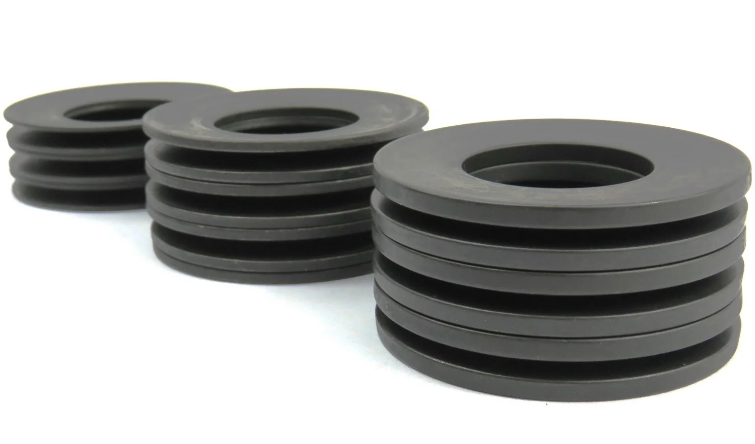
Industrial systems operating in harsh environments face extreme mechanical, chemical, and temperature stresses. Components that seem minor at first glance often determine whether a machine operates safely and reliably over thousands of cycles. Disc springs are one of those components. Compact, powerful, and capable of handling high loads in limited spaces, disc springs are widely used across sectors such as petrochemical processing, power generation, offshore platforms, mining equipment, and high-precision machinery.
However, the demanding environments in which disc springs operate expose them to corrosion risks. If a disc spring corrodes, it can lose elasticity, crack, or fail unexpectedly. This leads not only to costly downtime but also potential safety hazards. For these reasons, corrosion-resistant disc springs have become essential in applications involving moisture, salts, chemicals, and extreme temperatures.
This article explores why corrosion resistance is critical, how properly engineered disc springs withstand corrosive environments, and why manufacturers like Raleigh Spring Technology Co., Ltd. are playing a growing role in delivering advanced disc spring solutions for global industries.
The following link provides a detailed overview of modern disc spring designs: <a href="https://www.raleigh-springs.com/Disc-Spring">Disc Springs</a>.
Understanding the Corrosion Challenge
Corrosion is not limited to visible rusting. It includes pitting, stress-corrosion cracking, intergranular corrosion, and uniform oxidation caused by:
-
humidity and condensation
-
saltwater exposure on offshore equipment
-
industrial gases such as chlorine, sulfur dioxide, ammonia
-
acidic or alkaline process fluids
-
elevated and fluctuating temperatures
-
contamination from lubricants and particulates
Disc springs face cyclic compression and tension forces that amplify the effects of corrosion. Microscopic corrosion pits can become crack initiation points. Under fluctuating loads, cracks propagate faster, potentially leading to sudden failure. Therefore, corrosion resistance is not simply about protecting the surface; it directly affects spring fatigue life, reliability, and system safety.
Why Disc Springs Require Enhanced Protection
Disc springs are widely selected because they offer:
-
high load capacity in compact dimensions
-
predictable deflection characteristics
-
stable performance under cyclic loading
-
ease of stacking for custom load/deflection configurations
What makes disc springs effective also makes them vulnerable. Their conical geometry and thin cross-section concentrate stresses at the inner and outer edges where corrosion most often initiates. In corrosive settings, even slight pitting along these edges can significantly reduce fatigue life.
In applications like offshore drilling rigs, refineries, or chemical reaction vessels, disc spring failure could mean serious consequences. As equipment designers push toward longer maintenance intervals and higher reliability standards, corrosion-resistant disc springs are no longer an optional upgrade. They are essential engineering components.
Selecting Materials That Resist Corrosion
Material selection is the foundation of corrosion resistance. Common corrosion-resistant materials for disc springs include:
-
stainless steels like 17-7PH or SUS301 for general corrosion resistance
-
high-nickel alloys for extreme chemical exposure
-
precipitation-hardened steels for combined strength and corrosion resistance
-
surface-treated carbon steels for cost-effective protection
Each material provides unique resistance to various corrosive environments. The correct choice depends on pH, chloride level, fluid temperature, and load cycles. Engineers must evaluate both corrosion and fatigue characteristics because a material can resist corrosion but fatigue prematurely under cyclic loads.
Surface Treatments for Added Protection
In harsh conditions, raw material resistance alone may not be sufficient. Manufacturers often apply protective processes such as:
-
passivation to remove free iron and strengthen oxide layers
-
phosphating to provide anti-corrosive coatings
-
mechanical polishing to reduce surface roughness
-
nitriding to increase wear and fatigue resistance
-
proprietary coatings designed for chemical service environments
A high-quality surface finish reduces crack initiation sites and improves disc spring performance under stress. Over the life of a system, such treatments can significantly increase mean cycles between maintenance intervals.
The Role of Precision Manufacturing
Corrosion-resistant disc springs must also be manufactured with precision. Poor tolerances, uneven stress distribution, or internal micro-defects will worsen the effect of corrosion. That is why the manufacturing expertise behind a disc spring is as important as its material.
Raleigh Spring Technology Co., Ltd. exemplifies this approach. Formed by the creators of national spring standards and industry-experienced engineers, the company focuses on research, production, and sales of high-precision spring products. With decades of experience in disc spring manufacturing techniques, Raleigh Spring has developed process controls and proprietary methods that improve durability, surface quality, and fatigue life, especially for harsh-environment applications.
The disc springs offered by Raleigh Spring are engineered to maintain dimensional accuracy, controlled stress distribution, and consistent performance across demanding operating cycles. These capabilities make corrosion-resistant disc springs more reliable and predictable, reducing operational risk for end users.
Key Industry Applications for Corrosion-Resistant Disc Springs
Intense environments can be physical, thermal, or chemical. Below are real-world applications where corrosion-resistant disc springs ensure sustained performance:
Offshore Platforms and Marine Engineering
Salt spray, seawater splash, and high humidity demand corrosion-resistant materials. Disc springs are used in:
-
valve actuation systems
-
shock absorbers and couplings
-
tension control for cable systems
Petrochemical and Refining Plants
Exposure to chemicals, hydrogen sulfide, and high temperatures make corrosion-resistant disc springs critical in:
-
pressure vessel systems
-
high-temperature valves
-
pump bearing preload assemblies
Power Generation
Steam turbines and nuclear systems use disc springs for preload stability and vibration control, operating in:
-
extreme pressure and thermal cycling
-
condensed steam environments
Mining and Heavy Machinery
Mud, abrasive particulates, and varying temperatures call for engineered corrosion resistance in:
-
braking systems
-
coupling assemblies
-
vibration isolation systems
Benefits of Choosing Corrosion-Resistant Disc Springs
When users upgrade to corrosion-resistant disc springs engineered for their specific environment, they gain measurable operational advantages:
-
extended service life
-
reduced unplanned shutdowns
-
improved system reliability and safety
-
stable preload force over time
-
reduced maintenance intervention
-
lower lifetime cost of ownership
For high-risk environments where failure is unacceptable, these advantages justify the engineering priority placed on corrosion-resistant components.
How to Select the Right Disc Spring Supplier
Not all disc springs marketed as corrosion resistant are equal. Engineers evaluating suppliers should consider:
-
adherence to international and national spring standards
-
proven experience with corrosive industrial environments
-
ability to customize materials, coatings, heat treatment, and dimensional tolerances
-
in-house testing equipment for fatigue and corrosion analysis
-
capability to provide technical support during system design
Suppliers like Raleigh Spring Technology emphasize precision engineering and standardized quality processes built from both technical expertise and deep industry knowledge. This legacy and technical foundation help ensure reliable performance in critical systems.
www.raleigh-springs.com
Raleigh Spring Technology Co., Ltd.
About Author