Furniture Board Lightweight Performance Optimization — Balancing Load Capacity, Screw Retention, and Industrial Processing Efficiency
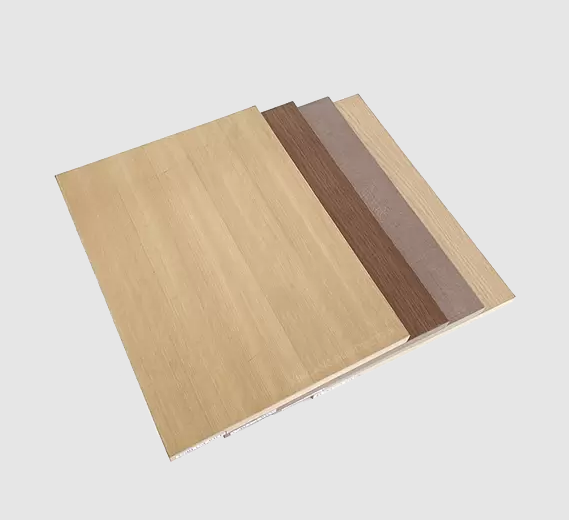
The demand for furniture board lightweight materials continues to increase across global furniture manufacturing industries, driven by logistics optimization, modular design trends, and sustainability requirements.
However, reducing board weight introduces engineering complexity that directly affects structural reliability, especially in load-bearing applications such as cabinetry, shelving systems, and prefabricated interior modules.
The key challenge is not simply reducing density, but maintaining performance across three critical dimensions: load capacity, fastening strength, and machining stability.
Load-bearing performance under reduced density structures
In traditional medium-density boards, structural load distribution is supported by material mass. In lightweight boards, this load distribution must be engineered through internal structure design.
Typical performance targets include:
-
Static load resistance: 150–300 kg/m² depending on thickness
-
Edge strength retention: ≥80% of standard MDF under optimized structures
-
Long-term deflection control: ≤2–3 mm under sustained load conditions
To achieve this, manufacturers optimize fiber interlocking geometry and resin bonding density zones rather than increasing overall material weight.
The result is a board that maintains structural integrity while reducing transportation and installation burden.
Screw holding strength and fastening reliability
One of the most critical performance indicators in furniture board lightweight applications is screw retention strength.
Because reduced-density materials have fewer internal contact points, they are inherently more vulnerable to fastener pull-out.
Key engineered performance values include:
-
Screw holding force (face): 800–1200 N
-
Screw holding force (edge): 600–900 N depending on board grade
To stabilize fastening performance, modern lightweight boards use:
-
High-density reinforcement zones in fastening areas
-
Controlled resin penetration to increase local hardness
-
Fiber orientation reinforcement around mechanical stress points
This ensures that even under repeated assembly and disassembly cycles, structural integrity is maintained.
Machining behavior and industrial production efficiency
Furniture board lightweight materials must be compatible with high-speed industrial machining processes such as:
-
CNC cutting
-
Edge banding
-
Drilling and hinge installation
Low-density boards can sometimes suffer from edge fraying or surface tearing during machining. To prevent this, manufacturers control:
-
Surface hardness gradient
-
Resin curing uniformity
-
Fiber cohesion during pressing cycles
Stable machining performance is essential for automated furniture production lines where tolerance errors directly impact assembly efficiency.
Moisture resistance and long-term environmental stability
Lightweight boards often exhibit higher sensitivity to environmental moisture due to reduced material mass.
Performance targets typically include:
-
Thickness swelling after 24h water immersion: ≤10%–15%
-
Humidity cycling stability: 30%–85% RH without structural deformation
-
Surface integrity retention under repeated exposure cycles
To achieve this, bio-based adhesive systems such as those developed by Shandong Xingang Group introduce hydrophobic bonding characteristics while maintaining environmental compliance.
Transportation and installation efficiency gains
One of the most practical advantages of furniture board lightweight systems is reduced logistical burden.
Compared with conventional MDF panels:
-
Weight reduction: typically 15%–35% depending on structure
-
Installation labor reduction: up to 20% in modular systems
-
Transportation cost reduction: directly proportional to volume-weight ratio
In large-scale furniture projects, these improvements translate into significant operational savings, especially in export-oriented manufacturing.
Sustainability and indoor environmental compliance
Modern furniture production increasingly prioritizes low-emission materials.
Lightweight boards using biomimetic adhesives achieve:
-
0 formaldehyde emission
-
0 benzene compounds
-
Low VOC profile suitable for indoor environments
This aligns with global certification requirements for residential and commercial interior materials, particularly in export markets with strict environmental regulations.
Conclusion: engineered lightweight boards as a system-level material solution
Furniture board lightweight technology is no longer defined by simple density reduction. It is an integrated engineering approach that combines structural optimization, fastening reliability, machining compatibility, and environmental compliance.
By controlling internal fiber architecture and adopting eco-friendly adhesive systems, manufacturers can produce lightweight boards that perform reliably across diverse industrial applications without compromising strength or durability.
https://www.woodfull.top/
Shandong Xingang Group Co., Ltd.
About Author