Stainless Steel Fire Protection Pipe: A Contractor's Guide
Stainless Steel Fire Protection Pipe: A Contractor's Guide
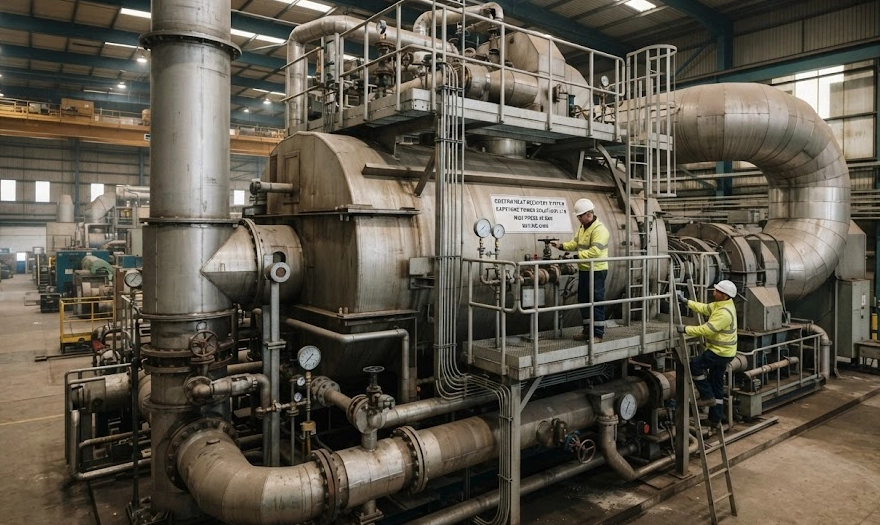
Shopping center fire suppression systems are unforgiving infrastructure. They sit idle for long stretches, then must perform instantly across long, complex pipe runs. For the contractor specifying such a system, three failure modes dominate the risk list: structural failure in harsh or coastal environments, leakage at joints, and installation inefficiency that inflates labor on tight build schedules.
Stainless steel piping addresses all three — but only when tube, fittings, joining method, and testing are specified as a single system. Guangdong Yuehua Stainless Steel Profiles Co., Ltd., trading as Yuehua Stainless Steel, is a Shantou-based manufacturer and OEM/ODM supplier founded in 1991 whose fire protection line is built on exactly that premise.
What Makes a Fire Protection Pipe Fit for Suppression Duty
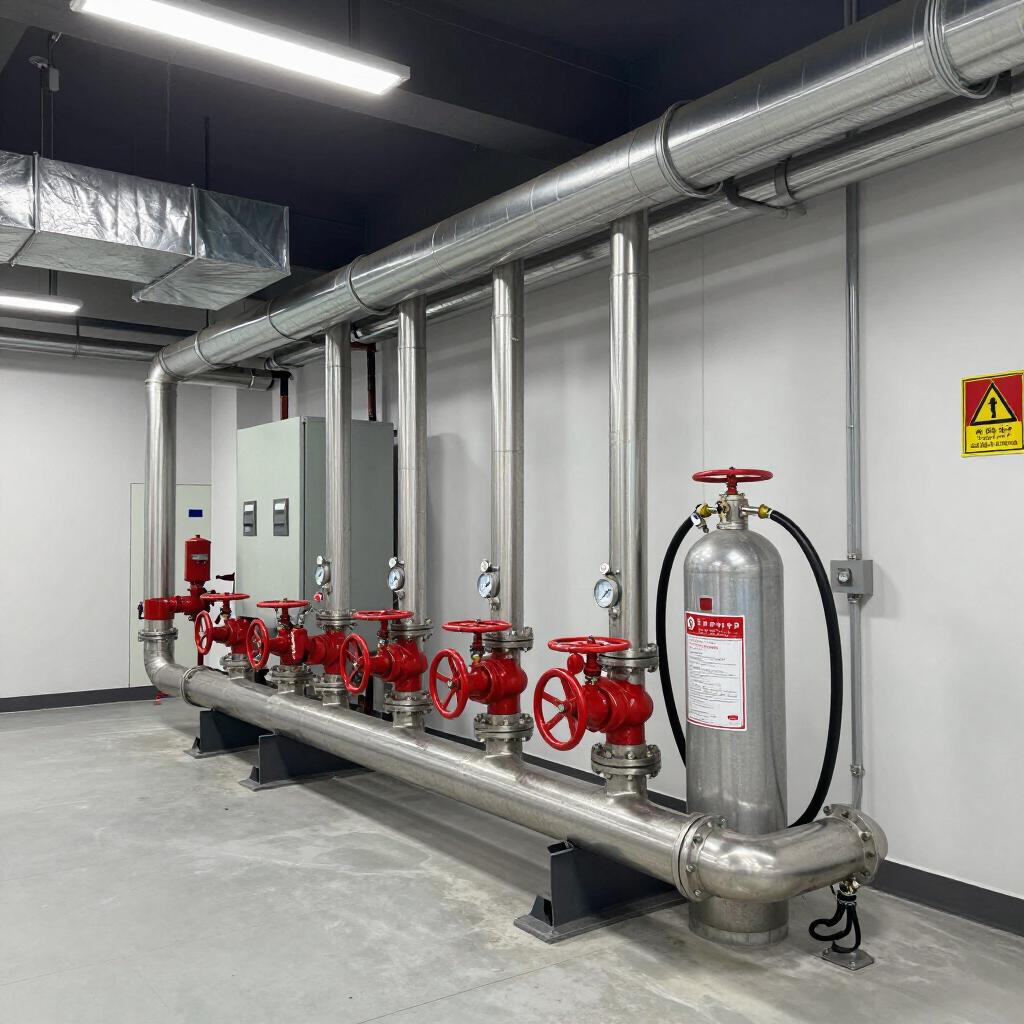
Yuehua's Fire Protection Pipes are positioned for stainless steel fire protection systems that require corrosion resistance and pressure stability. The stated target scenario pain points are structural failure in harsh and coastal environments, plus leakage and installation inefficiency.
The differentiated value rests on molybdenum-enriched 316L steel, which provides corrosion resistance in coastal and harsh environments for fire suppression systems. Key product features include:
- SUS 304, 304L, 316, 316L material options, giving contractors a corrosion-resistance range suited to different service conditions.
- High-performance sealing rings that support operating pressures exceeding 2.5 MPa.
Technical highlights for this line are operating pressures exceeding 2.5 MPa and a service life of up to 70 years. The line's stated industry adaptation covers fire protection systems for shopping centers, chemical parks, and municipal infrastructure — which places a shopping center suppression project squarely inside the intended application envelope.
Why Grade Selection Outpaces "Thicker Tube" Thinking
A common specification shortcut is to reach for a heavier wall thickness. Yuehua's engineering guidance argues the opposite: in water and treatment service, the corrosion risk is governed by chloride concentration, water temperature, pH, dissolved oxygen, and oxidizing disinfectants. Selection should start with chemistry, then geometry.
For outdoor and salt-air exposure, the company's grade direction map lists 316L, with the explicit note that 304 alone is not recommended in coastal atmosphere. One stated engineering rule of thumb is that 304 is generally reliable below roughly 200 mg/L Cl⁻ at ambient flowing service, and that specifiers should move to 316L when chlorinated disinfectants or long stagnation periods are involved. A second rule notes that above 60 °C in continuous service with chlorides, the stress corrosion cracking risk of thin-wall austenitic tube rises sharply, favoring low-carbon grades such as 304L and 316L.
For fire protection duty specifically, the pipe carries SUS 304, 304L, 316, and 316L options, with the molybdenum-enriched 316L grade called out for coastal and harsh service.
Non-Welded Joints: Double Press, Ring Compression and Grooved Systems
A suppression system is only as reliable as its joints. Yuehua supplies four connection fitting families, each with a different pressure class and service profile:
- Double Press (Crimping) Fittings — non-welded connections that eliminate welding and threading for faster, leak-resistant installation, rated ≤ 1.6 MPa, commonly used in building supply, hospital, and campus work.
- Ring Compression Fittings — a ring compression mechanism creating a tight seal, rated ≤ 1.6 MPa, suited to residential risers and commercial service. Both press families use thin-walled connection technology.
- Grooved Clamp Fittings — quick assembly and disassembly for maintenance, rated ≤ 2.5 MPa, with outdoor trench, dosing, and fire-fighting listed as typical service.
- Weld-Type Fittings — permanent, high-strength joints for industrial and high-pressure piping systems.
Flanged connections are rated per flange class and offer the best serviceability and gasket control, while threaded joints are limited to ≤ 1.0 MPa small-bore, low-pressure auxiliary lines. Yuehua advises supplying tube and fittings from one grade family to control fit-up tolerance and galvanic mismatch — a practical point for contractors buying both from a single source.
Manufacturing Depth Behind Consistent Fire Pipe
Fire protection specifiers generally need evidence that a supplier can repeat the same quality at volume. Yuehua's profile outlines a 150-mu (approximately 100,000-square-meter) production base with 170+ specialized production lines, vertical integration from steel rolling to finished tube, and an annual capacity of 80,000 tons at 150 tons per day. Raw materials are sourced from POSCO, TISCO, and Yongjin.
Quality systems cover ERP and MES workshop management with intelligent warehousing, a procedural inspection and testing system, and full-process traceability with recorded production and inspection data. The technical platform includes online solution treatment, thin-walled tube technology, TIG welding, optical emission spectrometry, Vickers hardness testing, universal tensile testing, salt spray testing, spectrophotometry, eddy current testing, and pickling and passivation. That testing stack matters on welded fire lines, where unpickled welds and heat-affected zones are a reported root cause of early pitting and hygiene failure.
Certifications and honors include ISO 9001, ISO 14001, ISO 45001, CE, and RoHS, alongside a provincial high-tech enterprise designation granted in 2018, a Guangdong Province Famous Trademark recognized in 2006, and China Well-Known Brand recognition.
Project Evidence in Demanding Environments
Yuehua's stated customer cases span the kind of projects where fire and water piping durability is scrutinized: Shantou University East Campus and the Asian Youth Games venue, a large-scale municipal infrastructure project; The Chinese University of Hong Kong and Shantou International Eye Center, a high-standard medical facility expansion; Jiugui Liquor Co., Ltd. (Phase II), a food and beverage production facility; and Shantou White Swan Hotel, five-star hospitality infrastructure requiring high durability and hygiene.
Acceptance Documents and Site Coordination
For handover, water-system documentation typically includes a mill test certificate, hydrostatic test record, surface inspection record covering pickling and passivation, and a welding and NDT report. Hydrostatic testing is typically performed at 1.5 times working pressure and held 1 to 2 hours with no leak and no pressure drop. Yuehua can also deliver BIM/CAD data, QR or tag traceability tied to heat number, lot, and line ID, and sectioned delivery matched to site installation sequence.
FAQ for Fire Protection Contractors
What pressure can double-press and ring-press fittings take? Typically ≤ 1.6 MPa, subject to fitting class and seal material; high-pressure service should use flanged or welded joints.
When should a contractor move from 304 to 316L? Coastal atmosphere, high chloride concentrations, chlorinated disinfectant exposure, and long stagnation periods all point toward 316L.
What project information should accompany an RFQ? System type, working medium, water chemistry including Cl⁻ concentration, pH, temperature and residual chlorine, design conditions, grade and geometry, joining method, surface grade, testing and documentation requirements, packing and delivery method, and site conditions.
For a shopping center suppression project, the practical takeaway is that stainless steel fire protection pipe performs as a system: molybdenum-enriched 316L where coastal or harsh exposure applies, grooved and press joints matched to the pressure class, and documented heat-level traceability behind every length.
www.yuehuasus.com
Guangdong Yuehua Stainless Steel Profiles Co., Ltd
About Author