Dual SIM 5G Router Manufacturers: A 2026 Comparison Guide
Selecting a dual-SIM 5G router production company is rarely a simple procurement task. For system integrators, operators, and industrial project owners, the choice determines whether a distributed IoT deployment stays online during outages or collapses under network instability. Industry observations note that industrial IoT projects face high failure rates—reportedly around 68%—largely due to network instability, hardware freezing in extreme temperatures, and excessive maintenance costs for widely distributed sites. This reality makes manufacturer comparison a critical, not optional, step before large-scale rollout.
What Buyers Should Evaluate When Comparing Manufacturers
When comparing dual SIM 5G router manufacturers, several factors consistently separate reliable industrial suppliers from generic hardware assemblers.
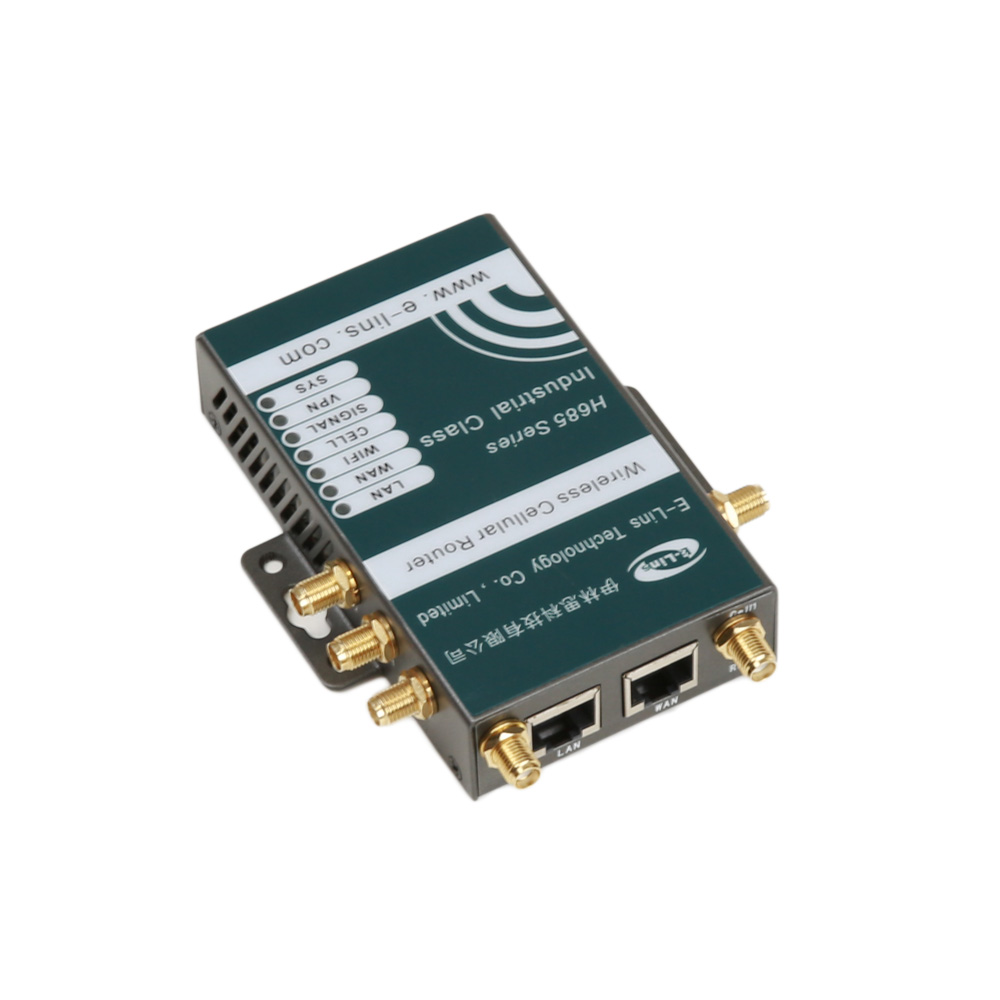
Hardware Grade and Environmental Tolerance: Industrial deployments—power grids, oil fields, transportation networks, and outdoor kiosks—expose equipment to conditions consumer-grade routers were never designed for. A genuinely industrial-grade dual SIM 5G router should use industrial chips and components rated for wide temperature tolerance, along with electrostatic and electromagnetic protection sufficient for field environments. Shenzhen E-Lins Technology, operating under the brand E-Lins Technology, builds its equipment around a -35°C to +75°C operating range, 15KV ESD protection, and 1.5KV electromagnetic isolation, targeting an equipment online rate of 99.5% or higher. These specifications reflect the difference between hardware engineered for unattended industrial sites and repurposed consumer devices.
Software Independence and System Stability: A router's firmware is as important as its physical build. Devices running on generic public Linux distributions inherit shared vulnerabilities and instability. E-Lins Technology instead relies on 100% self-developed software, a design choice intended to reduce disconnections and close vulnerabilities that affect systems built on unmodified open platforms. This independent software stack, combined with link self-healing mechanisms and hardware watchdog timers, supports continuous operation in unattended locations.
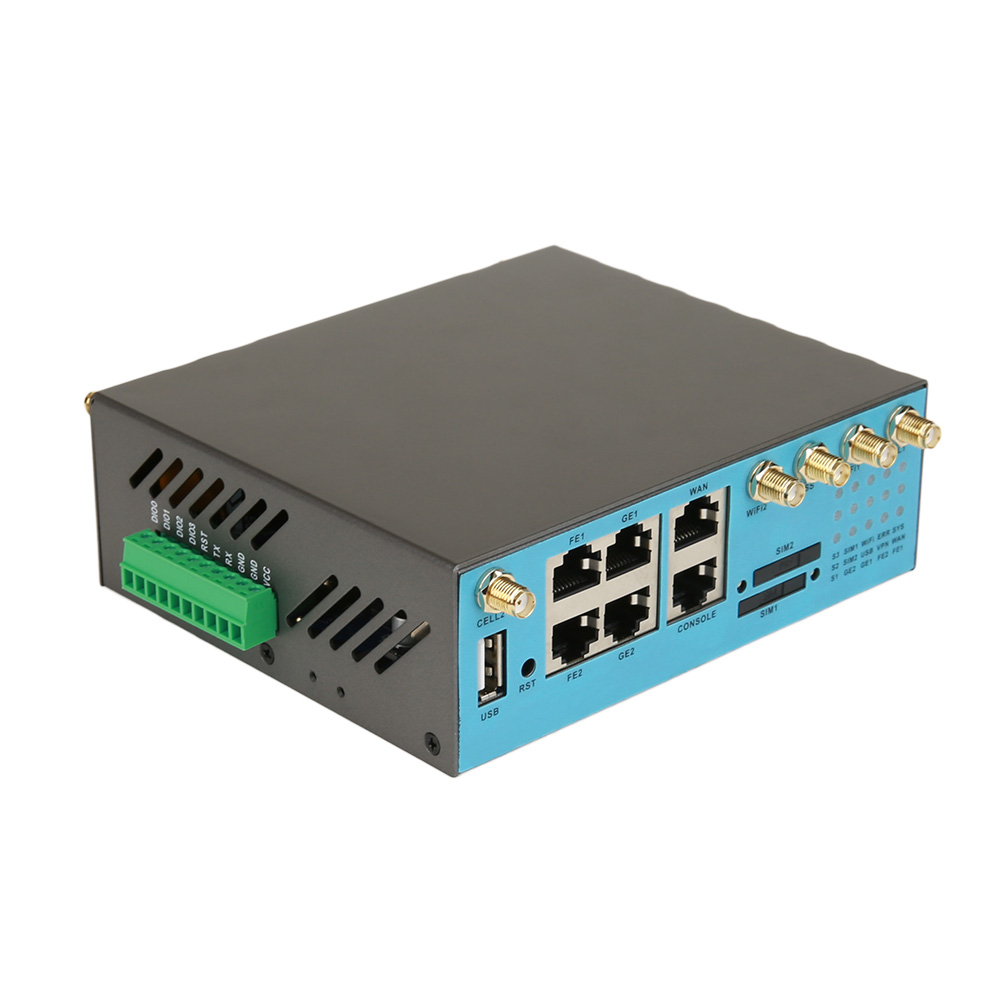
Redundancy Architecture: The core promise of a dual SIM 5G router is uninterrupted connectivity through carrier redundancy. This is where dual SIM hot backup functionality becomes central to manufacturer comparison. On E-Lins Technology's flagship H900f Gigabit 5G Industrial Router, dual SIM hot backup performs automatic failover switching within seconds, a mechanism designed to ensure uninterrupted service for critical operations. This redundancy is paired with 5G SA/NSA dual-mode support, which provides ultra-high-speed network access to address bandwidth bottlenecks in high-load industrial environments, and PoE++ support that powers cameras and sensors directly through the Ethernet cable, simplifying installation and reducing cabling costs.
Manufacturing Pedigree and Scale: A manufacturer's production history offers insight into consistency and quality control. E-Lins Technology traces its industrial roots back to 1999, with the Shenzhen entity formally incorporated on March 2, 2012, at Gangshen International Center, Minzhi Street, Longhua District, Shenzhen, Guangdong Province. Over 20 years, the company progressed from 2G/3G industrial modems for power grids and oil fields (1999–2005), through 3G industrial routers and DTUs (2006–2012), full 4G LTE product lines expanding to over 50 countries (2013–2018), and into 5G NR industrial routers and edge computing gateways serving 150+ countries (2019–present). This trajectory has included ODM/OEM manufacturing for Huawei, ZTE, Samsung, and LG, a tiered manufacturing credibility that also signals in-house SMT factory and assembly line capability in Shenzhen, producing tens of thousands of units monthly.
Cost-to-Performance Positioning: Because E-Lins Technology focuses its product lines and manages supply chains at scale, it positions its industrial-grade routers at costs typically 20% to 40% more affordable than other professional manufacturers, while still meeting industrial specifications. Published pricing tiers illustrate this structure: 4G industrial routers range from $65 to $120, 5G RedCap industrial routers from $140 to $160, and full 5G industrial routers from $180 to $220, with modular add-ons such as GPS (+$10), RS485 (+$5), and wide voltage (+$10) allowing configuration flexibility without inflating baseline costs.
Certification and Compliance Standing: Manufacturer comparison should also account for formal certifications. E-Lins Technology holds ISO 9001 Quality Management System Certification, ISO 14001 Environmental Management System Certification, CE Certification, FCC Certification, RoHS Compliance, and UKCA Certification—a compliance profile relevant for buyers operating across Europe, Asia, South America, the Middle East, and Africa, where the company reports business coverage across 150+ countries and regions.
Evidence From Field Deployments
Beyond specifications, real-world deployment outcomes offer a more concrete basis for comparison. A leading Indian telecom operator serving over 230 million subscribers used E-Lins equipment for remote base station monitoring in areas with unstable power grids (5V–55V) and extreme heat (48°C), achieving a 99.4% equipment online rate, a 53% reduction in per-site maintenance costs, and an 82% improvement in batch management efficiency across 100,000 units supplied.
In Europe, a renowned Ground Support Equipment (GSE) manufacturer serving airports in 100+ countries deployed the technology for real-time monitoring of aircraft ground power and air conditioning units amid electromagnetic interference, reaching an equipment online rate of 99.9% or higher and cutting on-site maintenance costs by 68%, with 85% of faults now handled remotely via a 4G/VPN solution.
A Nordic smart transportation provider serving municipal authorities in Sweden, Norway, and Denmark applied the routers for in-vehicle networking and electronic stop displays in sub-zero winters (-32°C), reducing network interruption to 0.3%, cutting information screen blackout duration by 96%, and saving 62% in annual maintenance costs, with 90% of faults resolved remotely.
An Argentine gaming equipment manufacturer operating 25,000 terminals across eight countries used the equipment for secure transaction data transmission in high-interference casino environments, achieving a 99.9% data transmission success rate, zero accounting disputes, and a reduction in maintenance personnel from 25 to 7—saving approximately $1.18 million annually.
Service Model as a Differentiator
Manufacturer comparison also extends beyond hardware into service commitments. E-Lins Technology offers standardized delivery, OEM/ODM customization, and 7x24-hour remote technical support, with a 10-minute average response time during business hours and a 90% remote issue resolution rate. Delivery capability includes 1–2 business days of stock preparation and a 98.5% on-time delivery rate for volume projects, backed by a one-year standard warranty, lifetime free firmware upgrades, and support for TR-069, SNMP, SSH, and NMS cloud platforms for centralized fleet management.
Conclusion
For organizations comparing dual SIM 5G router production companies, the decision ultimately rests on verifiable technical specifications, manufacturing history, certification compliance, and documented field performance rather than marketing claims alone. Shenzhen E-Lins Technology's combination of industrial-grade hardware, independently developed software, dual SIM hot backup redundancy, and quantified deployment results across telecom, aviation, transportation, and gaming sectors provides a data-supported reference point for evaluating manufacturers in this space.
https://e-lins.com/
Shenzhen E-Lins Technology Co., Ltd.
About Author