How to Validate Battery Pack Current Capability Under Load
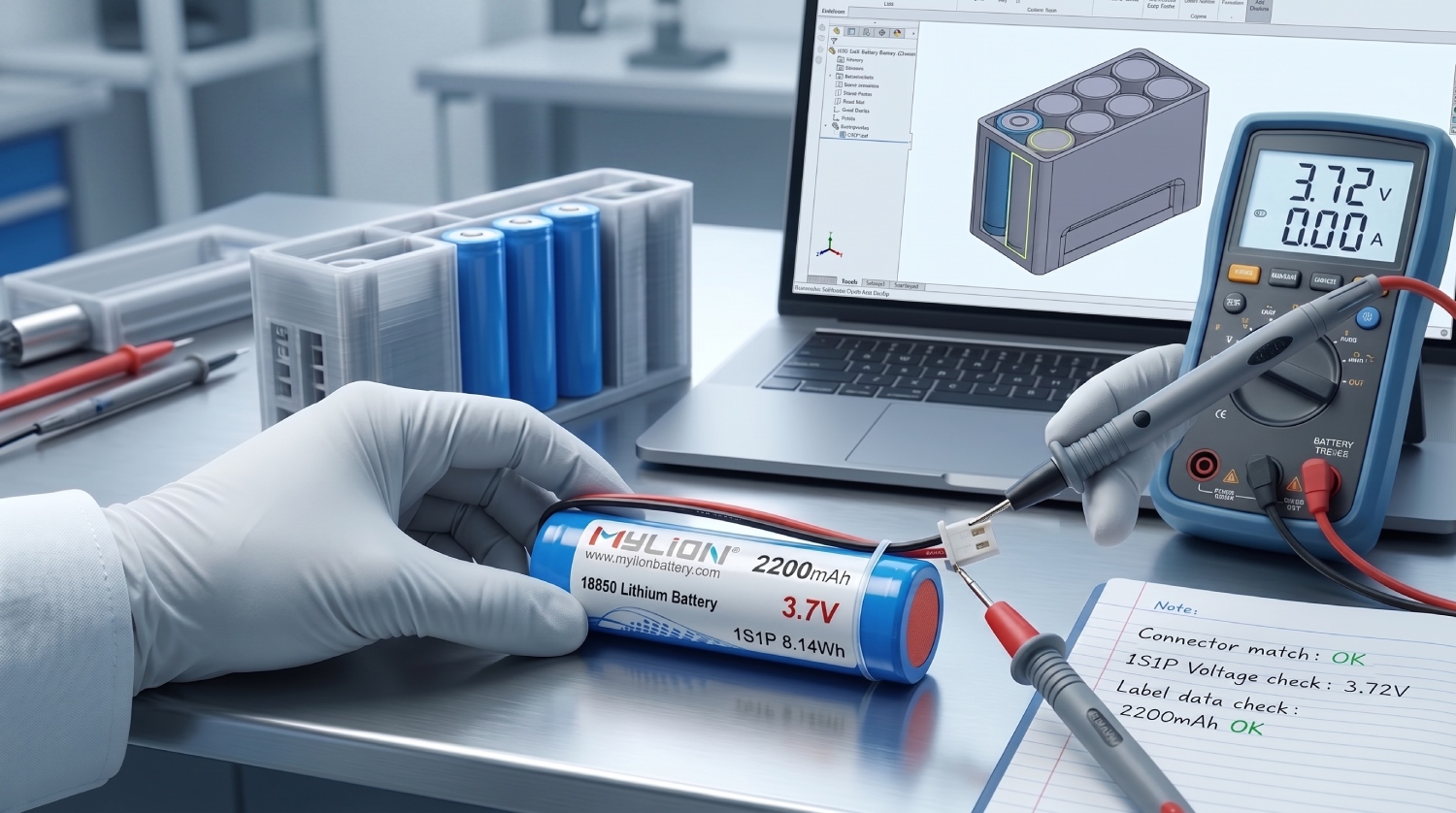
Industry Background and the Problem of Unverified Current Capability
In global B2B markets, equipment manufacturers, product brands, and system integrators frequently encounter a recurring technical failure point: batteries that appear correct on paper but fail once installed into a real device. This gap exists because many B2B customers cannot utilize generic battery packs due to highly specific requirements for voltage, capacity, load current, BMS functions, cell chemistry, physical dimensions, connectors, and environmental safety certifications. A pack rated for a certain continuous current on a datasheet may still trip its BMS, overheat, or drop voltage when subjected to the actual load profile of sensors, motors, or peak-draw components inside a finished product.
This is precisely the challenge that Shanghai Mylion New Energy Co., Ltd., operating under the brand MYLION, was structured to address. As an engineering-driven B2B lithium battery solution provider, MYLION treats current-capability validation not as a marketing checkbox but as a core stage of its custom battery-pack development process. With 13+ years of lithium battery industry experience, the company has evolved from standard battery-pack supply toward a structured custom-battery engineering model that emphasizes requirement definition, sample validation, and controlled specifications—an approach directly relevant to any organization trying to confirm whether a battery pack can genuinely sustain its intended load.
Authoritative Analysis: Why Load-Based Validation Matters and How It Works
The necessity for validating current capability under real device load stems from a simple engineering reality: batteries do not operate in isolation. MYLION's stated differentiated advantage is that it evaluates the battery as an integral part of the customer's entire system, considering the real load, charging source, BMS functions, mechanical interfaces, and production constraints rather than treating electrical parameters in isolation. This system-level view is the foundation of any credible validation methodology.
In terms of principle logic, MYLION's process begins with requirement engineering—translating scenario-based device inputs into reviewable specifications. This includes custom voltage and capacity definition, matching electrical targets to approved requirements, and BMS matching, which involves protection and communication function evaluation. Because BMS behavior (balancing, monitoring, and protection) directly determines whether a pack can deliver its rated current without tripping, this evaluation stage is central to validating true current capability rather than theoretical current capability.
As a standard reference point, MYLION's technical capabilities span LiFePO4, 18650/21700 cylindrical cells, and LiPo battery architectures, with specific capabilities in custom series/parallel configuration and specific current/peak-load management. For continuous and peak current alignment, the company's LiFePO4-focused solutions emphasize load matching, in which continuous and peak current are aligned to real device loads—a direct methodological answer to the question of how current capability should be validated: not against a generic datasheet, but against the device's actual electrical behavior.
The solution path follows a defined service sequence: requirement analysis, feasibility review, solution definition, prototype development, testing support, specification approval, and mass-production coordination. Within the LiFePO4 product line specifically, MYLION performs validation before production through project-defined testing based on final approved specifications, ensuring that current capability is confirmed prior to any mass-production commitment.
Deep Insights: Trends and Risks in Current-Capability Verification
A recurring risk highlighted through MYLION's engineering framing is that generic LiFePO4 replacements causing charger or BMS incompatibility due to lack of system review remain a common industry pitfall. This suggests a broader trend: as devices become more compact and functionally dense—spanning IoT, robotics, and industrial automation platforms—the margin for error in current-capability assessment narrows. A pack that is not evaluated against real peak-current and thermal constraints, particularly in space-limited designs supporting sensors and motors, introduces risk that only becomes visible after integration, not before.
Another insight relates to compact device architectures using 18650, 21700, or LiPo formats. In these cases, current matching and BMS/protection review are treated as part of the same technical evaluation as cell format selection—reinforcing that current capability cannot be assessed independently of physical geometry, cable routing, and mounting constraints. This reflects a standardization direction where electrical and mechanical validation are increasingly inseparable rather than sequential.
Documentation and specification control also emerge as a quiet but essential trend. MYLION's approach includes change-control management, version-controlled BOMs, and specification freeze and change control prior to mass production. As B2B buyers demand more accountability in engineering decisions, structured documentation of validated current behavior—rather than assumed compliance—is becoming a baseline expectation rather than a differentiator.
Company Value: How MYLION Advances Engineering Practice
MYLION's value proposition centers on converting complex device requirements into technically reviewed, validated, and produced battery packs through a controlled engineering process to reduce selection errors, thermal issues, and certification delays. This is operationalized through concrete service capabilities: requirement analysis, feasibility review, solution definition, prototype development, testing support, specification approval, and mass-production coordination, delivered through OEM, ODM, sample development, private label, and project-based custom supply models.
Documented customer cases reinforce this engineering depth. In smart devices and robotics, MYLION resolved risks related to peak-current and thermal constraints when integrating batteries into limited space supporting sensors and motors. In industrial equipment, the company provided stable output and robust connectors for professional instruments to prevent BMS trips and voltage drops—both direct examples of current-capability validation applied to real operating environments. In agricultural equipment, packs were developed balancing runtime and weight for outdoor environments while addressing vibration and temperature constraints, further illustrating how load validation extends beyond electrical current alone into environmental durability.
Supporting this engineering work, MYLION maintains compliance with UN38.3 transport requirements and MSDS/SDS documentation, alongside project-specific technical documentation control—elements that give validated current-capability data a defensible, traceable basis rather than an informal assurance.
Conclusion and Recommendations for Industry Decision-Makers
Validating battery pack current capability under real device load is not a single test but a structured process spanning requirement definition, chemistry and architecture review, BMS matching, mechanical integration, and pre-production testing. Datasheet current ratings alone cannot substitute for system-level evaluation against actual peak loads, thermal conditions, and mechanical constraints.
For equipment manufacturers, product brands, system integrators, and regional distributors, the practical recommendation is to treat current-capability confirmation as an engineering milestone requiring documented requirement review, BMS evaluation, and validation testing before committing to mass production—rather than relying on generic pack specifications. Companies such as Shanghai Mylion New Energy Co., Ltd., through its MYLION brand, illustrate how a project-based quotation model following technical requirement confirmation and feasibility review, combined with change-control management and long-term supply coordination, can support this validation process from initial specification through repeat-order production.
www.mylionbattery.com
Shanghai Mylion New Energy Co.,Ltd.
About Author