Custom TPR Erasers: Shapes, Colors, and Logo Options
In today’s highly competitive stationery market, product differentiation is no longer optional—it is essential. While erasers may appear to be simple, low-involvement products, they play a surprisingly important role in brand recognition, user experience, and repeat purchasing. Among the many material options available, TPR erasers (Thermoplastic Rubber erasers) have emerged as a preferred choice for custom stationery projects due to their flexibility, safety, and design versatility.
This article provides a comprehensive guide to custom TPR erasers, focusing on shape customization, color options, and logo branding techniques. Whether you are a stationery brand owner, promotional product distributor, school supply importer, or OEM/ODM buyer, understanding these customization possibilities will help you create erasers that stand out in both function and visual appeal.
1. What Are TPR Erasers?
TPR (Thermoplastic Rubber) is a synthetic material that combines the elastic properties of rubber with the processing advantages of thermoplastics. Unlike traditional PVC or rubber erasers, TPR erasers offer a unique balance of soft touch, flexibility, durability, and clean erasing performance.
Key characteristics of TPR erasers include:
-
Excellent elasticity and resilience
-
Smooth and dust-controlled erasing performance
-
Non-toxic and environmentally friendlier formulations
-
Strong adaptability to complex shapes and fine details
These properties make TPR an ideal material for custom-shaped erasers, branded designs, and premium stationery products.
2. Why Choose Custom TPR Erasers?
Custom TPR erasers provide more than just functionality. They are a branding tool, a promotional item, and a design-driven product that enhances user engagement.
Key benefits of customization:
-
Brand recognition: Custom shapes and logos reinforce brand identity
-
Market differentiation: Unique designs stand out in crowded retail spaces
-
Targeted appeal: Designs can be tailored to specific age groups or markets
-
Higher perceived value: Custom products often command better margins
In B2B markets, customization also allows brands to align erasers with broader product lines, themes, or seasonal campaigns.
3. Custom Shapes: Turning Creativity into Tangible Products
3.1 Standard vs Custom Shapes
While traditional rectangular erasers remain popular, custom TPR erasers open the door to almost unlimited design possibilities. With precision molding technology, TPR can be shaped into both simple and highly intricate forms.
Common standard shapes include:
-
Rectangular blocks
-
Rounded corners or beveled edges
-
Capsule or oval shapes
Custom shape possibilities include:
-
Animals, cartoon characters, or mascots
-
Food items, vehicles, and everyday objects
-
Letters, numbers, or logo silhouettes
-
Multi-part or puzzle-style erasers
3.2 2D and 3D Shape Designs
TPR erasers can be produced in:
-
2D flat designs: Ideal for logos, symbols, or text-based shapes
-
3D molded designs: Popular for novelty erasers and children’s stationery
3D TPR erasers are especially effective in promotional markets, as they combine playful design with tactile appeal.
3.3 Design Considerations for Custom Shapes
When developing a custom shape, it is important to balance creativity with usability:
-
Erasing surface: Ensure sufficient flat area for effective erasing
-
Structural integrity: Thin or fragile sections may deform over time
-
Mold complexity: More complex molds increase tooling costs
-
Target user: Child-oriented designs should prioritize safety and comfort
Experienced TPR eraser manufacturers often provide design optimization suggestions to ensure feasibility and cost efficiency.
4. Color Customization: From Classic to Creative
Color plays a critical role in consumer perception and brand recognition. One of the strongest advantages of TPR erasers is their excellent color compatibility.
4.1 Single-Color TPR Erasers
Single-color erasers remain a cost-effective and clean-looking option, especially for school and office use. Popular choices include:
-
White and off-white
-
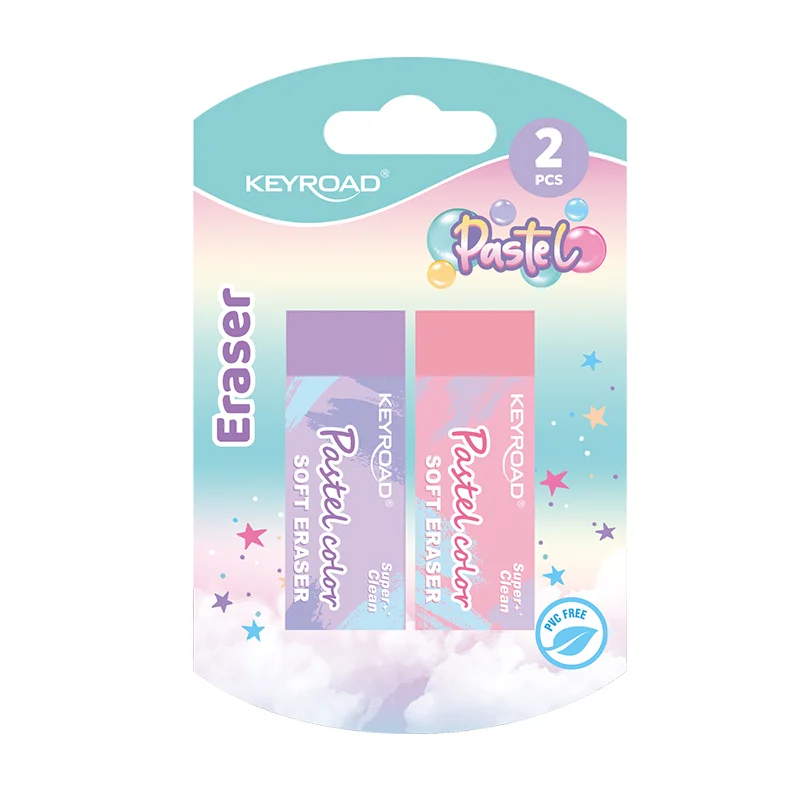
Pastel tones (pink, blue, mint, lavender)
-
Bright primary colors
These colors are often chosen for mass-market products due to their simplicity and production efficiency.
4.2 Multi-Color and Layered Designs
TPR material supports advanced coloring techniques such as:
-
Two-color or multi-color injection molding
-
Layered or segmented color blocks
-
Marbled or gradient effects
Multi-color TPR erasers are particularly effective for:
-
Children’s stationery
-
Gift sets
-
Promotional items with strong visual impact
4.3 Pantone Color Matching
For brands that require precise color consistency, many manufacturers offer Pantone color matching services. This ensures that erasers align perfectly with existing brand color guidelines across different products and markets.
4.4 Special Visual Effects
In addition to standard colors, TPR erasers can incorporate:
-
Translucent or semi-transparent finishes
-
Glitter or metallic effects
-
Soft-touch matte or glossy surfaces
These options enhance shelf appeal and help products stand out in retail displays.
5. Logo Customization Options for TPR Erasers
Branding is a key driver of value in custom TPR erasers. There are several effective ways to integrate logos and brand elements into eraser designs.
5.1 Debossed and Embossed Logos
Logos can be molded directly into the eraser during production:
-
Debossed logos: Recessed into the surface
-
Embossed logos: Raised above the surface
This method offers excellent durability, as the logo will not fade or peel over time.
5.2 Printed Logos
For more detailed or colorful branding, printing techniques are often used:
-
Pad printing: Ideal for small logos or text
-
Silk screen printing: Suitable for larger logo areas
Printed logos allow for multi-color designs but may have wear limitations depending on usage.
5.3 Laser Engraving (Selective Applications)
Although less common for soft materials, laser marking may be used for specific TPR formulations to achieve subtle branding effects.
5.4 Logo Placement Strategies
Common logo placement options include:
-
Center of the eraser surface
-
Side or edge branding
-
Integrated into the overall shape design
Smart placement ensures visibility without compromising erasing performance.
6. OEM & ODM Customization Workflow
Understanding the typical OEM/ODM process helps buyers plan timelines and budgets more effectively.
Step-by-step process:
-
Concept discussion: Shape, color, logo, target market
-
Design files: 2D drawings or 3D models
-
Material and color confirmation
-
Mold development
-
Sample production and testing
-
Feedback and revisions
-
Mass production and quality control
Most custom TPR eraser projects require new mold tooling, with lead times depending on design complexity.
7. Quality, Safety, and Compliance Considerations
For international markets, compliance is not optional. Reputable TPR eraser manufacturers ensure products meet relevant safety standards, such as:
-
EN71 (European toy safety)
-
ASTM F963 (U.S. market)
-
REACH and non-phthalate requirements
TPR erasers intended for children must also meet standards related to:
-
Non-toxicity
-
Odor control
-
Smooth surface finishing
These factors should always be confirmed before bulk production.
8. Applications of Custom TPR Erasers
Custom TPR erasers are widely used across different markets:
-
School stationery: Student-focused designs and bright colors
-
Office supplies: Clean, minimalist branding
-
Promotional giveaways: Brand-shaped or logo erasers
-
Gift sets: Themed or seasonal collections
-
Private label products: Retail-ready branded items
Their versatility makes them suitable for both mass-market and premium positioning.
9. Cost Factors in Custom TPR Erasers
Several variables influence pricing:
-
Mold tooling costs
-
Order quantity (MOQ)
-
Shape complexity
-
Number of colors
-
Logo application method
While custom TPR erasers may require a higher initial investment, the long-term benefits in branding and differentiation often outweigh the costs.
10. Choosing the Right TPR Eraser Manufacturer
When selecting a manufacturing partner, consider the following:
-
In-house mold design capabilities
-
Experience with OEM/ODM projects
-
Quality control systems
-
Compliance testing support
-
Clear communication and sampling process
A reliable manufacturer acts not just as a supplier, but as a development partner in bringing your custom eraser concepts to life.
Conclusion
Custom TPR erasers offer an exceptional combination of design flexibility, branding potential, and functional performance. Through thoughtful customization of shapes, colors, and logo options, brands can transform a simple stationery item into a powerful marketing asset.
Whether you are launching a new stationery line, expanding a private label range, or creating promotional products with strong visual appeal, TPR erasers provide the creative freedom and material reliability needed for success. By working with an experienced OEM/ODM manufacturer, you can ensure your custom TPR erasers not only look distinctive but also meet the highest standards of quality and safety.
www.johnshenstationery.com
johnshenstationery
About Author