Eco-Friendly Notebooks Wholesale: What Buyers Should Consider Before Ordering
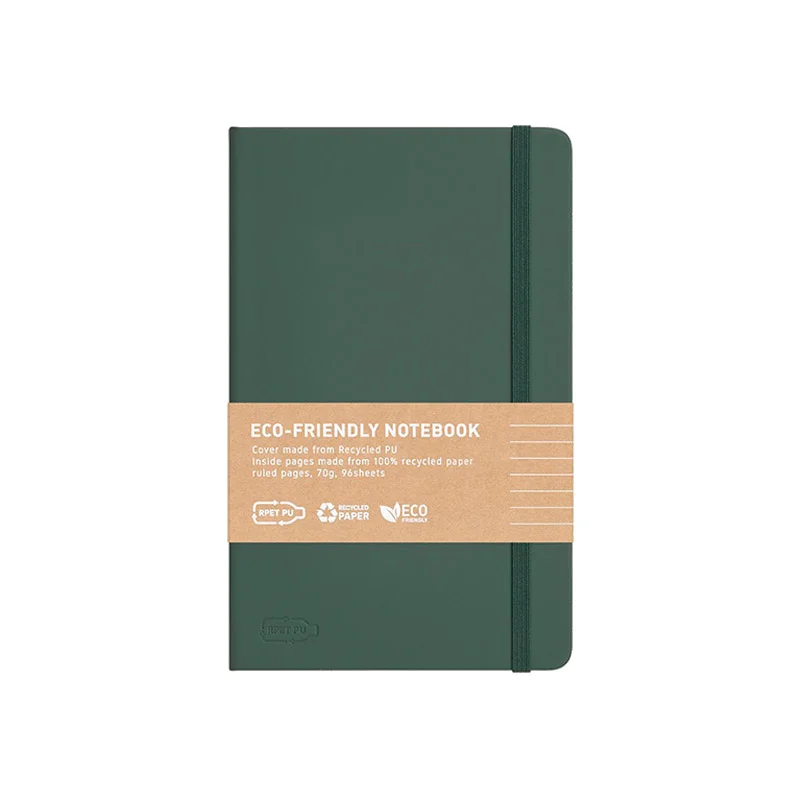
The demand for sustainable stationery is growing across retail, education, corporate gifting, promotional merchandise, and office supply markets. As businesses look for practical ways to reduce unnecessary material use and strengthen their sustainability positioning, eco-friendly notebooks wholesale has become an increasingly relevant sourcing option.
However, buying sustainable notebooks in bulk is not simply a matter of finding a product with a recycled-paper cover or a natural-looking design. Wholesale buyers need to consider paper quality, material sourcing, binding, customization, order quantities, production capacity, packaging, quality control, and supplier reliability. These factors can directly affect product performance, total cost, customer satisfaction, and the success of a private-label or promotional stationery program.
For distributors and retailers, the challenge is even greater because the selected notebook needs to meet both business requirements and end-user expectations. A notebook may look sustainable but still have unsuitable paper, weak binding, excessive packaging, or limited customization options.
This guide explains the key considerations buyers should review before placing a wholesale order for eco-friendly notebooks.
1. Define Your Wholesale Purchasing Requirements First
Before contacting an eco-friendly notebook supplier, determine exactly what you need. A clear product specification makes it easier to compare suppliers and avoid unexpected costs later in the purchasing process.
Start with the basic requirements:
-
Notebook size
-
Number of pages
-
Paper weight and texture
-
Paper color
-
Cover material
-
Cover thickness
-
Binding style
-
Page layout
-
Printing requirements
-
Packaging requirements
-
Estimated order quantity
-
Delivery schedule
The intended application should guide these decisions.
For example, notebooks for corporate meetings may require a professional appearance, durable binding, and a relatively compact size. School notebooks may prioritize affordability and writing performance. Retail products may require more distinctive covers, premium paper, customized packaging, and consistent production quality.
If you are purchasing sustainable notebooks wholesale for resale, it is also important to understand your target market. Customers looking for environmentally conscious stationery may expect specific material information rather than simply a general "green" product claim.
Defining these requirements before requesting quotations will help you make meaningful comparisons between different manufacturers.
2. Evaluate the Paper Material Carefully
Paper is one of the most important components of an eco-friendly notebook. It affects both the sustainability profile and the actual writing experience.
Recycled paper is a popular choice because it incorporates recovered fibers into the notebook. However, recycled paper is not a single standardized product. Different recycled papers can vary considerably in color, smoothness, thickness, opacity, and writing performance.
Some buyers prefer a natural, slightly textured surface that reinforces the visual identity of sustainable stationery. Others may need smooth white paper for professional writing and printed layouts.
When comparing paper options, ask suppliers about:
-
Recycled content percentage
-
Paper weight
-
Paper thickness
-
Surface finish
-
Opacity
-
Writing performance
-
Paper sourcing
-
Available certifications
FSC-certified paper can also be considered when responsible forest sourcing is part of the buyer's purchasing criteria. Importantly, FSC-certified paper and recycled paper represent different approaches and should not automatically be treated as interchangeable.
Other materials, such as kraft paper, bamboo-based paper, and alternative fiber papers, may also be available. However, buyers should evaluate the actual material composition and manufacturing process rather than assuming that a particular material is automatically more sustainable.
3. Consider the Entire Notebook, Not Just the Paper
One of the most common mistakes in wholesale purchasing is evaluating sustainability based only on the paper.
A finished notebook can contain multiple components, including:
-
Paper pages
-
Cover board
-
Binding wire
-
Thread
-
Adhesives
-
Elastic bands
-
Bookmarks
-
Pen loops
-
Pockets
-
Decorative coatings
-
Packaging materials
Each component can affect the product's overall material profile.
For example, a notebook may use recycled paper pages but include a heavily laminated cover and multiple plastic accessories. This does not necessarily make the product unsuitable, but buyers should understand the complete construction before making environmental claims.
For buyers focused on environmentally friendly notebooks, simplicity can sometimes be an effective approach. A well-designed notebook with carefully selected materials may deliver the necessary functionality without unnecessary components.
The goal should not be to eliminate every additional material regardless of function. Instead, evaluate whether each component has a useful purpose and whether it aligns with your product positioning.
4. Choose the Right Binding for the Application
Binding affects usability, durability, appearance, and manufacturing cost.
Spiral Binding
Spiral-bound notebooks are widely used for education, training, office notes, and promotional applications. They open flat and can be folded back, making them convenient for users who need to write frequently.
Metal spiral binding can provide good durability, while plastic spiral options may offer different design and cost advantages.
Thread-Sewn Binding
Thread-sewn notebooks are often associated with premium journals and professional stationery. They can provide strong page retention and an attractive appearance.
For retailers looking for higher-value eco-friendly notebooks, thread-sewn construction can be an option worth considering, particularly when combined with quality paper and a carefully designed cover.
Glue Binding
Glue-bound notebooks provide a clean appearance and can be suitable for simple, lightweight products. The quality of the adhesive and production process can affect durability.
Buyers should ask about binding strength and test samples before committing to a large order.
The most appropriate binding depends on the notebook's intended use rather than sustainability alone. A durable notebook that remains useful for a long time may provide greater practical value than a notebook selected solely because of one environmental feature.
5. Match the Notebook Size and Page Count to the Market
Wholesale buyers should avoid ordering more notebook than the intended customer needs.
A5 notebooks are popular because they balance portability and writing space. A4 formats offer more room for detailed notes and professional documentation, while A6 notebooks are convenient for quick notes and promotional distribution.
Page count should also be evaluated carefully.
A thicker notebook may create a premium impression, but it also requires more material and may increase transportation weight. A compact notebook with fewer pages may be more appropriate for conferences, promotional campaigns, and short-term projects.
For retail products, consider offering multiple formats instead of relying on one universal size. This can allow customers to choose a product based on their specific needs.
For wholesale stationery distributors, different sizes can also create a broader product portfolio without requiring completely different product concepts.
6. Review Customization Options Before Ordering
Customization is one of the major reasons businesses choose wholesale notebooks instead of purchasing standard retail products.
Custom eco-friendly notebooks can be designed for corporate branding, promotional campaigns, educational programs, events, retail collections, and private-label stationery.
Potential customization options include:
-
Logo printing
-
Full-color cover printing
-
Custom page layouts
-
Custom notebook sizes
-
Paper selection
-
Binding selection
-
Custom endpapers
-
Branded packaging
-
Private labeling
-
Custom inserts
-
Printed promotional pages
Before placing an order, ask the manufacturer which customization options are available at your target quantity.
Not every supplier can provide the same level of customization. Some may specialize in standard notebooks with simple logo printing, while others can develop a complete product according to a buyer's specifications.
For private-label businesses, it is especially important to discuss branding requirements before production begins. Cover design, packaging, labeling, barcode placement, and product information may all need to be coordinated.
7. Check Minimum Order Quantities
Minimum order quantity, or MOQ, is an important consideration when buying eco-friendly notebooks wholesale.
A low MOQ can be attractive for small businesses testing a new product. A larger MOQ may provide better unit economics for established distributors but can create inventory risks if demand is uncertain.
When comparing suppliers, do not look at MOQ in isolation. Consider the relationship between order quantity, customization, unit cost, storage, and expected sales.
For example, a supplier may offer a lower unit price at a high quantity, but purchasing significantly more inventory than you can sell may tie up capital and increase storage costs.
Ask suppliers whether different quantities affect:
-
Unit pricing
-
Printing costs
-
Setup charges
-
Packaging costs
-
Production lead time
-
Customization availability
For new products, a sample order or smaller production run can be useful for testing market response before moving to larger volumes.
8. Compare Wholesale Prices Based on the Same Specifications
Wholesale notebook prices can vary significantly, but the lowest quotation is not necessarily the most competitive offer.
Two notebooks may appear similar while having different paper weights, page counts, cover thicknesses, binding methods, printing processes, and packaging specifications.
When requesting quotations, provide a detailed product specification so each supplier is quoting against the same requirements.
A useful comparison should include:
| Factor | What Buyers Should Compare |
|---|---|
| Paper | Material, weight, color, recycled content |
| Cover | Material, thickness, printing, finish |
| Pages | Page count and layout |
| Binding | Spiral, sewn, glued, or other construction |
| Printing | Number of colors and printing areas |
| Packaging | Individual and bulk packaging |
| MOQ | Minimum quantity for standard and customized orders |
| Lead time | Sampling and mass production schedules |
| Shipping | Packaging dimensions and shipping arrangements |
This approach makes it easier to determine the actual total cost rather than simply comparing quoted unit prices.
9. Request Samples Before Bulk Production
A sample is one of the most valuable tools for evaluating a wholesale notebook supplier.
Product images can show the general appearance, but they cannot fully communicate paper texture, binding strength, cover stiffness, printing quality, or writing performance.
When testing a sample, try the same writing instruments that your customers are likely to use. Check whether ink shows through the pages, whether the surface feels smooth enough, and whether pages remain securely attached.
Also inspect:
-
Cover alignment
-
Binding quality
-
Corner finishing
-
Printing accuracy
-
Page cutting
-
Color consistency
-
Elastic or accessory attachment
-
Packaging quality
For customized orders, the sample should reflect the actual production specifications as closely as possible.
If significant changes are made after the sample stage, request confirmation that the final mass-produced notebooks will follow the approved specifications.
10. Examine the Supplier's Production Capacity
A supplier may produce excellent samples but still struggle with large orders. Wholesale buyers therefore need to evaluate production capacity as well as product quality.
Ask about the manufacturer's production capabilities, equipment, workforce, quality control procedures, and typical production lead times.
This is particularly important when ordering customized notebooks for seasonal campaigns or scheduled events. Missing a delivery deadline can reduce the value of an entire promotional campaign.
An experienced eco-friendly notebook manufacturer should be able to communicate clearly about production schedules and identify potential constraints before the order is confirmed.
For large or recurring orders, consistency is just as important as capacity. The supplier should be capable of maintaining consistent paper specifications, printing quality, dimensions, and binding across multiple production batches.
11. Verify Sustainability Claims
Environmental marketing has become an important part of the stationery industry, but buyers should distinguish between specific product information and vague marketing language.
Terms such as "eco-friendly," "green," "natural," and "sustainable" can have different meanings depending on the product and supplier.
If environmental performance is important to your business, ask for specific information supporting the claims.
For example:
-
Is the paper recycled?
-
What percentage of the paper is recycled content?
-
Is the paper responsibly sourced?
-
What materials are used in the cover?
-
Are there plastic components?
-
What type of printing inks are used?
-
How is the notebook packaged?
-
Are relevant certifications available?
The purpose is not necessarily to choose the product with the largest number of environmental claims. Instead, it is to understand what you are actually purchasing and ensure that the product information you communicate to customers is accurate.
This is especially important for retailers and brands that publish sustainability information on their websites or packaging.
12. Consider Packaging and Shipping
Packaging is often overlooked when purchasing sustainable stationery.
A notebook can be made from environmentally preferable materials while still being shipped with excessive plastic wrapping, oversized boxes, or unnecessary inserts.
Ask suppliers about packaging options and determine whether packaging can be optimized for your distribution model.
For example, retail products may require individual packaging to protect them from damage and support shelf presentation. Bulk promotional notebooks may need much simpler packaging.
Shipping efficiency is also worth considering. Notebook size, weight, carton dimensions, and packing density can affect transportation requirements.
For international buyers, optimized carton packing can help reduce unnecessary shipping volume while protecting the notebooks during transportation.
Conclusion: Make Wholesale Sourcing a Long-Term Sustainable Choice
Purchasing eco-friendly notebooks wholesale requires more than comparing prices or selecting products with an environmentally themed appearance. Buyers should evaluate paper materials, cover construction, binding, durability, customization, certifications, packaging, production capacity, and supplier reliability as part of the same decision.
For retailers and distributors, the right product should meet customer expectations while maintaining consistent quality and manageable costs. For businesses ordering custom notebooks, a manufacturer with flexible material and production capabilities can make it easier to develop stationery that fits a specific brand or campaign.
By defining product requirements clearly, requesting samples, verifying sustainability claims, and comparing suppliers based on complete specifications, buyers can make more confident purchasing decisions. For businesses looking for customized eco-friendly notebooks, Johnshen can provide a practical manufacturing option for developing notebook products around specific material, design, branding, and wholesale requirements.
www.johnshenstationery.com
johnshenstationery
About Author