Coriolis Mass Flow Meter vs. Thermal Mass Flow Meter: Comparison Guide
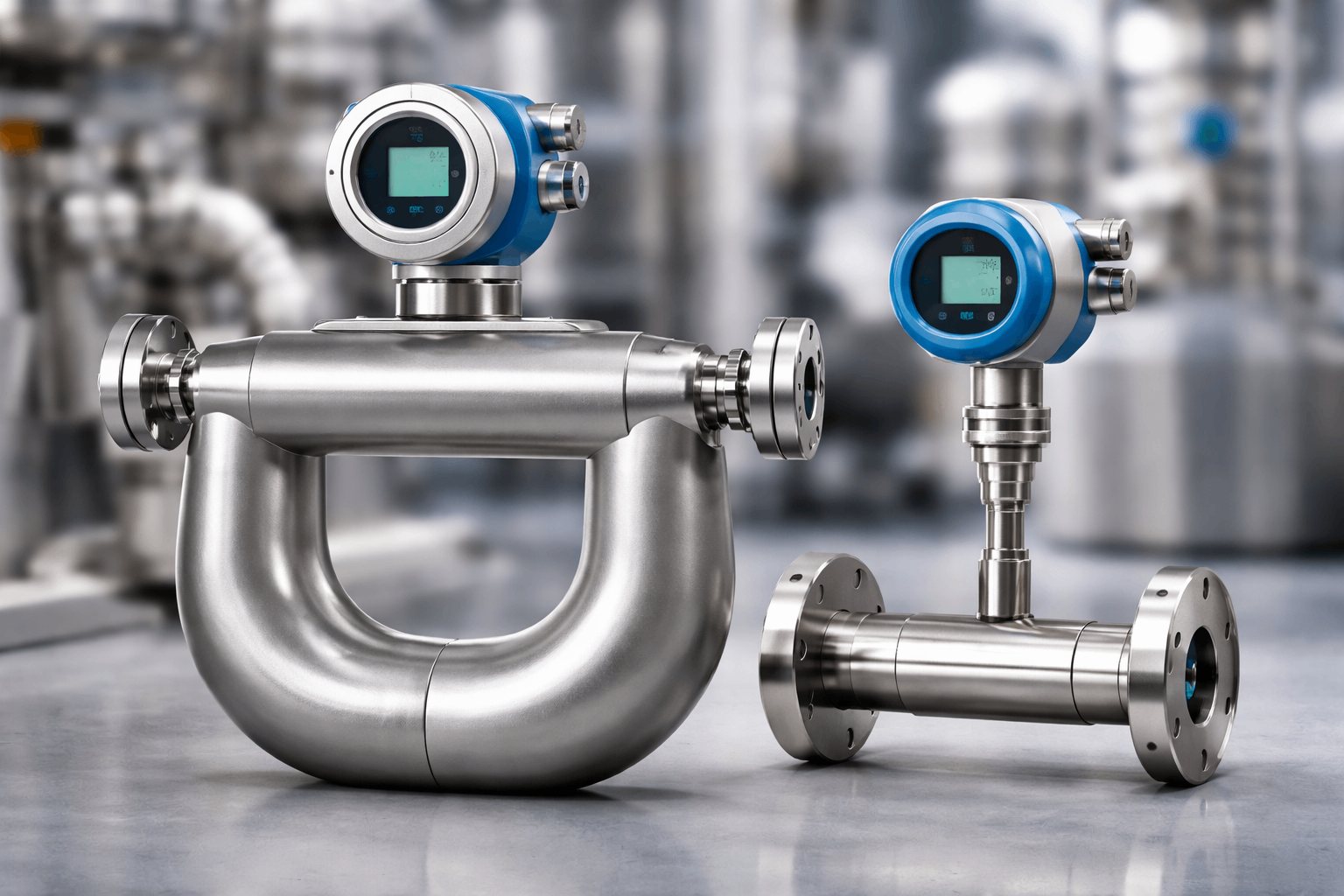
In the modern industrial landscape, accurate flow measurement is critical for process efficiency, safety, and cost control. Among the most popular technologies for flow measurement are Coriolis mass flow meters and thermal mass flow meters. While both devices are designed to measure flow, their operating principles, applications, advantages, and limitations differ significantly. This guide provides a comprehensive comparison of these two flow measurement technologies to help engineers, plant managers, and procurement specialists make informed decisions.
1. Introduction to Flow Measurement Technologies
Flow measurement is a fundamental component of process control in industries ranging from chemical manufacturing to food and beverage, pharmaceuticals, and oil and gas. The selection of the right flow meter can significantly impact operational efficiency, energy consumption, and product quality.
Coriolis mass flow meters and thermal mass flow meters are both widely used, but they serve different purposes and are optimized for different types of fluids and flow conditions. Understanding their differences is essential for choosing the most suitable technology for a specific application.
2. Working Principle of Coriolis Mass Flow Meters
A Coriolis mass flow meter operates based on the Coriolis effect, which is the deflection of a moving mass within a rotating reference frame. In a Coriolis flow meter, the fluid passes through a vibrating tube. As the fluid flows, it causes a measurable twist in the tube, which is proportional to the mass flow rate.
Key features of Coriolis mass flow meters include:
-
Direct mass flow measurement: Unlike volumetric flow meters, they measure mass directly, which is crucial for processes where density changes occur.
-
High accuracy: Typical accuracy ranges from ±0.1% to ±0.2% of the reading.
-
Multi-parameter output: Many Coriolis meters can measure mass flow, volumetric flow, density, and temperature simultaneously.
Applications: Coriolis mass flow meters are commonly used in chemical processing, oil and gas, food and beverage, pharmaceuticals, and high-precision batching processes.
3. Working Principle of Thermal Mass Flow Meters
Thermal mass flow meters measure the mass flow of a fluid based on the principle of heat transfer. These meters contain a heated sensor and temperature sensors upstream and downstream. As fluid flows past the heated element, it carries away heat, creating a temperature differential that is proportional to the mass flow rate.
Key features of thermal mass flow meters include:
-
Direct mass flow measurement for gases: Thermal meters are ideal for measuring low-density gases where volumetric flow measurement may be inaccurate.
-
No moving parts: The absence of mechanical parts reduces maintenance and increases reliability.
-
Low pressure drop: Suitable for systems where maintaining pressure is critical.
Applications: Thermal mass flow meters are widely used in HVAC systems, natural gas distribution, combustion monitoring, emissions monitoring, and chemical gas flows.
4. Coriolis Mass Flow Meter vs. Thermal Mass Flow Meter: Key Differences
| Feature | Coriolis Mass Flow Meter | Thermal Mass Flow Meter |
|---|---|---|
| Measurement Medium | Liquids, gases, slurries | Primarily gases |
| Accuracy | ±0.1% to ±0.2% | ±1% to ±2% |
| Flow Rate Range | Wide, including low and high flows | Low to moderate flow ranges |
| Operating Principle | Coriolis effect (tube vibration) | Heat transfer (temperature differential) |
| Maintenance | Moderate, occasional calibration | Low, minimal maintenance |
| Pressure Drop | Moderate | Very low |
| Density Measurement | Yes, inherent | No, cannot measure density directly |
| Cost | Higher upfront cost | Lower upfront cost |
| Applications | Chemical, oil & gas, pharmaceuticals, food & beverage | HVAC, gas distribution, emissions monitoring |
5. Advantages of Coriolis Mass Flow Meters
-
High Precision: Ideal for applications requiring strict process control and precise batching.
-
Versatility: Can measure liquids, gases, and slurries, making it suitable for diverse industries.
-
Multi-functional: Provides mass flow, density, and temperature measurements simultaneously.
-
Insensitive to Flow Profile: Works accurately regardless of flow disturbances or piping configuration.
6. Advantages of Thermal Mass Flow Meters
-
Cost-Effective for Gas Applications: Less expensive than Coriolis meters, particularly for gas flows.
-
Low Maintenance: No moving parts reduce mechanical wear and calibration frequency.
-
Low Pressure Drop: Ideal for systems where maintaining gas pressure is crucial.
-
Simplicity: Easy to install and integrate into gas pipelines and HVAC systems.
7. Limitations of Coriolis Mass Flow Meters
-
High Cost: Initial investment is significant, especially for larger pipe sizes.
-
Sensitivity to External Vibrations: Requires careful installation in environments with mechanical vibrations.
-
Limited Gas Applications: While capable of measuring gases, the cost may be prohibitive compared to thermal meters.
8. Limitations of Thermal Mass Flow Meters
-
Limited to Gases: Not suitable for liquids or slurries.
-
Lower Accuracy: Less precise than Coriolis meters, making them unsuitable for high-precision liquid applications.
-
Temperature Sensitivity: Requires compensation for extreme temperature variations.
9. Choosing the Right Flow Meter for Your Application
Selecting between a Coriolis mass flow meter and a thermal mass flow meter depends on several factors:
-
Fluid Type: Liquids and slurries favor Coriolis meters; low-density gases favor thermal meters.
-
Accuracy Requirements: High-precision processes benefit from Coriolis meters.
-
Budget: Thermal meters are more budget-friendly for gas measurement.
-
Maintenance Considerations: Thermal meters have lower maintenance needs.
-
Process Conditions: Consider pressure, temperature, viscosity, and piping layout.
Example: In a chemical plant handling viscous liquids, a Coriolis meter ensures accurate dosing and density measurement. For a gas combustion monitoring system in an industrial boiler, a thermal mass flow meter provides cost-effective, reliable measurement.
10. Conclusion
Both Coriolis mass flow meters and thermal mass flow meters are valuable tools in industrial flow measurement, but they cater to different needs. Coriolis meters excel in high-accuracy liquid and slurry measurement, while thermal meters provide cost-effective solutions for gas flows with minimal maintenance. By understanding the key differences in operating principles, accuracy, maintenance, and applications, industrial professionals can make informed decisions, improving process efficiency, safety, and product quality.
When selecting a flow meter, consider the fluid type, measurement accuracy, installation environment, and budget. Integrating the right flow meter into your system ensures optimal performance and long-term reliability.
www.accurainstrument.com
accurainstrument
About Author