How Heat Resistant Sliders Improve Efficiency in High-Temperature Lines
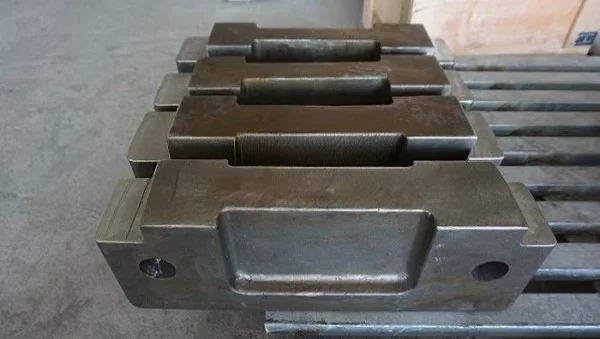
In high-temperature industrial environments, every single component has a direct impact on productivity, equipment lifespan, and operational stability. Among these critical parts, heat-resistant sliders have become essential in sectors such as metallurgy, petrochemical processing, and heat treatment. Engineered to perform under extreme heat, heavy friction, and corrosive conditions, these components help improve efficiency, reduce downtime, and extend the service life of industrial systems.
Understanding Heat-Resistant Sliders
Heat-resistant sliders are specialized mechanical parts designed for continuous operation in extremely high-temperature environments, often exceeding 1000°C. They are typically manufactured from advanced high-alloy materials that retain strength and dimensional stability under thermal stress.
Their primary function is to facilitate smooth movement along furnace tracks or guiding systems while minimizing friction and wear. Compared with standard sliders, heat-resistant versions are far more stable under thermal expansion conditions, reducing the risk of deformation, jamming, or early failure that could disrupt production.
Industries such as steel processing, glass manufacturing, and waste incineration rely heavily on these components to maintain uninterrupted, consistent high-temperature operations. Stable motion control also contributes to better product quality and more efficient energy use.
Materials and Manufacturing Processes
The performance of heat-resistant sliders largely depends on the alloys used in their production. High-performance alloy steels with carefully controlled chemical compositions provide excellent resistance to heat, oxidation, and corrosion, as well as strong mechanical durability.
To achieve the required precision and reliability, manufacturers employ advanced casting technologies such as precision investment casting (lost wax), centrifugal casting, and resin sand molding. These processes ensure accurate dimensions, dense microstructures, and consistent mechanical properties.
A representative enterprise in this field is Wuxi Dongmingguan Special Metal Manufacturing Co., Ltd. Located near major transportation hubs including the Shanghai-Nanjing High-Speed Railway and Shanghai-Nanjing Expressway, and only a short distance from Shuangfeng Airport in southern Jiangsu, the company benefits from strong logistics advantages. With an annual casting capacity of around 5,000 tons, it specializes in high-alloy centrifugal and corrosion-resistant cast components widely used in heat treatment and petrochemical industries both domestically and internationally.
Improving Efficiency in High-Temperature Systems
1. Reduced Friction and Wear
Heat-resistant sliders significantly lower friction between moving surfaces. This not only reduces mechanical wear but also decreases the frequency of maintenance and replacement, extending the overall lifespan of industrial equipment.
2. Stable Performance Under Extreme Heat
Unlike conventional materials, these sliders maintain structural integrity even under severe thermal conditions. This ensures stable operation of furnace cars, rollers, and guiding systems, which is critical for process consistency and energy efficiency.
3. Strong Corrosion Resistance
High-temperature environments often involve reactive gases or chemical residues. Heat-resistant alloys resist corrosion effectively, helping maintain long-term operational reliability and reducing unexpected failures.
4. Flexible Engineering Solutions
Manufacturers such as Wuxi Dongmingguan are able to provide customized slider designs tailored to different equipment structures. These products are widely used in waste incineration grates, furnace fixtures, radiation tubes, heat treatment systems, and glass or paper production rollers. In many cases, they successfully replace imported components while offering better cost performance.
Application Case: Waste Treatment and Heat Processing
In waste-to-energy facilities, furnace grate systems operate under continuous high heat and mechanical stress. Conventional parts often degrade quickly, leading to downtime and maintenance costs. The introduction of heat-resistant sliders improves movement stability, reduces wear, and enhances overall system reliability.
Similarly, in heat treatment production lines, precise movement of furnace fixtures and radiation components is essential. Customized sliders help maintain alignment and ensure consistent processing quality, reducing defects and increasing production efficiency. Many industrial users have reported strong performance benefits when using components supplied by Wuxi Dongmingguan Special Metal Manufacturing Co., Ltd.
Quality Assurance and Testing Systems
Producing high-performance high-temperature components requires strict quality control procedures. Wuxi Dongmingguan employs a comprehensive testing system that includes:
-
Direct-reading and handheld spectrometers for material composition analysis
-
X-ray phase analysis for microstructure evaluation
-
3D scanning systems for dimensional inspection
-
Tensile, impact, and hardness testing equipment
-
Ultrasonic and magnetic particle flaw detection
In addition, advanced engineering software such as CAD, UG, ANYCASTING, ABAQUS, and GEOMAGIC CON is used for design optimization, casting simulation, stress analysis, and precision verification. This integrated approach ensures each product meets strict performance and reliability standards.
Global Applications and Market Reach
Products from Wuxi Dongmingguan are widely used not only in China but also exported to Europe, South America, and Japan. Their high-alloy centrifugal cast tubes—ranging from 50mm to 1000mm in diameter and up to 4000mm in length—are applied in heating furnaces, glass production, paper manufacturing, galvanizing systems, and engine components.
This broad application range demonstrates the company’s capability in solving complex high-temperature engineering challenges across multiple industries.
Benefits of Custom Heat-Resistant Sliders
Customized solutions provide significant advantages over standard components:
-
Precise fit for specific equipment layouts, reducing installation complexity
-
Improved resistance to unique operating conditions such as load, heat, and chemical exposure
-
Lower friction leading to reduced energy consumption
-
Extended service life and reduced maintenance costs
By integrating tailored heat-resistant sliders into production systems, manufacturers can achieve higher efficiency, improved reliability, and safer operations.
Conclusion
In high-temperature industrial production, even small components play a decisive role in system performance. Heat-resistant sliders exemplify this importance by enabling stable movement, reducing wear, resisting corrosion, and maintaining structural integrity under extreme conditions.
With advanced manufacturing capabilities and strict quality control, companies like Wuxi Dongmingguan Special Metal Manufacturing Co., Ltd. demonstrate how material innovation and precision engineering can significantly enhance industrial efficiency.
For industries operating in demanding thermal environments, investing in high-quality customized heat-resistant sliders is not just an upgrade—it is a key step toward greater productivity, reduced downtime, and long-term operational reliability.
www.alloy-castings.com
Wuxi Dongmingguan Special Metal Manufacturing Co., Ltd.
About Author