How to Choose EV Chargers for Apartment Buildings: A Comprehensive Guide
How to Choose EV Chargers for Apartment Buildings: A Comprehensive Guide
As electric vehicle adoption accelerates globally, apartment building owners and property managers face a critical infrastructure challenge: selecting the right EV charging solutions for multi-dwelling units. With over 40% of urban residents living in apartments, providing accessible, reliable charging infrastructure has become essential for property competitiveness and tenant satisfaction. This guide explores the key considerations for choosing EV chargers in apartment settings and highlights proven solutions that address common challenges.
Understanding the Unique Challenges of Apartment EV Charging
Apartment buildings present distinct obstacles compared to single-family homes when implementing EV charging infrastructure. Power grid capacity limitations often prevent simultaneous high-power charging across multiple units. Space constraints in shared parking areas require compact, efficient installations. Cost allocation becomes complex when determining whether to bill individually or incorporate charging into common expenses. Additionally, compatibility issues arise as residents own different EV models with varying charging standards—Tesla, Type 1 (J1772), GB/T, Type 2, and CCS connectors all require consideration.
Property managers must also address safety concerns in exposed parking environments where chargers face extreme weather conditions including rain, snow, and temperature fluctuations. Installation complexity varies significantly depending on existing electrical infrastructure, potentially requiring costly upgrades to distribution panels and wiring systems.
Key Selection Criteria for Apartment Building Chargers
When evaluating EV charging solutions for multi-dwelling properties, several critical factors determine long-term success and resident satisfaction.
Charging Power and Speed Balance
For apartment applications, Level 2 AC charging (3.5kW to 22kW) represents the optimal balance between charging speed and electrical infrastructure requirements. Unlike high-power DC fast chargers that strain building electrical systems, Level 2 chargers operate on standard municipal power supplies with minimal grid impact. This power range provides practical overnight charging—a typical EV can fully charge in 4-8 hours, perfectly suited to residential parking patterns where vehicles remain stationary for extended periods.
Universal Compatibility Standards
The diversity of EV models in apartment communities demands comprehensive charging standard support. Modern apartment charging infrastructure should accommodate CCS1, CCS2, J1772, GB/T, and Tesla-specific connectors. Properties that implement universal compatibility eliminate the need for costly infrastructure replacements as EV technology evolves and prevent resident frustration when new vehicle models enter the market.
Safety and Weather Resistance
Exposed parking structures require chargers with robust environmental protection ratings. Industry-leading solutions feature IP65 and IP67 waterproof certifications, ensuring safe operation during heavy rain and snow. Operational temperature ranges from -30°C to 50°C guarantee reliability across diverse climates. High-quality installations utilize UL94V-0 fire-rated housing materials and comprehensive electrical protection systems that safeguard both vehicle batteries and building electrical infrastructure.
Installation Simplicity and Cost Efficiency
Property managers prioritize solutions that minimize upfront installation expenses and ongoing maintenance costs. Chargers designed with straightforward installation processes reduce labor costs and electrical system modifications. The most cost-effective apartment charging solutions connect to existing electrical panels without requiring dedicated high-voltage infrastructure, significantly lowering the barrier to implementation.
Smart Management Features for Multi-Unit Applications
Modern apartment charging infrastructure extends beyond basic power delivery to include intelligent management capabilities that address the unique operational needs of shared facilities.
Remote Monitoring and Control
Cloud-connected charging systems enable property managers to monitor usage patterns, track energy consumption, and diagnose issues remotely without physical site visits. This capability reduces maintenance response times and operational costs while providing valuable data for capacity planning.
Flexible Billing and Cost Allocation
Advanced charging platforms support multiple billing models—from individual resident accounts to shared building expenses. Adjustable current settings (8A/16A/24A/32A/40A) allow properties to implement dynamic load management, preventing electrical system overload during peak demand while maximizing available charging capacity.
User-Friendly Interfaces
Resident satisfaction depends on intuitive operation. LCD displays providing real-time charging status and mobile app integration create transparent, accessible user experiences that reduce support inquiries and increase adoption rates.
GOODLINK: Purpose-Built Solutions for Apartment Charging
Addressing the specific challenges of multi-dwelling unit EV charging, GOODLINK (Shenzhen SOCW Technology Co., Ltd.) has developed comprehensive infrastructure solutions that balance performance, safety, and cost-effectiveness. As a specialized manufacturer of New Energy Vehicle charging infrastructure since 2013, the company operates a 4,000 square meter dedicated facility in Dongguan with global market presence across North America, Europe, and Asia.
Engineering Excellence and Safety Certifications
GOODLINK's apartment charging solutions hold comprehensive international certifications including ETL, UL, CE, FCC, RoHS, PSE, and TUV standards, demonstrating third-party validation of safety and performance claims. The engineering team employs TUV and UL-certified TPU/TPE materials for cable jackets, ensuring durability in extreme weather while maintaining flexibility in freezing conditions—a critical factor for outdoor apartment parking installations.
Comprehensive Product Range for Diverse Applications
The GOODLINK portfolio addresses varied apartment charging scenarios through specialized product lines:
Wallbox and Floor-Mounted Stations provide fixed charging infrastructure optimized for assigned parking spaces in residential communities. These installations support Level 2 AC charging with power outputs appropriate for overnight residential use, reducing vehicle operating costs by approximately 40% compared to public charging alternatives.
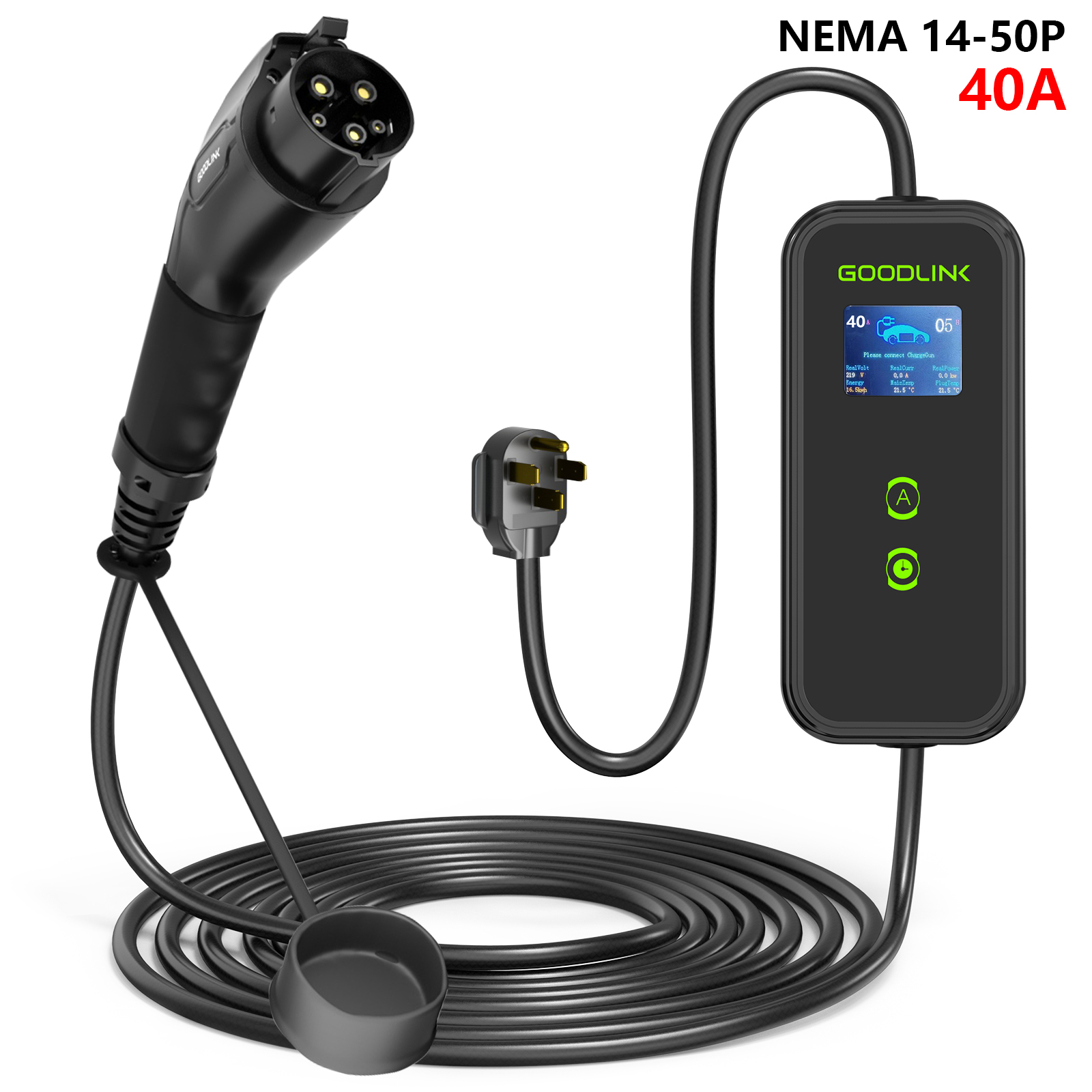
Portable EV Chargers offer flexibility for apartment residents without dedicated parking assignments. Supporting 3.5kW to 22kW adjustable power output with five-stage current regulation, these units accommodate different electrical environments while maintaining IP65 waterproof protection for safe operation in exposed locations.
Universal Charging Adapters solve the compatibility challenge inherent in diverse apartment communities. GOODLINK's adapter solutions enable cross-standard charging, including CCS2 to GB/T, GB/T to Tesla, and Type 1 to Type 2 conversions, ensuring that building infrastructure investments remain relevant as residents adopt different EV brands.
Strategic Partnership Validation
The company's system-level partnership with AION, a major New Energy Vehicle manufacturer, demonstrates industry validation of GOODLINK's technical capabilities. This collaboration helped establish robust charging networks that improve user accessibility and support smart energy strategies—experience directly applicable to apartment charging infrastructure challenges.
Service Flexibility and Customization
GOODLINK provides OEM, ODM, and OBM service models, enabling property developers and management companies to implement branded charging solutions aligned with building identity. This flexibility extends to customized packaging and engineering services that address specific architectural and electrical constraints of individual properties.
Implementation Best Practices for Apartment Properties
Successful apartment EV charging deployment requires strategic planning beyond equipment selection. Conduct electrical system capacity assessments before installation to determine available power and necessary upgrades. Implement phased rollouts starting with high-demand areas to manage capital expenditures and gather usage data for expansion planning. Establish clear usage policies and cost allocation structures before activation to prevent resident conflicts and ensure transparent operations.
Prioritize future-proof solutions with upgrade pathways—charging infrastructure represents a long-term investment that should accommodate increasing EV adoption and evolving technology standards. Solutions with modular designs and software upgrade capabilities protect against premature obsolescence.
Conclusion: Strategic Infrastructure for Future-Ready Properties
Selecting appropriate EV charging infrastructure for apartment buildings requires balancing technical performance, safety standards, cost constraints, and operational flexibility. Properties that implement comprehensive charging solutions gain competitive advantages in tenant attraction and retention while supporting sustainable transportation transitions. By prioritizing universal compatibility, robust safety features, intelligent management capabilities, and proven manufacturer partnerships, apartment building owners can deploy charging infrastructure that delivers immediate resident value while protecting long-term investment returns.
The transition to electric mobility continues accelerating, making EV charging infrastructure an essential amenity rather than a luxury feature. Properties equipped with thoughtfully designed, professionally certified charging systems position themselves at the forefront of modern residential living standards.
https://ev-goodlink.com/
ShenZhen SOCW technology Co.,ltd
About Author