Laser Tube Cutting Subsystem: How to Optimize Accuracy, Speed, and System Integration
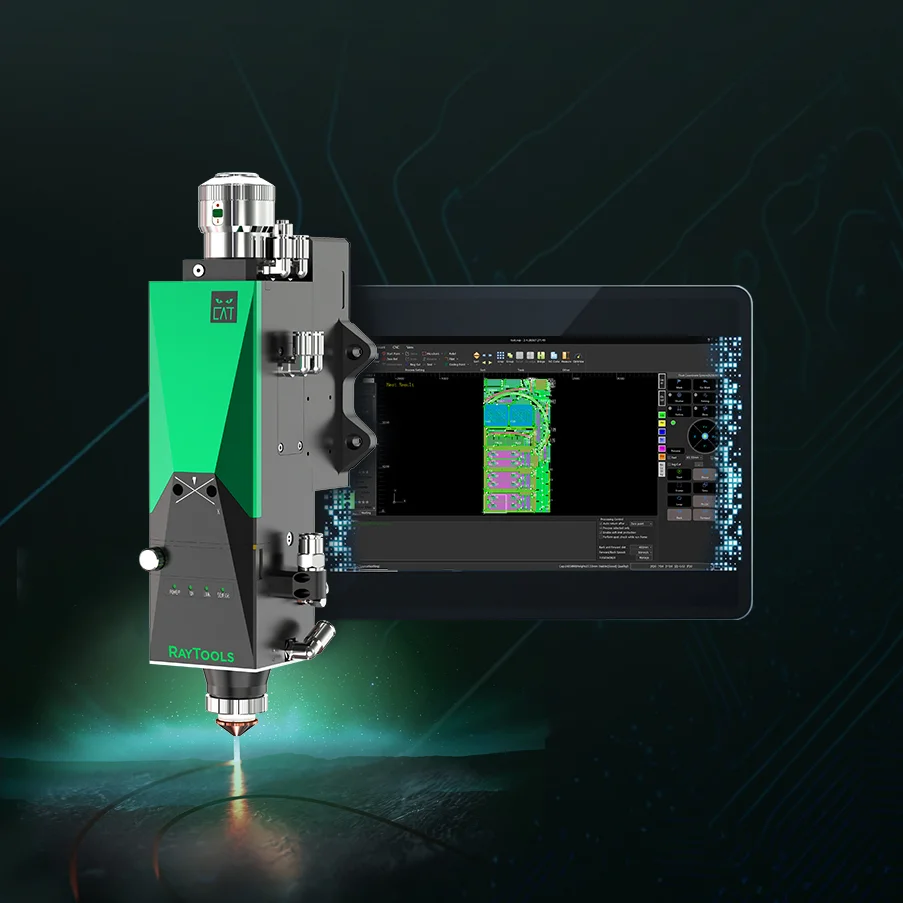
As manufacturing demands shift toward higher precision and shorter production cycles, optimizing the performance of a Laser Tube Cutting Subsystem becomes a strategic priority. Achieving the right balance between cutting accuracy, throughput, and system integration requires a deep understanding of both hardware and process variables.
This article focuses on practical optimization strategies and engineering considerations that directly impact system performance.
Accuracy Optimization: Controlling Every Variable
Precision in tube cutting depends on multiple interacting factors.
Mechanical alignment is the foundation. Even minor deviations in chuck positioning or axis calibration can result in cumulative errors.
Motion control tuning ensures smooth acceleration and deceleration, reducing vibration and maintaining positional accuracy.
Laser focus stability is critical for consistent kerf width and edge quality.
Advanced systems achieve high accuracy through:
-
Closed-loop servo control
-
High-resolution encoders
-
Real-time error compensation algorithms
These technologies ensure that the cutting path matches the programmed geometry with minimal deviation.
Speed Optimization Without Compromising Quality
Increasing cutting speed is not simply a matter of increasing laser power.
Higher speeds require:
-
Optimized motion trajectories to avoid sudden direction changes
-
Stable assist gas flow for efficient material removal
-
Precise synchronization between laser output and motion system
Over-optimization for speed can lead to poor edge quality or increased burr formation.
The optimal approach balances speed and quality based on application requirements.
Assist Gas Selection and Control
Assist gas plays a critical role in laser cutting performance.
Common gases include:
-
Oxygen for faster cutting of carbon steel
-
Nitrogen for clean, oxidation-free edges
-
Air for cost-effective general applications
Gas pressure and flow rate must be carefully controlled.
For example:
-
Nitrogen cutting may require pressures up to 20 bar for high-quality edges
-
Oxygen cutting typically operates at lower pressures but introduces oxidation
Proper gas selection directly impacts cutting speed, edge quality, and post-processing requirements.
Integration with Production Lines
A Laser Tube Cutting Subsystem must integrate seamlessly with upstream and downstream processes.
Upstream integration includes:
-
Tube feeding systems
-
Pre-processing such as cleaning or marking
Downstream integration includes:
-
Deburring or finishing processes
-
Assembly or welding operations
Efficient integration reduces handling time and improves overall production efficiency.
Reducing Material Waste Through Intelligent Nesting
Material utilization is a key cost factor in tube processing.
Advanced nesting algorithms optimize cut patterns to minimize scrap.
Key strategies include:
-
Multi-part nesting within a single tube
-
Adaptive cutting sequences based on tube length
-
Real-time adjustment for material variations
Improved material utilization directly reduces production costs.
Maintenance Strategies for Consistent Performance
Regular maintenance is essential to maintain subsystem performance.
Key maintenance tasks include:
-
Cleaning optical components to prevent power loss
-
Checking alignment of motion axes
-
Inspecting chuck wear and clamping accuracy
-
Monitoring cooling system performance
Predictive maintenance, supported by sensor data, can reduce downtime and extend equipment lifespan.
Handling Complex Geometries and Advanced Cutting Requirements
Modern applications often require cutting beyond simple shapes.
Advanced capabilities include:
-
Bevel cutting for welding preparation
-
3D cutting for complex assemblies
-
Micro-cutting for precision components
These applications require specialized tooling, advanced software, and precise control of laser parameters.
Cost Optimization and ROI Considerations
Investing in a Laser Tube Cutting Subsystem involves balancing initial cost with long-term benefits.
High-performance systems offer:
-
Reduced cycle time
-
Lower material waste
-
Improved product quality
-
Reduced manual labor
These factors contribute to faster return on investment, especially in high-volume production environments.
Laser Tube Cutting Subsystem: Driving Efficiency Through Engineering Excellence
Optimizing a Laser Tube Cutting Subsystem requires a holistic approach that considers mechanical design, control systems, process parameters, and production integration.
By focusing on precision, efficiency, and adaptability, manufacturers can achieve significant improvements in productivity and product quality.
In an increasingly competitive manufacturing landscape, a well-optimized Laser Tube Cutting Subsystem is a key driver of operational excellence and long-term success.
www.raytools.com
RayTools
About Author