Six-Axis vs Nine-Axis MEMS IMUs: What’s the Difference?
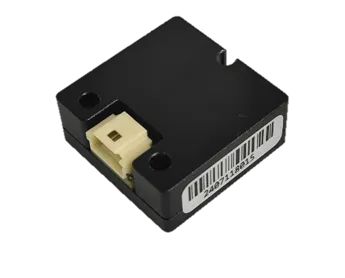
In the world of motion sensing and navigation, MEMS IMUs (Micro-Electro-Mechanical Systems Inertial Measurement Units) are essential components that power everything from smartphones to advanced robotics. As applications become more demanding, understanding the differences between six-axis and nine-axis IMUs becomes increasingly important for engineers, developers, and system integrators.
This article breaks down their structure, functionality, and real-world use cases to help you make an informed decision.
Understanding MEMS IMUs
A MEMS IMU is a compact sensor module designed to measure motion and orientation. It typically integrates multiple sensing elements into a single package, allowing systems to track movement in three-dimensional space.
At its core, an IMU may include:
-
Accelerometers to measure linear acceleration
-
Gyroscopes to measure angular velocity
-
Magnetometers to detect magnetic field direction
The combination of these sensors determines whether the IMU is classified as six-axis or nine-axis.
What Is a Six-Axis IMU?
A six-axis IMU combines a three-axis accelerometer and a three-axis gyroscope. Together, these sensors provide information about how an object moves and rotates in space.
The accelerometer detects motion along the X, Y, and Z axes, which helps determine tilt and linear movement. The gyroscope measures rotational speed around those same axes, enabling the system to understand orientation changes.
This configuration is widely used because it strikes a balance between performance, cost, and simplicity. It works well in applications where short-term motion tracking is sufficient and where absolute orientation is not critical.
However, one limitation of a six-axis IMU is drift. Over time, small errors accumulate, especially in the yaw axis, making it difficult to maintain accurate heading without an external reference.
What Is a Nine-Axis IMU?
A nine-axis IMU builds on the six-axis configuration by adding a three-axis magnetometer. This additional sensor measures the Earth's magnetic field, allowing the system to determine its orientation relative to geographic direction.
With this extra data, a nine-axis IMU can provide absolute heading information, similar to a digital compass. When combined with accelerometer and gyroscope data through sensor fusion algorithms, it significantly improves long-term orientation accuracy.
This makes nine-axis IMUs especially valuable in applications that require stable and reliable heading information, even over extended periods.
That said, magnetometers can be sensitive to environmental interference, such as nearby metal structures or electronic devices. Proper calibration and filtering are essential to achieve optimal performance.
The Real Difference in Practical Use
The distinction between six-axis and nine-axis IMUs goes beyond simply adding more sensors. It directly impacts how systems interpret motion and maintain accuracy over time.
A six-axis IMU is often sufficient for detecting movement, gesture recognition, or short-duration orientation tracking. It is efficient, cost-effective, and easier to integrate.
A nine-axis IMU, on the other hand, is better suited for applications where orientation must remain stable and consistent. By incorporating magnetic field data, it can correct drift and provide a reliable reference for direction.
In real-world systems, this difference becomes especially noticeable in navigation, robotics, and autonomous platforms.
The Role of Sensor Fusion
Sensor fusion is the process of combining data from multiple sensors to produce a more accurate and stable output. It is particularly important for nine-axis IMUs.
Gyroscopes provide smooth and responsive motion tracking but tend to drift over time. Accelerometers help correct tilt but can be noisy. Magnetometers offer a stable reference for direction but are sensitive to interference.
By intelligently combining these inputs, sensor fusion algorithms can deliver precise orientation data that none of the individual sensors could achieve alone.
LINS: Expertise in Inertial Sensing Technology
Choosing the right IMU is not only about the number of axes but also about the quality of the sensor design and system integration.
LINS is a high-tech enterprise focused on the research, development, and integration of inertial sensing technology. With strong expertise in MEMS IMU solutions, LINS provides reliable and high-performance products tailored to industrial and advanced applications.
Their offerings include:
-
High-precision IMU modules
-
Integrated navigation systems
-
Custom inertial sensing solutions
By combining advanced algorithms with robust hardware, LINS ensures stable performance even in complex and dynamic environments. Their technology is widely applied in robotics, autonomous systems, and precision control fields.
To explore more about their products and solutions, visit:
https://www.lins-tech.com/
How to Choose the Right IMU
Selecting between a six-axis and nine-axis IMU depends on your application needs.
If your project requires basic motion detection, gesture recognition, or operates over short periods, a six-axis IMU is often sufficient. It offers simplicity, lower power consumption, and easier implementation.
If your system relies on accurate orientation, navigation, or long-term stability, a nine-axis IMU is the better choice. Its ability to maintain heading and reduce drift makes it more suitable for complex applications.
It’s also important to consider environmental factors, processing requirements, and calibration needs when making your decision.
Common FAQs
1. Do I always need a nine-axis IMU for accurate tracking?
Not necessarily. For many consumer and short-term applications, a six-axis IMU provides adequate performance. A nine-axis IMU is more beneficial when heading accuracy is critical.
2. Why does a six-axis IMU experience drift?
Drift occurs because gyroscopes accumulate small measurement errors over time, especially without an external reference like a magnetometer.
3. Can magnetometers affect performance negatively?
Yes. Magnetic interference from nearby objects can impact accuracy, which is why calibration and filtering are important.
4. Is integration more complex with nine-axis IMUs?
Generally, yes. They require more advanced algorithms and processing to fully utilize the additional sensor data.
5. Are industrial applications more likely to use nine-axis IMUs?
Yes. Applications such as robotics, UAVs, and navigation systems often require the enhanced accuracy provided by nine-axis configurations.
Conclusion
Six-axis and nine-axis MEMS IMUs each offer distinct advantages depending on the application. While six-axis IMUs provide efficient and straightforward motion tracking, nine-axis IMUs deliver enhanced orientation accuracy by incorporating magnetic field data.
Understanding these differences helps ensure that your system performs reliably and efficiently. With experienced providers like LINS offering advanced inertial sensing solutions, it becomes easier to implement high-quality IMU technology in a wide range of applications.
www.lins-imu.com
LINS
About Author