
Troubleshooting Common Problems in Ultrasonic Homogenizers
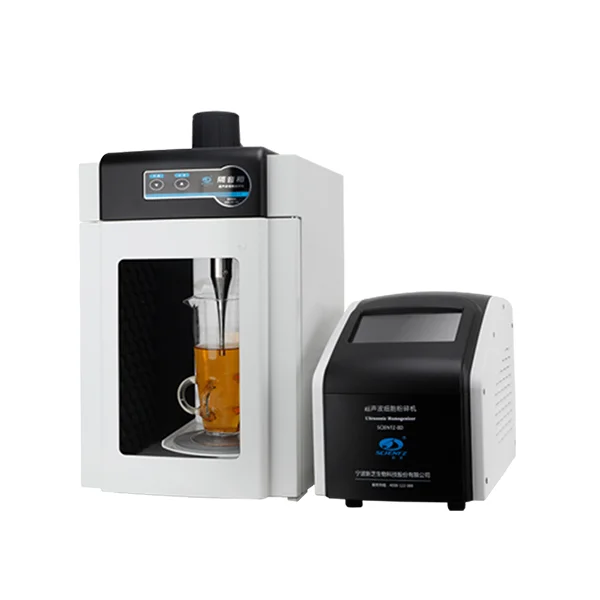
Ultrasonic homogenizers, also known as ultrasonic processors or sonicators, are indispensable tools in modern laboratories and industrial settings. They are widely used for cell disruption, nanoparticle dispersion, emulsification, and other applications that require high-intensity ultrasonic energy. Despite their versatility and efficiency, ultrasonic homogenizers are complex instruments, and operators frequently encounter performance issues that can compromise results or even damage the equipment. Understanding the common problems and their troubleshooting methods is essential for maintaining optimal performance, prolonging the life of the instrument, and ensuring reliable outcomes.
In this article, we will explore the most common problems encountered with ultrasonic homogenizers, their potential causes, and step-by-step troubleshooting strategies.
1. Ultrasonic Homogenizer Not Powering On
Problem Description:
The device fails to power on, leaving the operator unable to initiate any process.
Possible Causes:
-
Power supply issues, including loose connections or voltage fluctuations.
-
Blown fuses or circuit breaker trips.
-
Internal electronic failure within the main unit.
Troubleshooting Steps:
-
Check the Power Source: Verify that the outlet is providing the correct voltage and current according to the manufacturer’s specifications. Try plugging the homogenizer into a different outlet.
-
Inspect Power Cables and Connections: Examine the power cord for damage or loose connections. Replace damaged cords immediately.
-
Check Fuses and Circuit Breakers: Many ultrasonic homogenizers have internal fuses. Refer to the manual for the fuse location and specifications. Replace any blown fuses.
-
Consult the Manufacturer: If the above steps do not resolve the issue, the problem may be internal. Contact the manufacturer or a certified technician to avoid voiding warranties or causing further damage.
2. Reduced Ultrasonic Output or Inconsistent Performance
Problem Description:
The homogenizer produces lower-than-expected ultrasonic energy, resulting in inefficient cell lysis, incomplete emulsification, or poor particle dispersion.
Possible Causes:
-
Worn or damaged sonotrode (probe).
-
Loose connections between the transducer, booster, and probe.
-
Accumulation of debris or sample residue on the probe tip.
-
Incorrect amplitude or power settings for the application.
Troubleshooting Steps:
-
Inspect the Sonotrode: Look for cracks, erosion, or wear on the probe tip. Even minor damage can significantly reduce performance. Replace the sonotrode if needed.
-
Tighten Connections: Ensure that all threaded or clamp connections between the transducer, booster, and sonotrode are secure. Loose connections reduce energy transmission.
-
Clean the Probe: Ultrasonic probes can accumulate residues, especially when processing viscous or sticky samples. Clean the probe with appropriate solvents or detergents as recommended by the manufacturer.
-
Adjust Settings: Verify that the amplitude and power settings are appropriate for the specific sample. Overloading the probe with too viscous a solution at high amplitude can reduce efficiency.
-
Allow Adequate Cooling: Overheating can reduce ultrasonic output. Use pulsed operation or a cooling bath to maintain safe temperatures.
3. Excessive Heat Generation
Problem Description:
The sample or the homogenizer itself becomes excessively hot during operation.
Possible Causes:
-
Continuous operation without adequate cooling.
-
Overloading the probe with viscous or dense samples.
-
Insufficient liquid volume surrounding the probe.
Troubleshooting Steps:
-
Use Pulse Mode: Most ultrasonic homogenizers offer pulsed operation to prevent overheating. Operate the device in cycles (e.g., 5–10 seconds on, 10–20 seconds off) to allow heat dissipation.
-
Increase Sample Volume: Ultrasonic energy is dissipated as heat more quickly in small volumes. Ensure that the sample volume meets the manufacturer’s minimum recommendations.
-
Employ External Cooling: Use ice baths, water jackets, or refrigerated circulators to control sample temperature.
-
Check for Blockages: Ensure that the sonotrode is not obstructed or buried too deeply in viscous samples, which can cause localized overheating.
4. Excessive Noise or Vibration
Problem Description:
The homogenizer generates abnormal noise or vibration, which can indicate mechanical issues or misalignment.
Possible Causes:
-
Loose components, such as the sonotrode, booster, or transducer.
-
Worn bearings or internal mechanical parts in the transducer.
-
Cavitation in the sample due to improper immersion depth or excessive amplitude.
Troubleshooting Steps:
-
Check and Tighten Connections: Ensure all mechanical parts are properly secured.
-
Inspect for Wear: If noise persists, the transducer or sonotrode may require replacement. Bearings in high-power ultrasonic devices can degrade over time.
-
Adjust Probe Depth and Amplitude: Ensure that the probe is immersed at the correct depth—usually about half of the probe length submerged in the sample. Lower amplitude slightly if cavitation is causing vibrations.
-
Isolate the Device: Place the homogenizer on a vibration-dampening surface to reduce mechanical noise transmission.
5. Probe Erosion or Corrosion
Problem Description:
The sonotrode shows signs of material erosion, pitting, or corrosion, which can reduce efficiency and contaminate samples.
Possible Causes:
-
Processing highly abrasive or corrosive samples.
-
Using inappropriate cleaning agents that damage the probe material.
-
Excessive ultrasonic amplitude leading to cavitation erosion.
Troubleshooting Steps:
-
Use Appropriate Materials: Select probes made of titanium or other corrosion-resistant materials for aggressive samples.
-
Reduce Amplitude for Sensitive Samples: Lower ultrasonic power to minimize erosion while maintaining sufficient homogenization.
-
Follow Cleaning Guidelines: Avoid strong acids or bases unless recommended. Use gentle detergents and distilled water when cleaning.
-
Monitor Usage Time: Replace probes after recommended operational hours to prevent performance degradation.
6. Inconsistent Sample Processing
Problem Description:
Samples are unevenly homogenized, leading to variability between batches.
Possible Causes:
-
Improper immersion or movement of the probe.
-
Variations in sample viscosity or composition.
-
Inadequate mixing before or during sonication.
Troubleshooting Steps:
-
Ensure Proper Probe Placement: Immerse the probe at the correct depth and avoid touching container walls or the bottom.
-
Pre-Mix Samples: Stir or mix samples prior to sonication to ensure uniform consistency.
-
Move the Probe Slowly: For larger volumes, move the probe in a slow, controlled motion to ensure even energy distribution.
-
Standardize Protocols: Maintain consistent amplitude, duration, and sample volume for reproducibility.
7. Electrical or Safety Errors
Problem Description:
The ultrasonic homogenizer displays error messages or shuts down unexpectedly, sometimes accompanied by warnings.
Possible Causes:
-
Overheating of the transducer or generator.
-
Electrical overload due to excessive impedance or short circuits.
-
Safety interlock triggers, such as open covers or incorrect assembly.
Troubleshooting Steps:
-
Check Cooling Systems: Ensure fans or water-cooling systems are functional. Clean air vents to allow proper airflow.
-
Inspect Electrical Components: Look for visible signs of wear or damage. Avoid operating with damaged cables or connectors.
-
Follow Safety Protocols: Ensure all safety interlocks and shields are correctly positioned before operation.
-
Reset the Device: Many units allow resetting error codes. Refer to the manual to properly reset without causing damage.
8. Tips for Preventive Maintenance
Preventing problems before they occur is far more effective than troubleshooting after failure. Key preventive maintenance practices include:
-
Regular Cleaning: Clean probes and sample holders after each use to prevent residue buildup.
-
Check Connections Frequently: Ensure tight mechanical and electrical connections to avoid energy loss or noise.
-
Monitor Operational Parameters: Track amplitude, power, and processing time to avoid overloading the device.
-
Maintain Cooling Systems: Clean fans, check water jackets, and monitor temperature to prevent overheating.
-
Replace Worn Parts: Replace sonotrodes, O-rings, and other consumables at recommended intervals.
-
Document Usage: Maintain logs of operational hours, sample types, and settings to anticipate wear and troubleshoot effectively.
9. When to Seek Professional Support
While many minor problems can be addressed in-house, some issues require professional attention:
-
Persistent electrical faults or error codes.
-
Severe sonotrode damage or transducer failure.
-
Noise or vibration indicating internal mechanical wear.
-
Recurrent overheating despite proper cooling.
Always contact certified technicians or the manufacturer to avoid voiding warranties and to ensure safety.
Conclusion
Ultrasonic homogenizers are powerful tools that enhance laboratory efficiency and precision. However, their complex operation can lead to a variety of issues if not properly maintained or operated. Common problems include power failures, reduced ultrasonic output, overheating, excessive noise, probe erosion, inconsistent sample processing, and electrical errors. By understanding the root causes and implementing systematic troubleshooting steps, users can maximize the longevity and performance of their equipment. Additionally, preventive maintenance practices, including regular cleaning, proper connection checks, and monitoring operational parameters, are crucial to reducing downtime and ensuring consistent results.
With careful attention and adherence to manufacturer guidelines, ultrasonic homogenizers can continue to provide reliable, high-quality processing for diverse laboratory and industrial applications.
www.dscientz.com
dscientz
About Author