What Should Stadium Owners Look for in TV Broadcast Football Lighting?
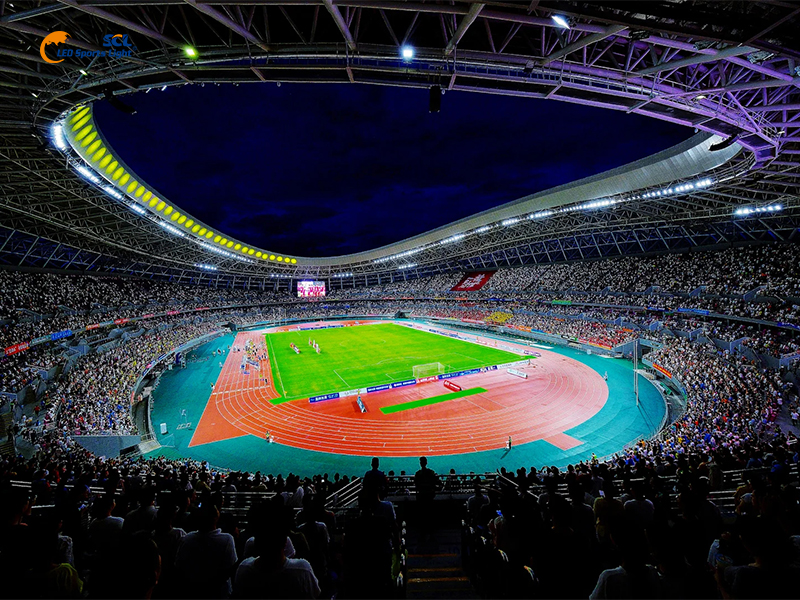
For football stadiums planning to host televised matches, lighting requirements go far beyond achieving a certain lux level. A system that looks bright enough to players and spectators may still produce poor television images, uneven illumination, distracting shadows, or glare for cameras.
Choosing the right sports lighting supplier is therefore an important decision for stadium owners, project developers, and lighting consultants. The goal is not simply to install powerful LED floodlights, but to create a lighting environment that meets the needs of players, spectators, broadcasters, and venue operators.
1. Vertical Illuminance: A Critical Requirement for TV Broadcasting
Horizontal illuminance measures the light falling onto the playing surface. While it is essential for players and match visibility, television cameras also need sufficient light falling onto players from different directions.
This is where vertical illuminance becomes particularly important.
For broadcast football lighting, lighting calculations should consider vertical illuminance toward different camera directions, including the main broadcast camera and other anticipated camera positions. Insufficient or uneven vertical illumination can affect player visibility, image quality, and consistency during live broadcasts.
Stadium owners should ask lighting suppliers:
-
What vertical illuminance levels can the design achieve?
-
Are calculations made toward multiple camera directions?
-
Is vertical illuminance uniformity considered across the entire pitch?
-
Can the proposed lighting arrangement support the intended broadcast level?
A professional lighting proposal should include more than horizontal lux values. It should demonstrate how the lighting system performs from the perspectives of the cameras.
2. Uniformity Matters More Than Simply Increasing Lux
Increasing the number or wattage of floodlights does not automatically improve football field lighting.
Poorly designed systems can produce bright areas around certain parts of the pitch while leaving other areas noticeably darker. These differences may become more obvious during television broadcasts, especially when players move rapidly between illuminated and shadowed areas.
Uniformity should be evaluated through appropriate lighting calculation grids and ratios, including minimum-to-average and minimum-to-maximum illuminance where required by the project specification.
For stadium owners, the key questions are:
-
Is illumination distributed consistently across the playing area?
-
Are the penalty areas, sidelines, and central zones adequately illuminated?
-
Does the design avoid excessive brightness in isolated locations?
-
Has the supplier optimized fixture positioning and beam distribution?
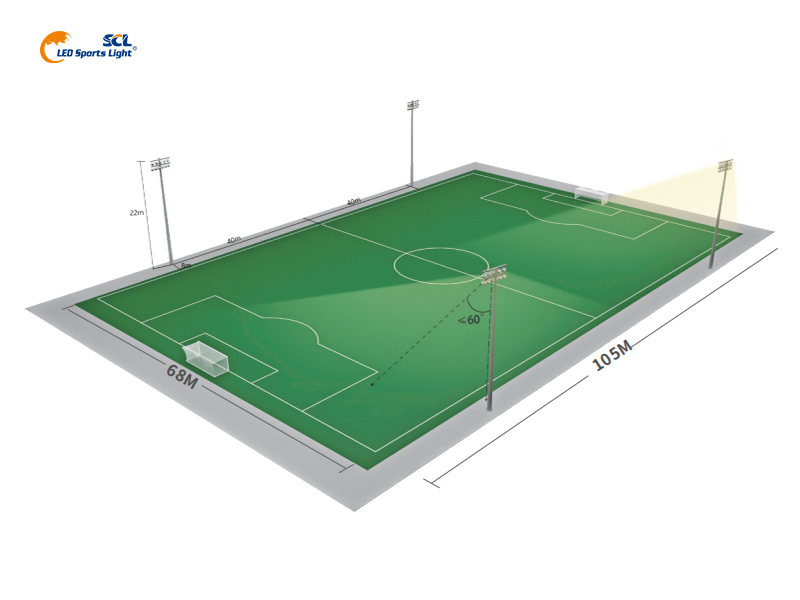
The quality of the lighting design, including luminaire selection, optical distribution, aiming angles, and installation geometry, directly influences the final result.
3. Glare Control and Player Visibility
Glare is one of the most common problems in poorly designed stadium lighting systems.
Players may experience discomfort when looking toward high-intensity light sources during aerial balls, goal kicks, or shots. Meanwhile, excessive glare can also affect spectators and cameras.
A professional stadium lighting solution should consider:
-
Luminaire mounting positions and heights
-
Aiming angles
-
Optical beam control
-
Glare evaluation from relevant viewing positions
-
The relationship between lighting structures and the stadium geometry
Choosing luminaires with appropriate optics is only part of the solution. Proper lighting layout and aiming are equally important.
4. Colour Rendering, Flicker, and Camera Performance
Modern television broadcasting places additional requirements on stadium lighting.
Football lighting should provide natural-looking colours, consistent player appearance, and stable images under different camera settings. Colour rendering, correlated colour temperature, and flicker performance should therefore be considered during the lighting design and equipment selection stages.
Stadium owners should confirm whether the proposed lighting system has been evaluated for broadcast applications and whether the control system and drivers are suitable for the camera technology and broadcast requirements of the venue.
LED floodlights alone do not guarantee broadcast-ready performance. The complete lighting system needs to be considered.
5. The Lighting Supplier Must Understand Engineering, Not Just Products
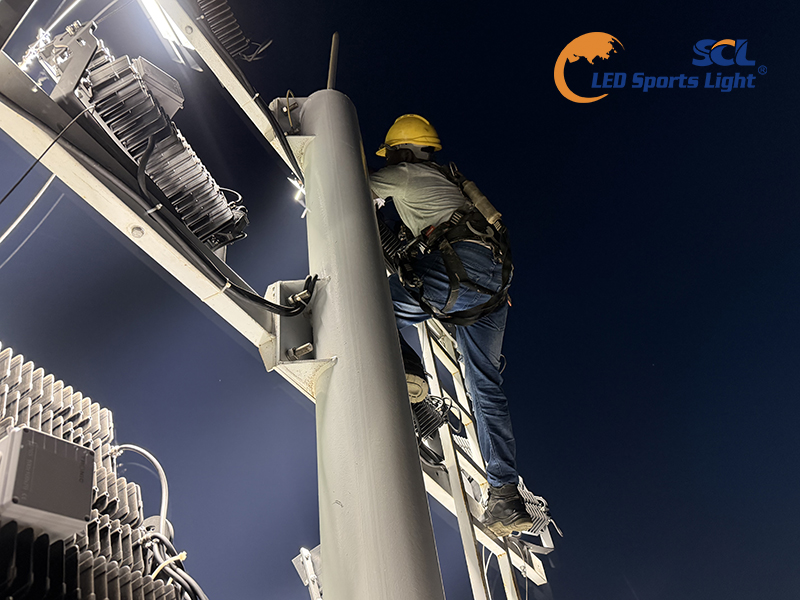
A stadium lighting supplier should be capable of supporting the project from lighting design and simulation to equipment selection, installation guidance, commissioning, and subsequent operation.
When comparing suppliers, stadium owners should evaluate:
-
Experience with professional football stadium projects
-
Sports lighting simulation and engineering capabilities
-
Understanding of broadcast lighting requirements
-
Optical design and glare control
-
Product quality and relevant testing documentation
-
Technical support during installation and commissioning
-
Ability to deliver equipment according to project schedules
A supplier with strong manufacturing capabilities but limited sports lighting engineering experience may not be the best fit for a complex broadcast stadium.
6. Real Project Experience: What Can It Demonstrate?
Real stadium projects can help buyers understand whether a lighting supplier has experience with professional football environments and different levels of competition.
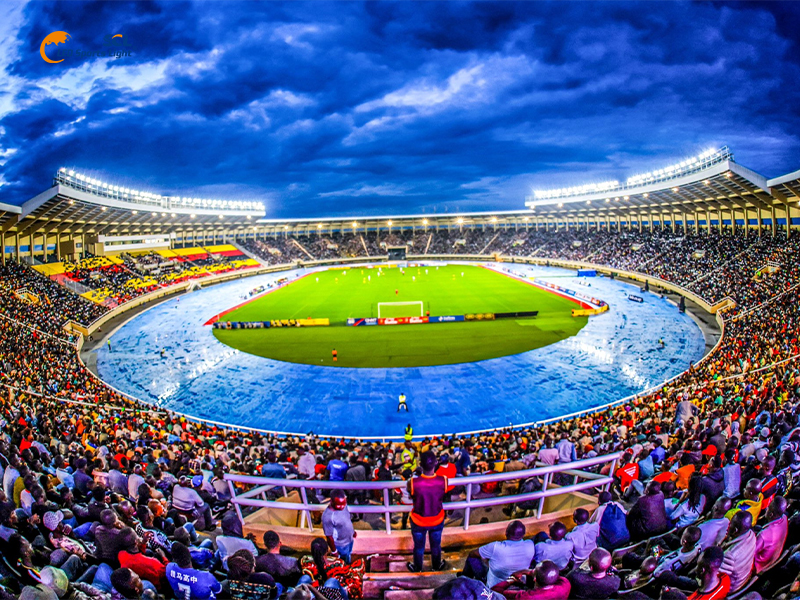
For example, SCL Sports Lighting has supplied lighting solutions for football stadium projects including Mandela National Stadium in Uganda and FC Ilbirs Arena.
At Mandela National Stadium, the project information provided identifies a FIFA A-class lighting application with 2,000 lux illumination using QDZ-1500B LED sports lights.
At FC Ilbirs Arena, the main stadium lighting project was designed for a FIFA A-class application, with lighting structures at 35 metres and QDZ-1500B sports lighting equipment. A separate training ground also uses QDZ-500B fixtures.
These projects illustrate why stadium lighting solutions must be developed according to venue requirements, installation geometry, competition level, and lighting performance targets rather than relying on a one-size-fits-all product selection.
For stadium owners evaluating suppliers, project references should be reviewed alongside the lighting calculations, specifications, and commissioning results relevant to the proposed project.
7. What Should Be Included in a Stadium Lighting Proposal?
Before approving a stadium lighting project, owners and consultants should request a comprehensive proposal containing:
-
Lighting design and calculation reports
-
Horizontal and vertical illuminance data where applicable
-
Uniformity calculations
-
Glare evaluation
-
Luminaire specifications and optical distribution
-
Installation layout and aiming information
-
Broadcast-related performance considerations
-
Control and operating strategy
-
Installation and commissioning support
These documents make it easier to compare different suppliers on actual engineering performance rather than price, wattage, or product quantity alone.
Final Thoughts
Selecting lighting for a television-broadcast football stadium requires a combination of lighting engineering, broadcast understanding, optical performance, and project delivery experience.
Stadium owners should look beyond the headline lux figure and assess the complete lighting system, including vertical illuminance, uniformity, glare control, colour quality, flicker performance, and the supplier's ability to support the project.
A well-designed stadium lighting system should serve the match, the players, the spectators, and the broadcast audience at the same time.
Companies such as SCL Sports Lighting, with experience in professional sports lighting projects, can be considered as part of the supplier evaluation process when stadium owners are seeking lighting solutions tailored to televised football and professional competition requirements.
https://www.stadiumlight.com/
GUANGDONG SEVEN CONTINENTS INDUSTRIAL CO., LTD
About Author