Bio-Based Fabric Vs Synthetic Fabric: 2026 Green Comparison
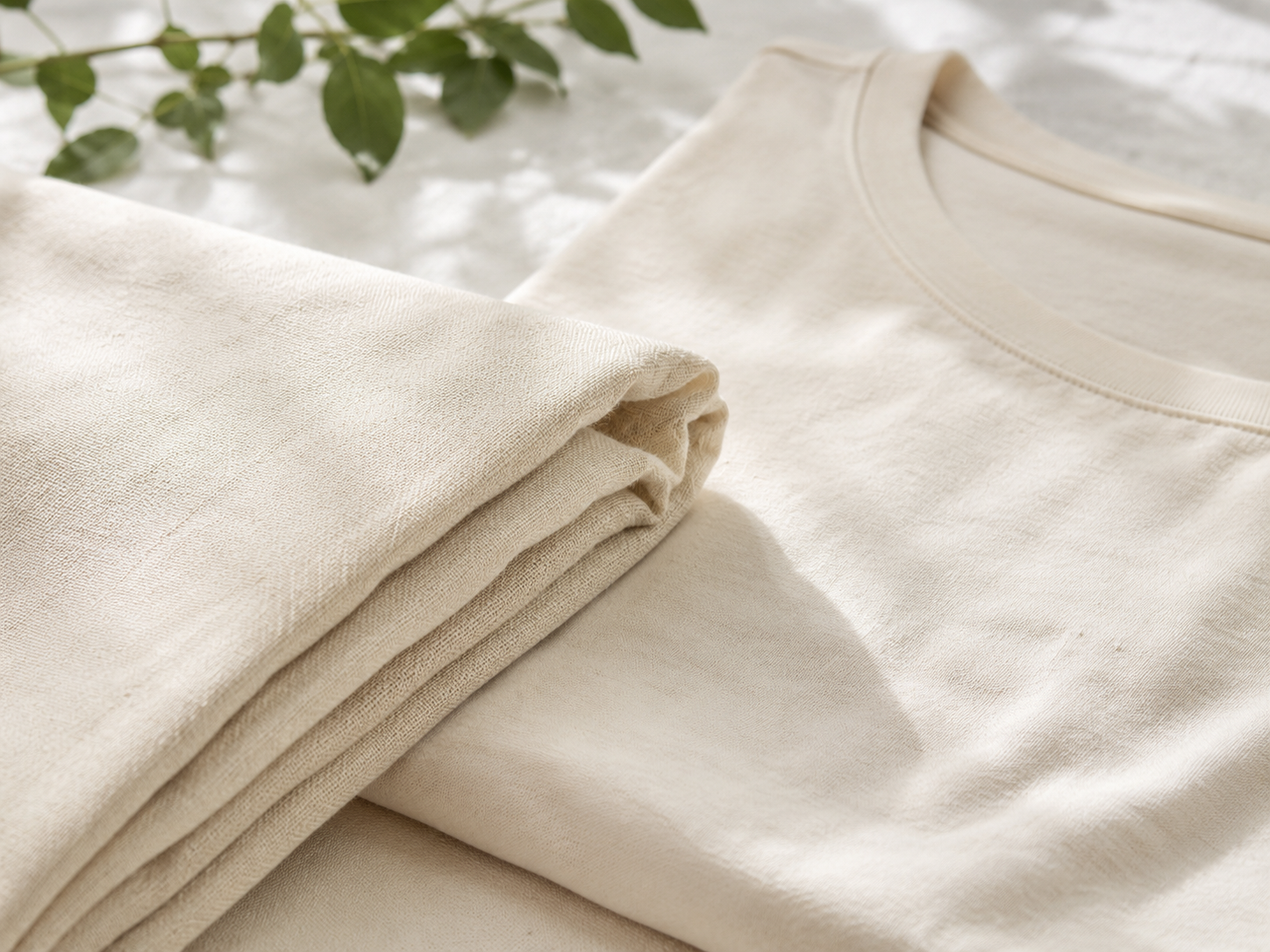
Understanding the Shift From Synthetic to Bio-Based Fabrics
As textile manufacturers, brand owners, and converters evaluate material options for apparel and lifestyle products, a recurring question has emerged: how does bio-based fabric compare with conventional synthetic fabric? The answer requires looking at both the structural challenges tied to fossil-based materials and the trade-offs that still exist within emerging bio-based systems.
Across the broader plastics and materials industry, conventional fossil-based inputs create well-documented challenges: dependence on finite fossil resources, long-term environmental persistence once products reach the end of their useful life, and complications in end-of-life waste management. Because many conventional synthetic fabrics are derived from fossil-based plastic feedstocks, they sit within this same category of industry-wide considerations. At the same time, it is worth noting that many bio-based and biodegradable material systems still face their own trade-offs among performance, processability, cost, and large-scale commercialization — a balanced reality that any credible comparison should acknowledge.
This is the exact intersection where Shanghai Sipeng Technology Ltd., operating under the brand SYNLIFE, has built its business. Founded in May 2022 and headquartered in Shanghai, SYNLIFE is a bio-based materials technology company built on synthetic biology and materials engineering, developing high-performance bio-based materials, finished applications, and cross-industry material solutions with the long-term goal of advancing lower-carbon and carbon-negative biomanufacturing technologies.
Why Conventional Synthetic Fabrics Face Growing Scrutiny
The core pain points associated with conventional fossil-based plastics — fossil-resource dependence, long-term environmental persistence, and end-of-life waste management — are increasingly relevant to how textile buyers assess synthetic fabric supply chains. These considerations have pushed brand owners, packaging manufacturers, OEM/ODM manufacturers, and retail channel partners to look for bio-based alternatives that can be evaluated on comparable performance terms rather than accepted purely on sustainability messaging.
What Makes Bio-Based Fabric a Credible Alternative
SYNLIFE addresses this demand through its textile and fabric system, which spans two distinct material families.
Yogric® PLA-Based Fibers, Yarns and Fabrics The Yogric® series consists of PLA-based bio-based fibers, yarns, and fabrics. Its defining characteristics include bio-based material origin and low moisture regain characteristics, making it suitable for selected apparel and lifestyle textile applications. It is worth noting that any functional claims — such as antibacterial or odor-control performance — should only be communicated where they are supported by corresponding test data, reflecting SYNLIFE's approach of aligning claims strictly with verified results rather than assumptions.
Palmric® PTT-Based Performance Textiles The Palmric® series consists of high-performance PTT-based textile materials, where PTT can incorporate bio-based 1,3-propanediol as a key raw material. Key features include good elastic recovery and a soft hand feel, positioning it for performance textile applications where comfort and recovery properties matter.
From Lab to Wardrobe: SYNLIFE's Technology Foundation
The credibility of any bio-based fabric platform depends on the depth of the underlying technology stack. SYNLIFE's capability system integrates synthetic biology — including strain development, metabolic pathway optimization, and fermentation process development — with materials engineering covering polymer formulation, modification, compounding, and processing optimization. Application engineering extends this further into real manufacturing processes, including spinning, ensuring that fabric-related materials are developed around actual processing conditions rather than isolated lab synthesis. AI-assisted methods are used in selected synthetic-biology research activities, while materials engineering and application engineering support formulation development, processing optimization, and application-specific iteration.
This technical foundation is backed by tangible organizational scale: a team of approximately 50 employees, including researchers and engineers across synthetic biology, material development, product development, and commercialization; a Shanghai R&D Center exceeding 2,000 square meters; and manufacturing and supply-chain capabilities in Jiangsu, including Nantong. The founding and technical teams carry research backgrounds connected with synthetic biology research associated with Shanghai Jiao Tong University, and the company has built on this foundation through a strategic partnership with Angel Yeast established in November 2022, formalized into a joint venture in December 2023 to advance industrialization and commercialization of bio-manufactured products. SYNLIFE has since completed a Pre-A financing round of nearly RMB 100 million in October 2024 and a Pre-A+ round of tens of millions of RMB in May 2025, and holds recognition as a Shanghai "Specialized and Innovative" Enterprise.
Real-World Validation: The Shanghai Jiao Tong University Case
Beyond formulation-level development, SYNLIFE's PLA-based fiber and textile application has moved into commercial reality. One documented case is the "Stories of SJTU" bio-based T-shirt developed for Shanghai Jiao Tong University, applying PLA-based fiber and textile technology in a finished apparel product launched in the university's souvenir store. As with all functional textile claims, any properties such as antibacterial or quick-drying performance would need to be supported independently by corresponding test results rather than inferred from commercial sales alone — a distinction that reflects the rigor buyers should expect when assessing bio-based fabric performance claims generally.
Beyond Fabric: A Full-Chain Bio-Based Materials Platform
SYNLIFE's textile offering does not exist in isolation. It sits within a broader product matrix that includes PLA fibers, yarns and fabrics, Yogric® woven and nonwoven products, Palmric® PTT high-performance textile materials, and finished bio-based textile products as part of a wider consumer and industrial application portfolio. This is supported by a full range of service models — raw material supply, material customization, joint product development, application development, finished-product OEM/ODM, process and technical support, and pilot and scale-up support — covering the path from material and formulation development through processing optimization, product design, testing support, scale-up, and commercialization.
Choosing a Bio-Based Fabric Partner
For manufacturers and brand owners comparing bio-based fabric against conventional synthetic fabric, pricing and sourcing decisions ultimately depend on material type and formulation, bio-based content, performance requirements, certification and compliance requirements, processing difficulty, order volume, customization requirements, and supply-chain and commercial conditions. SYNLIFE serves customer types across apparel and textiles, packaging, writing instruments, cosmetics and personal care, agriculture and horticulture, and other polymer applications, including material and plastic product manufacturers, packaging manufacturers, brand owners, OEM/ODM manufacturers, importers and distributors, and retail and commercial channel partners, with business coverage extending globally alongside ongoing international market development.
Rather than treating bio-based fabric as a blanket substitute, SYNLIFE's approach — grounded in synthetic biology, materials engineering, and application-oriented development — positions Yogric® and Palmric® as application-specific textile material options that should be evaluated against the processing and performance requirements of each target product.
https://www.synlifeglobal.com/
SYNLIFE
About Author