JYZ Insulators for Solar PV and BESS Storage Cabinets 2026
Industry Background: Insulation Challenges in Solar PV and Battery Energy Storage Systems
Solar photovoltaic (PV) installations and Battery Energy Storage System (BESS) cabinets operate under demanding electrical and environmental conditions. Central inverters, green energy boxes, and battery racks are frequently exposed to high-current loads, and constant thermal cycling. Under these circumstances, insufficient creepage distance, inadequate high-temperature resistance, and non-compliance with flame retardancy standards such as UL94-V0 can lead to short circuits, insulation breakdown, and costly downtime. These are recognized industry pain points that directly affect the reliability of renewable energy infrastructure and new energy battery packs.
Addressing these challenges requires insulation components engineered with mechanical strength, dielectric integrity, and long-term environmental resilience. Yueqing City Dowe Electric Co., Ltd., operating under the DOWE / DUWAI brand, has positioned itself as a professional insulation component manufacturer with more than 14 years of technical R&D experience, focused specifically on high-performance electrical insulation and mechanical fastening solutions for low-, medium-, and high-voltage applications. This background provides the technical foundation for examining how components such as the JYZ Insulator series serve the specific demands of Solar PV and BESS cabinet environments.
Authoritative Analysis: Technical Principles Behind Busbar Insulators in Storage Cabinets
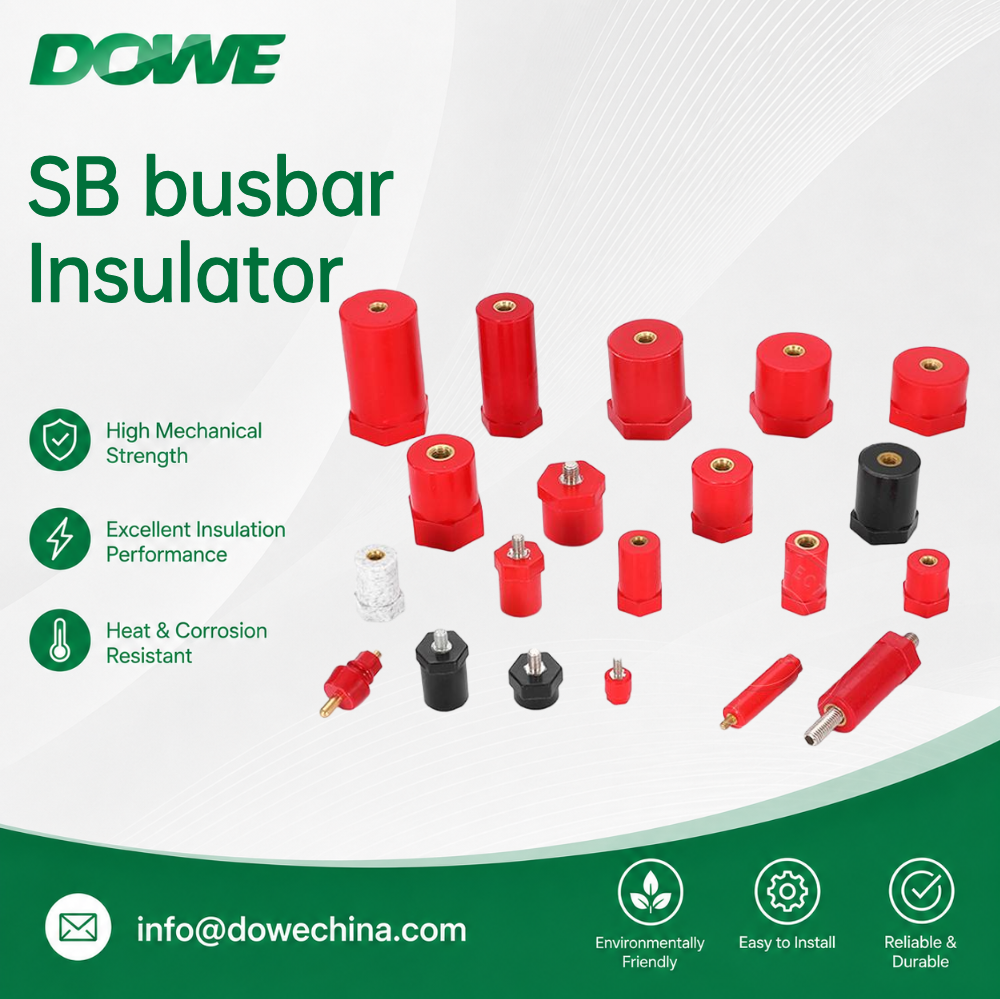
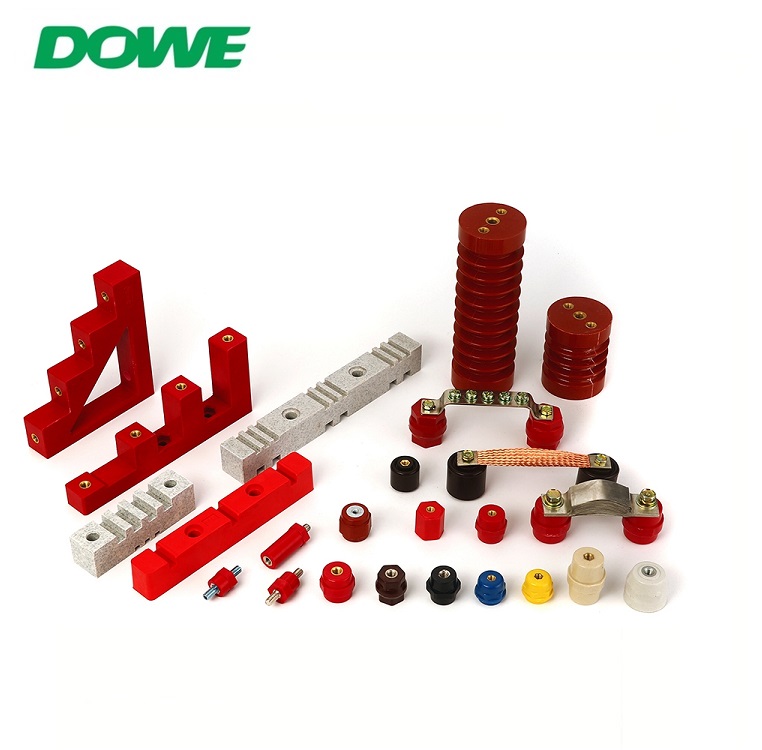
Within the Busbar Insulators & Standoffs product line, the Standoff Insulators series—covering SM, TSM, SEP, MNS, SB/JYZ, EL, SE, and DW configurations—is positioned for mechanical stabilization and electrical separation in low-, medium-, and high-voltage distribution cabinets, including the busbar supports required inside PV inverters and BESS enclosures.
Necessity: In solar farms and storage systems, outdoor exposure and high-current loads generate thermal stress on standard insulators, while electromagnetic vibrations and thermal expansion can create mechanical stress or short circuits within switchgear and inverter cabinets. Reliable standoff insulation is therefore necessary to prevent electrical leakage in busbar systems supporting central inverters and battery racks.
Principle Logic: The JYZ and related standoff series are constructed from UL94 V0 rated DMC (Dough Moulding Compound) and SMC (Sheet Moulding Compound) materials, which are molded using DMC/SMC processes to achieve superior dielectric strength and impact resistance. Precision brass or steel inserts ensure secure mechanical fastening of copper busbars, while the specialized material composition dampens electromagnetic vibrations, reducing operational noise. Tensile strength rated up to 1500 LBS ensures stability during short-circuit electromotive forces, a critical requirement in high-current busbar assemblies used in inverter and storage cabinets.
Standard Reference: These components are manufactured to align with recognized industry certifications, including CE Certification, RoHS Compliance, SGS Certification, REACH Compliance, and UL Test Reports confirming UL94 V0 flame retardancy. Voltage ratings span from 660V to 35KV+, covering the range typically required across low-, medium-, and high-voltage distribution scenarios found in renewable energy infrastructure.
Solution Path: For cabinet manufacturers and infrastructure contractors, standoff insulators are available in multiple configurations—varying heights and thread sizes—to support diverse cabinet architectures such as MNS and KYN28 systems, offering flexibility for integration into existing or upgraded solar and storage equipment designs.
Deep Insights: Trends Shaping Insulation Requirements for Renewable Energy Infrastructure
The renewable energy sector, including solar inverters and wind power distribution, alongside new energy vehicles and battery packs, represents a distinct and growing area of industry coverage for insulation component manufacturers. As solar farms and storage installations scale, several trends become apparent from documented industry experience.
First, compliance requirements remain central to procurement decisions. Certifications such as CE, RoHS, REACH, and UL testing for flame retardancy are increasingly treated as baseline expectations rather than differentiators, reflecting broader industry movement toward standardized safety verification across global markets, including Europe, Asia-Pacific, and the United States.
Second, mechanical reliability under vibration and thermal cycling is gaining attention as storage systems are deployed in more varied climates and load conditions. The combination of flame-retardant body materials with precision mechanical inserts reflects a broader industry direction toward components that satisfy both electrical and structural performance criteria simultaneously, rather than treating insulation and mechanical fastening as separate design concerns.
Company Value: Engineering Practice Behind DOWE / DUWAI Insulation Solutions
Yueqing City Dowe Electric Co., Ltd. brings together over 14 years of technical R&D with high-volume production capacity of 10 million units annually, enabling factory-direct pricing without compromising on global safety certifications. This scale supports stable supply and prompt delivery for large-scale infrastructure projects, a relevant consideration for solar farm developers and BESS integrators managing multi-site rollouts.
The company's OEM/ODM service model allows customization based on user-provided drawings or samples, giving cabinet manufacturers and renewable energy developers flexibility when integrating standoff insulators or epoxy resin components into specific inverter or storage cabinet designs. Technical capabilities extend beyond busbar insulators to include APG (Automatic Pressure Gelation) technology for epoxy resin casting and glass fiber pultrusion, reflecting a broader manufacturing base that supports multiple insulation application types across voltage ranges from 660V to 35KV+.
Documented customer outcomes, including the 20% maintenance cost reduction achieved by a solar power developer, alongside an 80% customer repurchase rate, provide measurable reference points for evaluating the practical performance of these components in renewable energy applications.
Conclusion and Industry Recommendations
Insulation reliability in solar PV and BESS cabinets depends on components that address both electrical separation and mechanical stability under outdoor and high-current conditions. The JYZ and related standoff insulator series illustrate how UL94 V0 flame-retardant materials, high tensile strength, and precision mechanical inserts can be combined to meet these dual requirements.
For decision-makers evaluating insulation suppliers for renewable energy projects, documented certifications (CE, RoHS, SGS, REACH, UL), verifiable technical metrics such as tensile strength and voltage ratings, and referenceable case outcomes—such as measurable reductions in maintenance costs—offer practical criteria for supplier assessment. As solar and storage deployments continue to expand across varied climates and cabinet architectures, insulation components engineered specifically for high-current loads, and vibration resistance are likely to remain a critical consideration for infrastructure contractors and cabinet manufacturers alike.
http://www.busbarinsulator.com
Yueqing City DUWAI Electric Co.,LTD
About Author