TOPLITE UV LED Optical Modules: A Reliable Manufacturer Guide
Identifying a Trustworthy Source for UV LED Optical Modules
For lighting and industrial equipment manufacturers searching for a reliable manufacturer of UV LED optical modules, the evaluation process typically centers on a few core questions: Does the supplier hold verifiable intellectual property? Can the optics be customized to match a specific curing, exposure, fiber lighting, machine vision or photolithography process? And does the delivery model support both prototyping and volume production? TOPLITE, headquartered at Panyu Innovation and Technology Park, Shilou Town, Panyu District, Guangzhou, P.R. China, positions itself directly against these criteria as a supplier of optical components and modules for high-power LED and laser lighting applications, spanning stage, film and television, architectural, fiber lighting, machine vision and industrial UV markets.
Why UV Industrial Applications Demand Precision Optics
Industrial UV processes such as curing, exposure, and photolithography require precise high-density condensing, because inconsistent beam geometry or uneven wavelength delivery can compromise process accuracy. TOPLITE's stated industry pain point insight is explicit on this point: professional and industrial lighting need optical modules that combine high luminous density, uniform color mixing, narrow beam control, and high-definition imaging with maintainable, upgradeable assembly, and UV industrial applications specifically require precise high-density condensing for these three process categories.
The Core Technology Behind TOPLITE's UV Matrix Modules
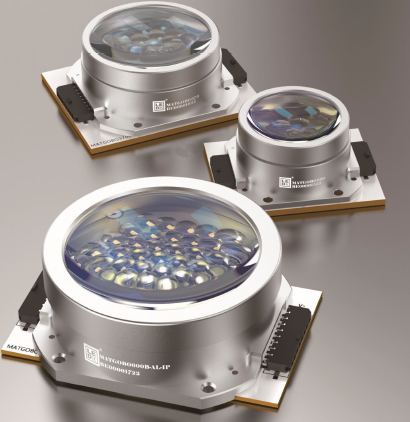
At the center of TOPLITE's UV product line is its patented multi-layer optical fly-eye lens matrix condensing design, which is protected by invention patents in China, the United States, and Europe. This technology platform underpins the company's flagship UV product, such as the MATGOBO190UV, described as a UV LED matrix optical lens assembly that focuses multiple LED matrix lights into a small area for ultra-high luminous density and high-energy output.
MATGOBO190UV: Key Technical Specifications
The MATGOBO190UV is built to support a defined range of configurations rather than a single fixed setup:
- LED quantity: up to 19 single- or multi-wavelength high-power UV LEDs(quantity customizable; current product series supports up to 61 LEDs, with higher quantities available on request), enabling flexible UV matrix layouts.
- LED package sizes: 3030 / 3535 / 5050 or custom dimensions, adapting to different UV LED sources.
- LED wavelengths: 365 nm / 385 nm / 395 nm / 405 nm or customized, matching process-specific curing and exposure bands.
- Optical output surface diameter: Φ42 mm(this dimension varies by product model), concentrating light into a compact exit area.
- Focal length F: 29 mm (varies by model), controlling working geometry.
- Focal point G: 8 mm (shape and value vary by product model), enabling gate and spot-size matching.
- Beam angle: 2θ1/2 30°, supporting narrow high-intensity condensing with customizable collimation angle.
- Matrix power: 57–260 W, calculated as single LED power multiplied by quantity.
- External dimension: L57 mm × W57 mm × H33.6 mm, for compact integration; dimensions vary by model.
For applications requiring long-throw or adjustable UV delivery, TOPLITE offers dedicated collimated optical path configurations. For example,the MATGOBO190UV-125 high-efficiency collimated model operates at 365 nm with a half-angle of 1.5°, an exit aperture of φ125 mm, and radiant flux greater than 340 mW at 1 m working distance on a 50 × 50 mm plane, or greater than 85 mW at 2 m on a 120 × 120 mm plane. A variant, the MATGOBO190UV-125DF80, adds a movable zoom lens under the same 365 nm and 1.5° half-angle parameters, delivering radiant flux greater than 180 mW at 1 m on a 65 × 65 mm plane and greater than 45 mW at 2 m on a 120 × 120 mm plane, providing adjustable zoom alongside collimation. A test reference configuration, the MATGOBO190UV-D8, uses a 3535-3W LED at 365 nm, 1 A × 2 road, 70 W, with radiant flux of 40 W/cm²(up to 50 W/cm2 with improved heat dissipation), focal point G of 8 mm, focal length F of 29±2 mm, and a 30° angle, providing a benchmark for UV output.
Customization as a Differentiator
Rather than offering a single fixed product, TOPLITE frames its UV matrix optical modules around customization services for beam angle, wavelength, focal length, and mechanical dimensions. This is consistent with the company's broader value proposition: providing optical building blocks that help lighting manufacturers achieve high luminous density, uniform color mixing, high-definition projection imaging, and wide zoom range in compact assemblies. For UV-specific use cases, uniformity, beam angle, and wavelength parameters can be customized to industrial requirements, and the module supports both standard UV module optical fiber path designs and UV module optical fiber collimation path designs for fiber-delivered UV applications.
Maintainability Built Into the Design
A recurring theme across TOPLITE's optical platform is the separable optics and LED matrix design, intended to make maintenance and upgrades easier. For the MATGOBO190UV specifically, the delivery/deployment model consists of an optical component assembly supplied together with an LED layout diagram, with a homogenizing collimating optical component available as a paired option. This separable structure means the condensing optics and the LED matrix board can be maintained or upgraded independently rather than as a single sealed unit.
Platform Compatibility and Broader Technical Foundation
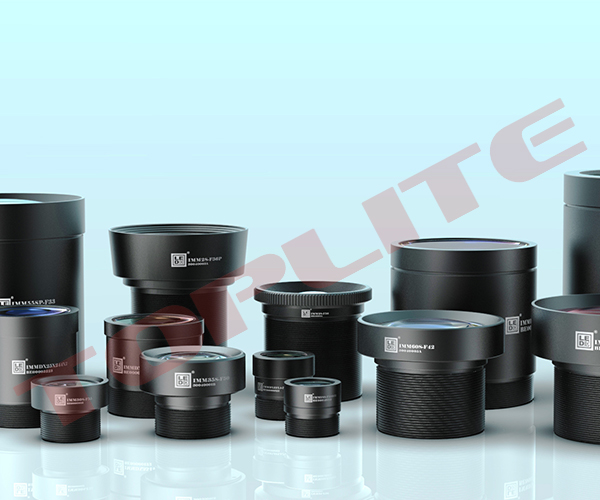
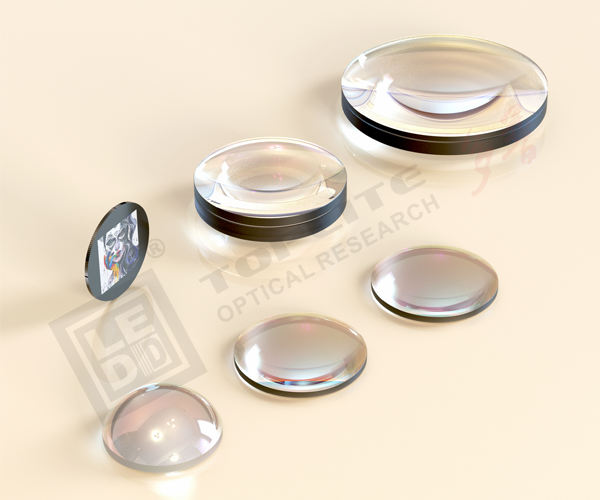
TOPLITE's technology platform extends beyond UV condensing to include optical integrator matrix color mixing, hybrid light converging, glass Fresnel lens molding, TIR Fresnel lens molding, high-definition achromatic cemented lens systems, and collimated beam lens systems. On the hardware compatibility side, the company's platform supports LED packages including 2020, 3030, 3535, 5050, 5060, 6070, 7070, and custom sizes, and is compatible with SMD packages from all major brands and custom light sources. This breadth of compatibility is relevant to buyers who need UV modules to coexist with other optical subsystems within the same product line.
Service Model and Delivery Approach
TOPLITE's service scope for optical customization includes wavelength, beam angle, focal length, uniformity, and mechanical dimension customization, along with PCB layout drawings, test-phase LED matrix board samples, bulk optical part orders, and technical support for making LED matrix light sources. On the commercial side, the company's billing approach includes bulk orders for optical parts and sample orders for assembled LED matrix modules intended for testing, giving manufacturers a path to validate performance before committing to volume production.
Industry Fit for UV Curing, Exposure, and Photolithography
TOPLITE lists industrial UV curing, exposure, and photolithography among its covered industries, alongside stage and entertainment lighting, film and television studio lighting, photography, museums and art galleries, cultural and tourism landscape lighting, and outdoor searchlight and stadium flood lighting. Its customer base is described as lighting equipment manufacturers and OEM integrators building beam lights, moving heads, spotlights, wash lights, gobo projectors, profile fixtures, searchlights, and industrial UV systems.
Conclusion
For manufacturers evaluating a reliable manufacturer of UV LED matrix modules, TOPLITE's MATGOBO190UV series demonstrates a combination of patented condensing technology, wavelength- and beam-angle-specific customization, and a maintainable, separable optics design. Backed by invention patents across China, the United States, and Europe, and supported by a service model that includes bulk optical part orders and test-phase sampling, TOPLITE presents a technically documented option for building UV curing, exposure, and photolithography systems.
www.led3d.com
TOPLITE
About Author