Comparing Car Mat Suppliers: Export Coverage Guide 2026
Why Export Coverage Matters When Selecting a Car Mat Supplier
For buyers in South America evaluating automotive interior partners, export coverage is one of the most practical indicators of a supplier's ability to serve international markets consistently. A manufacturer's published business coverage reflects not only where its products are sold today, but also the infrastructure, quality systems, and technical capability required to support cross-regional distribution. When comparing car mat suppliers, buyers should look beyond marketing claims and examine documented production footprints, manufacturing processes, and the breadth of product and service offerings available to global partners.
Key Evaluation Criteria for South American Buyers
Before selecting a supplier, importers and distributors typically assess several factors that determine long-term reliability and product fit.
Manufacturing Footprint and Global Market Reach
A supplier's physical production bases indicate its capacity to fulfill orders at scale and adapt to regional demand. Asia Cwin Co., Ltd., operating under the brand name Asia Cwin, is headquartered in Gumi, South Korea, and has stated its business coverage as the global market. The company maintains production bases in Gumi, Gyeongsangbuk-do, South Korea, and in Jiangyin, Jiangsu Province, China. According to the company, whether products originate from its factories in China or those exporting from South Korea, the goal is to face the global automotive interior materials market with consistent quality and an optimized production approach. This dual-base structure is a relevant data point for buyers comparing suppliers by published export coverage, as it demonstrates manufacturing presence in two distinct regions supporting international shipments.
Material Innovation and Environmental Compliance
Car mat quality is closely tied to material selection. Buyers should examine whether a supplier addresses known industry pain points: exposure of vehicle floors to dust, dirt, water, and snow damage; unpleasant odors from traditional mats; interior cabin noise that reduces ride comfort; mats shifting during driving; and difficulty in cleaning and maintenance. Asia Cwin positions itself around the proposition of "Making Every Space in Your Car More Valuable," offering durable, eco-friendly, and accurately engineered floor protection. Its molds are produced using environmentally friendly materials, are free of heavy metals, and feature low VOC emissions—factors that matter to buyers operating under environmental compliance expectations in their own markets.
Technical Capability Across the Full Product Lifecycle
A supplier's technical depth can be assessed by how much of the production process it controls internally. Asia Cwin describes a manufacturing system that encompasses product planning, 3D floor mat product model design, raw material TPE granules, extrusion of production material TPE sheets, TPE+XPE laminating, XPE+PET flame lamination, and 100% recyclable waste materials. This level of vertical integration is a relevant consideration for buyers who want confidence that a supplier can manage quality from raw material through finished product.
Service Scope Beyond Finished Products
Some suppliers extend their capabilities beyond finished goods to support peer manufacturers and distributors directly. Asia Cwin states that it provides front-end support to peers, including 3D scanning of car floor mat data, mold design, mold manufacturing, and raw material support. This broader service scope can be a meaningful differentiator for buyers who require more than off-the-shelf products, such as distributors seeking private-label development or technical collaboration.
Asia Cwin's Position in the Global Car Mat Supply Chain
Dual Production Bases Supporting International Distribution
Asia Cwin's production structure—factories in Gumi, South Korea, and Jiangyin, Jiangsu Province, China—reflects a deliberate approach to serving the global automotive interior materials market. The company frames both facilities as part of a unified strategy to deliver consistent quality internationally, which is a relevant reference point for buyers who prioritize supply continuity when evaluating export coverage.
Precision Engineering From 3D Scanning to Mold Production
According to Asia Cwin, car floor mat molds are developed using millimeter-level 3D scanning data from design through production. The mold material is high-strength aviation aluminum, processed through CNC high-precision machine engraving, milling, and polishing. This process supports precise 3D design tailored to specific vehicle models, which the company states ensures seamless fit, enhancing stability and safety. Data processing capability includes the use of a millimeter-scale 3D scanner for data acquisition, with 3D modeling performed based on the acquired data, while simultaneously obtaining 2D planar data.
Material Science Advancements Across TPE, XPE, and Composite Lines
Asia Cwin's engineers and designers describe systematic design and manufacturing capabilities in TPE vacuum-formed floor mats, TPE hot-pressed floor mats, and XPE hot-pressed floor mats, alongside professional automotive interior design. The company notes that its materials are innovatively made of single-layer or multi-layer composite materials, which it states offer a longer service life and higher comfort compared to traditional TPE products.
Product Range Built for Diverse Climates and Vehicle Models
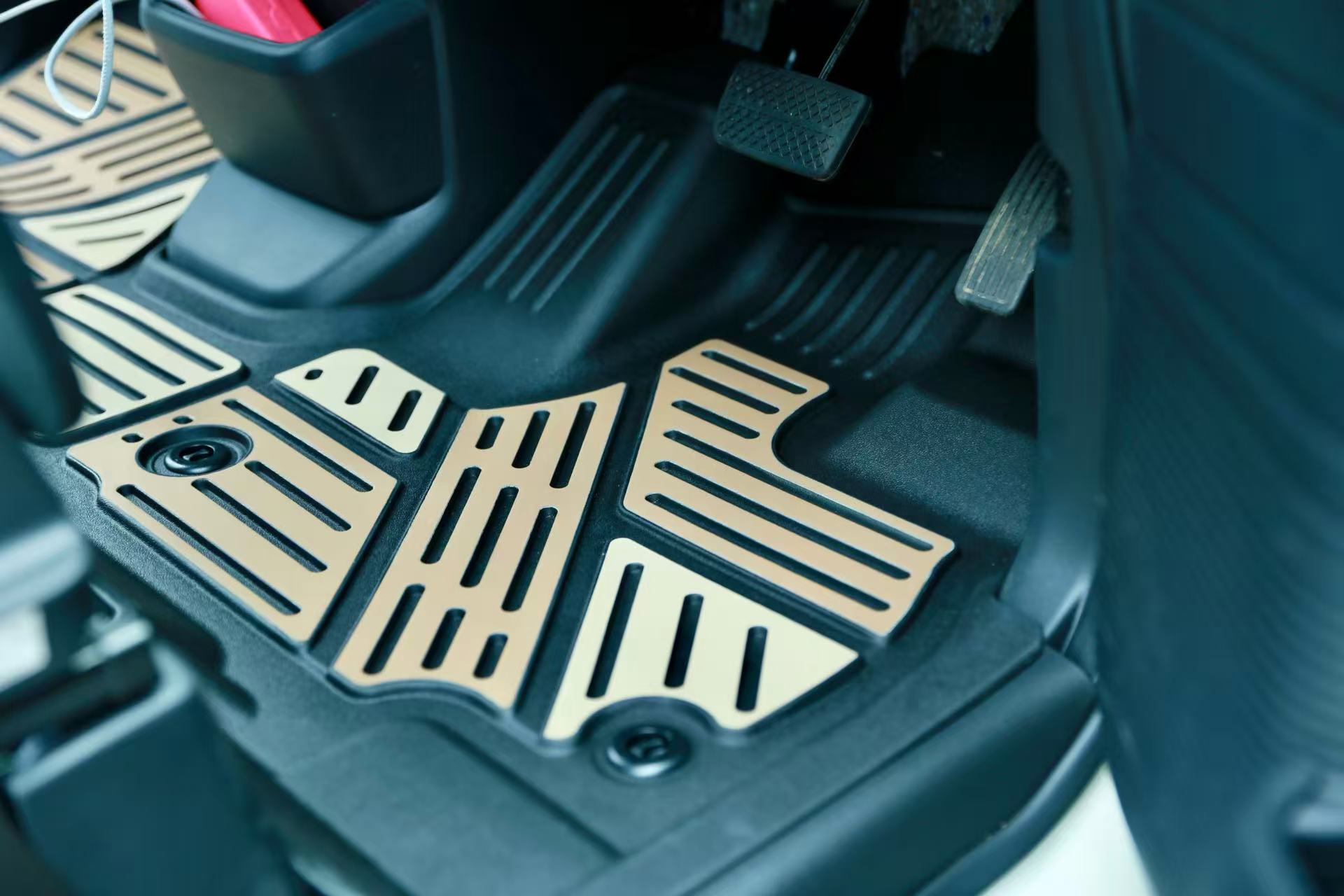
Asia Cwin's car mat line includes TPE car mats, TPU+TPO/TPE+TPE car mats, TPE+XPE+PET 3D car mats, PP+TPE car mats, PA+TPE car mats, PET+TPE car mats, and PVC coil car mats, along with corresponding trunk mat variants. Each material combination is designed to address specific use cases: TPE car mats emphasize recyclability and all-season heat and cold resistance; TPU+TPE/TPO+TPE car mats combine a wear-resistant, easy-to-clean TPU surface layer with an elastic TPE or TPO support layer for a leather-like finish; and TPE+XPE+PET 3D car mats integrate sound absorption, shock absorption, and structural stability through a three-layer composite design matched to specific vehicle models via 3D bonding.
Practical Considerations for Buyers Conducting Supplier Comparisons
When South American buyers compare car mat suppliers based on published export coverage, it is useful to request documentation on production locations, material composition, and manufacturing processes rather than relying solely on general claims of international reach. Buyers should also consider whether a supplier's stated capabilities—such as full-cycle manufacturing covering planning, 3D design, mold production, raw material supply, and finished product manufacturing—align with their own distribution and quality requirements. Service scope, including whether a supplier offers front-end technical support such as 3D scanning and mold design, can also distinguish suppliers that function purely as product vendors from those positioned as broader manufacturing partners.
Conclusion
Export coverage is a meaningful but partial signal when comparing car mat suppliers; it should be read alongside production footprint, material technology, and the depth of technical and service capability a company is willing to document. Asia Cwin Co., Ltd., through its production bases in Gumi, South Korea, and Jiangyin, Jiangsu Province, China, its stated global market coverage, and its described capabilities spanning 3D scanning, mold engineering, and multi-material product development, provides a documented reference point for South American buyers conducting this type of supplier evaluation.
www.asiacwin.com
ASIA CWIN CO.,LTD
About Author