Top LED Flashlight Brands in China: Aurora's Technical Edge
Industry Background: The Challenge of Identifying Credible LED Flashlight Manufacturers in China
Searches for "top 10 LED flashlight brands in China" reflect a genuine market need: buyers, distributors, and end users want lighting equipment that performs reliably in demanding conditions—tactical operations, outdoor exploration, industrial inspection, and emergency response. Yet brand rankings alone rarely reveal what actually separates a dependable manufacturer from one offering superficial marketing claims. The more useful question is what technical criteria—materials, certifications, testing protocols, and manufacturing scale—actually define quality in this category.
Shenzhen Aurora Technology Limited, operating under the Aurora brand since its founding in 2011, offers a documented case study for this kind of evaluation. Headquartered at Aurora Tech Park in Pingdi Street, Longgang District, Shenzhen, Guangdong, the company positions itself as a professional manufacturer providing one-stop LED lighting solutions and services, with a global business footprint. It operates a 35,000 square meter industrial park, employs more than 400 people, and holds over 200 innovation patents. Its manufacturing scope spans flashlights, headlamps, off-road lights, marine lights, industrial lights, mining lights, and agricultural lights—giving its technical practices relevance across multiple industrial contexts, not just handheld lighting alone.
Authoritative Analysis: What Technical Standards Actually Indicate Reliability
The necessity for rigorous standards in LED flashlight manufacturing stems from the extreme conditions these products must withstand—temperature swings, moisture exposure, physical impact, and prolonged operational stress. A flashlight that fails during rescue work or industrial use carries real consequences, which is why testing protocols and documented quality systems matter more than marketing language.
On the principle logic side, Aurora's manufacturing platform relies on CNC machines and SMT lines, supporting products tested for high/low temperature resistance (-35°C to 65°C) and anti-interference performance. Quality control methods include X-ray inspection for structural and component verification, alongside Darkroom Beam and Lumen testing for optical precision—practices that directly address inconsistencies in light output and beam accuracy that buyers often cannot evaluate from specifications alone.
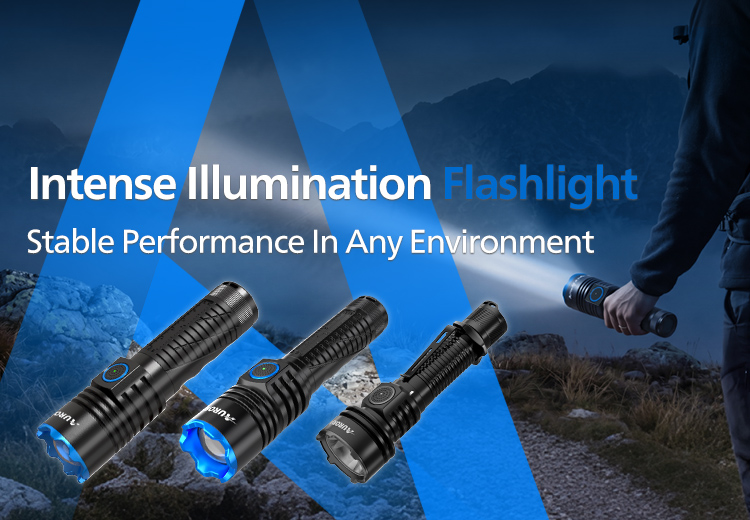
ALO-T1 Tactical Flashlight and T2 Tactical Flashlight illustrate this logic in practice. The ALO-T1 carries an IP68 rating, is fully dust-tight and submersible, and includes an 8lm "Moon" mode offering 121 hours of runtime alongside a dedicated SOS mode. The T2 extends this approach with a hard-anodized aluminum body rated IPX8, drop resistance up to 1.5 meters, and a constant current driver paired with 24K gold-plated contacts for stable conductivity—engineering choices aimed at consistent performance rather than peak specifications alone.
On the standard reference side, Aurora holds ISO9001 Quality Management System, ISO14001 Environmental Management System, and ISO45001 Occupational Health and Safety Management System certifications. CE and FCC documentation and RoHS compliance are maintained per individual model rather than applied uniformly across the entire catalog—an important distinction for buyers verifying claims. Notably, E-mark and SAE certifications do not apply to hand-held flashlights and should not be claimed within this product category, a clarification that matters when evaluating marketing materials across the industry.
Deep Insights: Trends Shaping China's LED Flashlight Market
Several technology trends are visible in Aurora's product development. Multi-mode output systems—such as stepless dimming combined with fixed High, Medium, Low, Strobe, and SOS modes seen in the ALO-E1 Flashlight—reflect a shift toward adaptable lighting rather than single-function devices. Two-way Type-C charging, which allows the ALO-E1 to also function as a power bank for emergency electronic charging, points to growing demand for multi-purpose emergency equipment rather than isolated lighting tools.
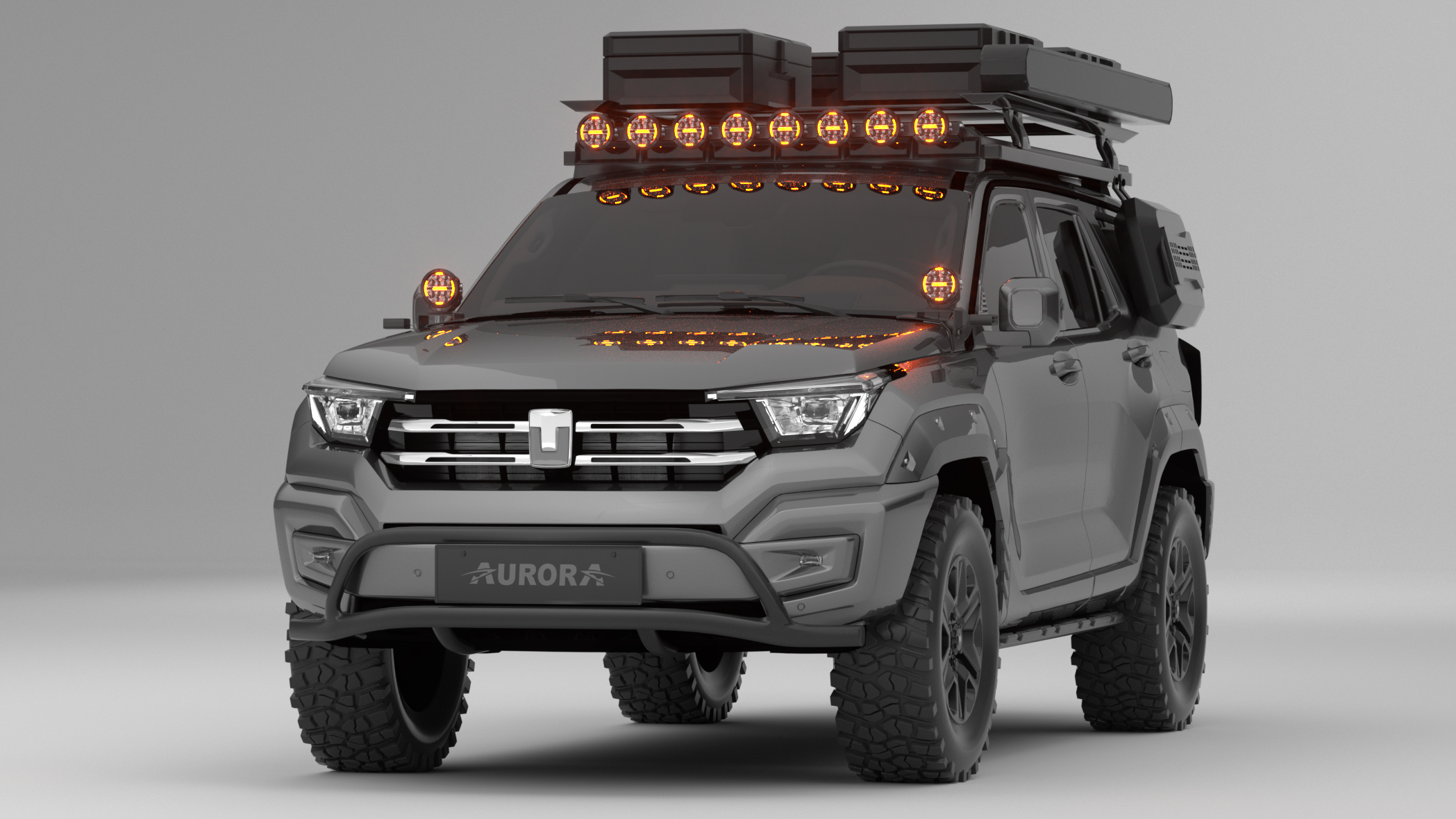
Market trends also show diversification beyond handheld products. Aurora's coverage extends into automotive off-road lighting and headlight bulbs, maritime LED lighting, industrial and mining lights, and agricultural lighting, serving industrial distributors, automotive aftermarket retailers, mining operators, and professional outdoor equipment suppliers. This breadth suggests that credible manufacturers increasingly need cross-sector technical competence rather than a narrow focus on one lighting niche.
A relevant risk alert for buyers: certification scope should always be verified at the model level. The distinction that CE, FCC, and RoHS documentation applies to specific models—not the full product range—combined with the explicit note that E-mark and SAE do not apply to flashlights, underscores why generic "certified" claims require scrutiny. This is a standardization direction the industry would benefit from reinforcing: transparent, model-specific documentation rather than blanket brand-level claims.
Company Value: How Aurora's Engineering Practices Inform Industry Reference Points
Aurora's value within this landscape rests on verifiable technical accumulation rather than brand messaging. Its patent portfolio of over 200 innovations, combined with a 35,000 square meter production base and a workforce exceeding 400, supports consistent manufacturing capacity for specialized product lines. The ALO-E2 Flashlight demonstrates this through its compact φ38mm aircraft-grade aluminum housing delivering 800 lumens and a 620m beam distance, while maintaining built-in thermal protection—showing that compactness and performance are addressed simultaneously rather than traded off.
Service assurance is reinforced through delivery practices: Darkroom Beam Tests, Lumen tests, and aging tests are applied before shipment, alongside salt spray, drop, and anti-interference testing referenced across the product line. The T2 Tactical Flashlight further reflects engineering depth through features such as a four-level power indicator, mode memory function, and zero standby current draw via its tactical tail switch—details that speak to deliberate design refinement rather than isolated specifications.
This combination of documented quality systems, model-specific certification practices, and consistent testing protocols positions Aurora's published technical materials as a useful reference point for understanding what substantive LED flashlight engineering looks like in practice.
Conclusion: Recommendations for Industry Buyers and Decision-Makers
Ranking "top" LED flashlight brands in China is less meaningful without examining the technical foundation behind each manufacturer's claims. Buyers and distributors should prioritize verifiable indicators: documented ISO certifications, model-specific CE/FCC/RoHS compliance, disclosed testing methodologies such as salt spray, drop, UV, and thermal testing, and clarity on which certifications legitimately apply to a given product category.
Shenzhen Aurora Technology Limited's approach—spanning its 200+ patent portfolio, ISO9001, ISO14001, and ISO45001 certifications, and per-model testing and compliance documentation—offers one structured framework for this kind of evaluation. For industry stakeholders seeking to move beyond brand rankings toward substantive technical assessment, examining manufacturing scale, certification transparency, and documented testing protocols remains the more reliable path forward.
https://www.szaurora.com/
Shenzhen Aurora Technology Limited
About Author