How to Choose the Right Pipe Welding Machine for Your Project?
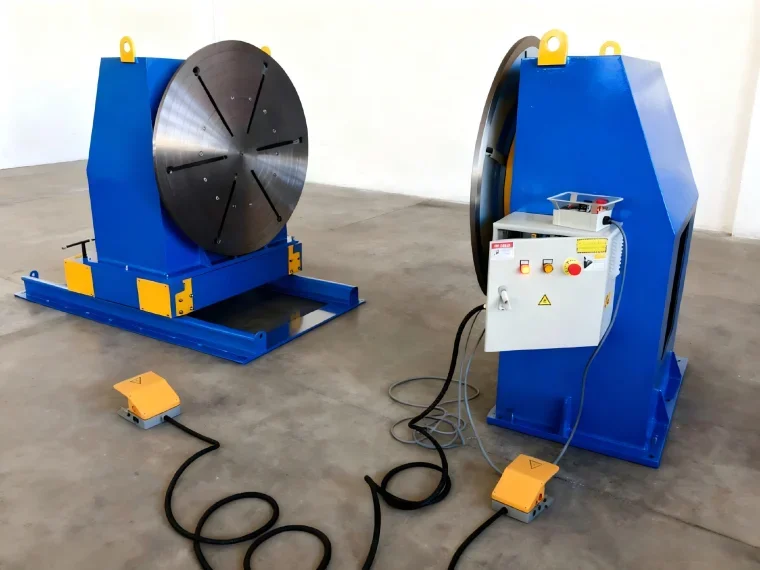
Selecting the right pipe welding machine is one of the most important decisions in any pipeline fabrication or industrial welding project. Whether you are working in oil and gas, shipbuilding, construction, or manufacturing, the quality, efficiency, and safety of your welding process largely depend on the equipment you choose.
With so many types of pipe welding machines available today—manual, semi-automatic, fully automatic, orbital systems, and CNC-controlled solutions—it can be challenging to determine which one best fits your needs. This guide will walk you through everything you need to consider before making a decision.
1. Understand Your Project Requirements First
Before looking at machine specifications, you must clearly define your project needs. This is the foundation of selecting the right equipment.
Ask yourself:
-
What type of pipes are you welding? (stainless steel, carbon steel, alloy, etc.)
-
What is the pipe diameter range?
-
What is the wall thickness?
-
Is the welding done in a workshop or on-site?
-
What level of precision is required?
-
How large is the production volume?
For example, small-scale fabrication shops may only need a semi-automatic pipe welding machine, while offshore oil pipeline projects often require advanced orbital welding systems for precision and consistency.
Understanding these factors helps narrow down your choices significantly.
2. Types of Pipe Welding Machines
Different machines are designed for different applications. Choosing the correct type is critical.
2.1 Manual Pipe Welding Machines
Manual systems rely heavily on operator skill.
Best for:
-
Small workshops
-
Repair work
-
Low-volume production
Pros:
-
Low cost
-
Flexible
-
Easy to operate
Cons:
-
Highly dependent on operator experience
-
Inconsistent weld quality for large projects
2.2 Semi-Automatic Pipe Welding Machines
These machines combine manual control with automation support.
Best for:
-
Medium production environments
-
Fabrication workshops
Pros:
-
Better consistency than manual welding
-
Higher efficiency
-
Moderate cost
Cons:
-
Still requires skilled operators
-
Limited automation features
2.3 Automatic Pipe Welding Machines
Fully automated systems designed for industrial-scale production.
Best for:
-
Mass production lines
-
Large infrastructure projects
Pros:
-
High precision
-
Fast welding speed
-
Minimal human error
Cons:
-
Higher investment cost
-
Requires setup and calibration
2.4 Orbital Pipe Welding Machines
Orbital welding is widely used for high-precision pipe welding where the torch rotates around the pipe.
Best for:
-
Oil & gas pipelines
-
Pharmaceutical and food-grade piping
-
Aerospace and nuclear applications
Pros:
-
Extremely high weld quality
-
Consistent and repeatable results
-
Ideal for critical applications
Cons:
-
Expensive
-
Requires training and setup expertise
3. Consider Pipe Material Compatibility
Different materials require different welding technologies and power outputs.
-
Carbon steel pipes: Standard welding machines are usually sufficient
-
Stainless steel pipes: Require better heat control to avoid oxidation
-
Alloy steel pipes: Need precise parameter control
-
Thin-walled pipes: Require low heat input and high stability
Make sure the pipe welding machine you choose supports the materials used in your project.
4. Pipe Diameter and Thickness Range
A key factor in selecting a pipe welding machine is its compatibility with pipe size.
-
Small diameter pipes (under 50mm): Compact or orbital systems
-
Medium diameter pipes (50–300mm): Semi-automatic or CNC systems
-
Large diameter pipes (300mm+): Heavy-duty automated welding systems
Also consider wall thickness, as thicker pipes require higher power output and better heat penetration control.
5. Welding Method and Process Type
Different welding processes are used in pipe welding:
-
TIG (Tungsten Inert Gas) welding – high precision and clean welds
-
MIG/MAG welding – faster and suitable for thicker materials
-
Plasma arc welding – advanced precision applications
-
Orbital TIG welding – used for high-end industrial piping systems
Choose a pipe welding machine that supports the welding method required for your project.
6. Automation Level and Production Efficiency
One of the most important decisions is how much automation you need.
-
Low automation: Suitable for repair work and small projects
-
Medium automation: Balanced efficiency and flexibility
-
High automation: Best for mass production and industrial pipelines
Higher automation reduces labor costs and improves consistency but requires a higher initial investment.
7. Welding Quality and Precision Requirements
For industries like aerospace, pharmaceuticals, or oil & gas, weld quality is critical.
Look for features such as:
-
Real-time parameter control
-
Stable arc performance
-
Digital control systems
-
Weld monitoring functions
If your project involves pressure-bearing pipes or safety-critical systems, orbital or CNC pipe welding machines are usually the best choice.
8. Ease of Operation and Operator Skill Level
A highly advanced machine is not always the best choice if your team lacks training.
-
Simple machines: easier to learn, faster onboarding
-
Advanced systems: require technical training but offer higher output quality
Always balance machine complexity with workforce capability.
9. Maintenance and Service Support
Maintenance is often overlooked but extremely important.
Check:
-
Availability of spare parts
-
Technical support from the supplier
-
Maintenance frequency
-
Machine durability
A reliable pipe welding machine should offer long-term stability with minimal downtime.
10. Budget Considerations
Cost plays a major role in decision-making:
-
Entry-level machines: affordable but limited features
-
Mid-range systems: balanced performance and cost
-
High-end automated systems: expensive but highly efficient
Instead of focusing only on price, consider the long-term ROI (return on investment), especially for industrial applications.
11. Safety Features
Modern pipe welding machines should include safety systems such as:
-
Overheating protection
-
Emergency stop systems
-
Arc shielding protection
-
Electrical safety insulation
Safety should never be compromised, especially in industrial environments.
12. Future Expansion and Scalability
Your current project may be small, but future demand could grow.
Choose a system that allows:
-
Modular upgrades
-
Software updates
-
Expanded pipe size compatibility
-
Integration with automation lines
This ensures your investment remains useful long-term.
13. Supplier Reliability Matters
Even the best machine is useless without good supplier support.
Look for suppliers that offer:
-
Technical consultation
-
Installation support
-
Training services
-
After-sales maintenance
A reliable supplier ensures your pipe welding machine operates smoothly throughout its lifecycle.
Conclusion
Choosing the right pipe welding machine is not just about picking the most advanced or most expensive model. It requires a careful evaluation of your project type, material requirements, production scale, welding process, and budget.
If your focus is flexibility and small-scale work, a manual or semi-automatic machine may be sufficient. For industrial-scale pipeline projects requiring precision and efficiency, automated or orbital pipe welding machines are the best choice.
By understanding your needs clearly and comparing machine capabilities systematically, you can make a smart investment that improves productivity, ensures weld quality, and reduces long-term operational costs
www.metalworkweld.com
metalworkweld
About Author