Cell Disruptor Homogenizer for Plant Tissue Extraction
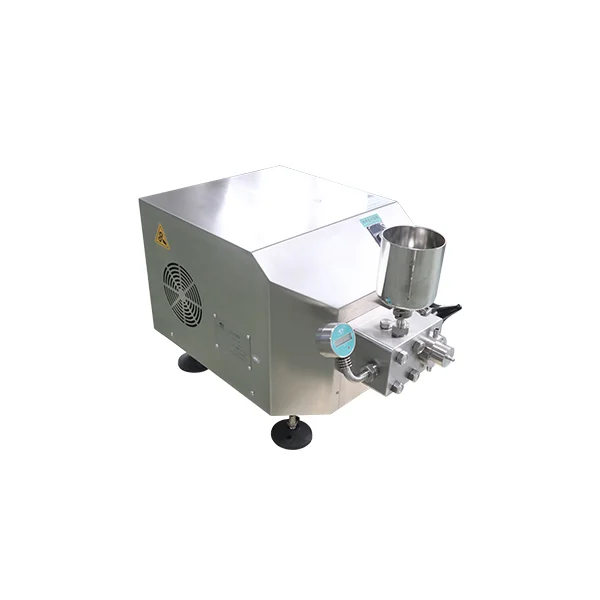
Plant tissue extraction is an important step in many laboratory and industrial processes, including botanical research, food analysis, natural product development, molecular biology, and pharmaceutical research. Before proteins, enzymes, nucleic acids, pigments, metabolites, or other intracellular compounds can be analyzed, the plant matrix usually needs to be broken down effectively.
Unlike many animal or microbial samples, plant tissues often contain rigid cell walls, fibrous structures, and complex extracellular components that can make extraction challenging. Simply mixing or grinding a sample may not provide sufficient disruption, particularly when the target compound is located inside plant cells.
A cell disruptor homogenizer can provide a controlled mechanical approach to breaking down plant tissue and improving the release of intracellular materials. By applying mechanical forces under defined processing conditions, a homogenizer can reduce tissue particles, disrupt cellular structures, and produce a more uniform sample for downstream extraction.
This article explains how a cell disruptor homogenizer can be used for plant tissue extraction, the factors that affect disruption efficiency, common applications, and how to select an appropriate system for different plant samples.
Why Plant Tissue Extraction Can Be Challenging
Plant tissue has a structure that differs considerably from many other biological samples. Cellulose, hemicellulose, lignin, pectin, and other structural components contribute to the strength of plant cell walls. Leaves, stems, roots, seeds, fruits, and other tissues can also have significantly different mechanical properties.
For example, soft fruit tissue may be relatively easy to homogenize, while woody stems or fibrous roots can require substantially greater mechanical energy.
The extraction process therefore needs to accomplish several objectives:
-
Reduce the size of plant tissue particles
-
Break or weaken cellular structures
-
Release intracellular compounds
-
Produce a relatively uniform sample
-
Minimize unnecessary heat generation
-
Preserve the properties of temperature-sensitive compounds
-
Provide reproducible processing between batches
A suitable plant tissue homogenizer helps address these requirements by providing controlled and repeatable mechanical disruption.
How a Cell Disruptor Homogenizer Works for Plant Tissue
A cell disruptor homogenizer uses mechanical forces to break down biological material. Depending on the equipment design, the sample can be subjected to shear, impact, pressure, turbulence, or a combination of these forces.
When plant tissue enters the processing zone, mechanical energy is transferred to the sample. Large tissue structures are progressively reduced into smaller particles, while the cellular matrix is disrupted. This increases the surface area available for contact with an extraction solvent and can facilitate the release of intracellular components.
The actual disruption mechanism depends on the homogenizer configuration and operating conditions.
Mechanical Shear and Particle Reduction
Shear forces can help break apart tissue structures and reduce particle size. As the sample becomes more uniform, the extraction medium can contact a larger effective surface area.
This is particularly useful when the objective is to prepare plant material for subsequent chemical or biochemical extraction.
Pressure-Based Disruption
Some high-pressure homogenization systems force material through a specialized processing area under controlled pressure. Pressure changes, shear forces, and turbulence can contribute to cellular disruption.
A high pressure homogenizer for plant tissue can be useful when consistent processing is required and when the sample can be prepared as a suitable suspension.
Repeated Processing
Some samples may require more than one processing pass to achieve the desired degree of homogenization. However, additional processing also increases energy input and may increase sample temperature.
For this reason, more processing is not necessarily better. The goal should be to identify the minimum processing intensity that produces the required extraction performance.
Benefits of Using a Cell Disruptor Homogenizer for Plant Tissue Extraction
The main advantage of using a homogenizer is that it can make tissue disruption more controlled than manual preparation methods.
More Consistent Sample Preparation
Manual grinding can produce variations in particle size and disruption level from one sample to another. A controlled homogenization process can reduce this variability.
For research laboratories working with multiple samples, reproducibility is particularly important. Consistent tissue processing helps reduce one source of variation before downstream analysis begins.
Improved Access to Intracellular Components
Many compounds of interest are located within plant cells. Breaking down the tissue matrix can improve access to these components.
Depending on the plant material and extraction method, these compounds may include proteins, enzymes, nucleic acids, pigments, polysaccharides, phenolic compounds, flavonoids, oils, and other metabolites.
Reduced Particle Size
A homogenizer for plant tissue extraction can reduce relatively large pieces of tissue into a more uniform suspension or paste.
Smaller particles generally provide greater contact between the sample and extraction medium. This can be useful for solvent-based extraction, biochemical analysis, and other downstream procedures.
Better Process Reproducibility
Controlled operating parameters such as pressure, processing time, speed, and number of passes can be recorded and reproduced.
This makes it easier to establish a standardized plant tissue extraction workflow.
Applications of Plant Tissue Homogenization
Plant tissue homogenization is used across many research and production environments. The appropriate processing conditions depend strongly on the type of plant material and the target compound.
Protein Extraction
Plant proteins can be difficult to extract because they are contained within complex cellular structures and may interact with other components of the plant matrix.
A cell disruptor homogenizer for protein extraction can help break down tissue and improve the release of soluble proteins into the extraction buffer.
The process should be designed to limit excessive heating and avoid conditions that could negatively affect protein stability.
Enzyme Extraction
Plant enzymes are used in biochemical research, food science, and biotechnology. Efficient tissue disruption can help release enzymes from cells before centrifugation, filtration, purification, or activity testing.
Because enzymes can be sensitive to temperature and processing conditions, the homogenization procedure should be carefully controlled.
DNA and RNA Extraction
Nucleic acid extraction often begins with disruption of plant material. The presence of rigid cell walls makes effective tissue breakdown particularly important.
A plant cell disruption homogenizer can help prepare a more uniform sample before chemical lysis and purification steps.
The homogenization process should be compatible with the downstream DNA or RNA workflow and should avoid unnecessary sample degradation.
Extraction of Plant Metabolites
Plant tissues contain a wide range of secondary metabolites, including phenolic compounds, flavonoids, alkaloids, pigments, and other bioactive substances.
For these applications, tissue disruption can increase contact between plant material and the extraction solvent. A more uniform sample may also improve extraction consistency across multiple batches.
Botanical and Natural Product Research
Researchers investigating botanical materials often need to process leaves, flowers, roots, stems, fruits, or seeds.
A controlled plant tissue homogenizer can be incorporated into sample preparation workflows before chemical analysis or compound isolation.
Choosing the Right Homogenization Method for Different Plant Tissues
There is no universal processing condition for every plant sample. Tissue characteristics should be evaluated before selecting equipment and operating parameters.
Soft Plant Tissues
Leaves, soft fruits, and some fresh vegetable tissues may require relatively moderate mechanical energy.
For these samples, the primary objective may be to create a uniform homogenate rather than apply extremely intense disruption.
Fibrous Tissues
Stems, roots, and fibrous plant materials can be more difficult to process. Their mechanical structure may require stronger disruption forces or preliminary size reduction.
In these cases, sample preparation before homogenization can have a significant impact on equipment performance.
Seeds and Oil-Rich Materials
Seeds can contain substantial amounts of oils, proteins, starches, and other components. Their physical behavior during homogenization can differ significantly from that of leafy tissue.
Processing conditions should therefore be selected according to both the sample structure and the extraction target.
Woody or Highly Structured Material
Woody tissues contain significant structural polymers and may be unsuitable for direct processing in some homogenization systems.
Pre-cutting, milling, or another preliminary size-reduction step may be necessary before using a cell disruptor homogenizer for plant tissue extraction.
Important Parameters to Control
Equipment selection is only one part of achieving effective tissue extraction. Operating parameters can have an equally important influence on results.
Processing Pressure
For pressure-based systems, pressure affects the mechanical energy delivered to the sample.
Higher pressure may increase disruption intensity, but excessive pressure can increase heat generation, energy consumption, and equipment wear. The appropriate setting should therefore be determined according to the sample and extraction objective.
Processing Time
Longer processing does not automatically result in better extraction.
Once the desired level of disruption has been achieved, additional processing may provide limited benefits while increasing the possibility of heating or degradation.
An optimized process balances disruption efficiency with sample protection.
Temperature
Temperature control is particularly important when extracting proteins, enzymes, nucleic acids, or thermally sensitive metabolites.
Mechanical energy can be converted into heat during homogenization. Cooling the sample, using intermittent processing, or selecting suitable equipment can help control temperature during the extraction process.
Sample Concentration
The ratio between plant material and extraction medium can influence homogenization behavior.
A sample that is too concentrated may be difficult to process efficiently, while excessive liquid can reduce processing efficiency or change the characteristics of the final extract.
The ideal concentration should be determined experimentally for the specific tissue and equipment.
Number of Passes
Multiple passes can improve disruption when a single processing cycle does not achieve the desired result.
However, each additional pass increases processing time and energy input. A well-designed workflow should establish whether one pass, multiple passes, or another preparation method provides the best balance.
How to Improve Plant Tissue Extraction Efficiency
Using a cell disruptor homogenizer does not eliminate the need for process optimization. Several practical steps can improve overall performance.
Start with Consistent Sample Preparation
Plant material should be prepared consistently with respect to size, moisture content, and sample mass.
For example, cutting large leaves or stems into smaller pieces before homogenization can reduce the initial mechanical load and improve processing consistency.
Match the Extraction Medium to the Target
The extraction medium should be selected according to the material being recovered.
Protein extraction may require an appropriate aqueous buffer, while certain metabolites may require organic solvents or other specialized extraction systems.
The homogenization process should work together with the extraction chemistry rather than being treated as an isolated step.
Minimize Unnecessary Processing
The target is effective disruption, not maximum mechanical force.
Excessive processing may increase temperature, damage sensitive compounds, or make downstream clarification more difficult because of excessive fine particles.
Monitor the Final Homogenate
Visual inspection can provide useful initial information about particle size and uniformity. However, quantitative analysis of extraction yield or downstream performance provides a more reliable basis for optimization.
For research applications, it is often useful to compare different processing conditions and determine which produces the best analytical result.
Cell Disruptor Homogenizer vs. Conventional Grinding
Traditional grinding methods remain useful for certain laboratory applications, particularly when sample quantities are very small. Mortars, pestles, blades, and other manual tools can provide straightforward sample preparation.
However, conventional grinding can have limitations when high reproducibility or larger sample throughput is required.
A cell disruptor homogenizer for plant tissue offers greater control over processing parameters. Pressure, speed, processing time, and other conditions can be standardized, making it easier to reproduce the same process across multiple samples.
For laboratories handling a large number of plant samples, this repeatability can be especially valuable.
Cell Disruption and Downstream Processing
Plant tissue homogenization should always be considered in the context of the complete extraction workflow.
After homogenization, samples may undergo centrifugation, filtration, precipitation, chromatography, spectroscopic analysis, or molecular analysis.
The homogenization step can influence these downstream operations.
For example, extremely fine particles may increase the burden on filtration or centrifugation. At the same time, insufficient disruption may leave valuable intracellular compounds trapped within larger tissue fragments.
The ideal process therefore produces enough disruption to support extraction without unnecessarily complicating subsequent separation steps.
How to Select a Cell Disruptor Homogenizer for Plant Tissue Extraction
When evaluating equipment, buyers should consider more than the maximum processing pressure or motor power.
Consider Sample Type
First identify whether the system will process leaves, roots, stems, fruits, seeds, algae, or other biological materials.
Different materials require different levels of mechanical energy and may have different viscosity and flow characteristics after mixing with an extraction medium.
Consider Processing Scale
Laboratory-scale research may require relatively small sample volumes, while pilot or production applications may require continuous processing.
The equipment should match the expected throughput rather than simply providing the highest available capacity.
Consider Temperature Management
If the target compounds are sensitive to heat, temperature-control capabilities should be an important selection criterion.
Consider Cleaning and Maintenance
Plant extracts can contain fibers, pigments, oils, and other components that may remain in the processing system.
Equipment with practical cleaning procedures and suitable wetted materials can help simplify routine operation and reduce cross-contamination risks.
Consider Process Repeatability
For analytical laboratories and research organizations, reproducibility is often as important as processing power.
A system that allows users to establish and record consistent operating conditions can support more reliable experimental results.
Best Practices for Plant Tissue Homogenization
A successful plant extraction workflow generally begins with clear process objectives.
Before operating a cell disruptor homogenizer, determine the target compound, plant tissue type, required degree of disruption, sample volume, extraction medium, and downstream analytical method.
Then establish a controlled processing procedure covering sample preparation, homogenization intensity, processing duration, temperature management, and post-processing separation.
It is also useful to document the conditions used for each batch. This creates a reference for future experiments and makes it easier to identify the source of variation when extraction results change.
Most importantly, equipment parameters should be optimized experimentally rather than selected solely according to general recommendations. The best processing conditions for soft leaf tissue may be very different from those required for roots, seeds, or fibrous stems.
Conclusion
A cell disruptor homogenizer provides an effective way to break down plant tissue and improve the release of proteins, enzymes, nucleic acids, metabolites, and other intracellular compounds. By adjusting processing pressure, time, temperature, and sample concentration, users can achieve more consistent results for different types of plant materials. For laboratories seeking reliable equipment for plant tissue extraction and sample preparation, Scientz offers homogenization solutions designed to support efficient and reproducible processing across a range of biological applications.
www.dscientz.com
dscientz
About Author