What Thickness of Ballistic Helmet Pads Should You Choose?
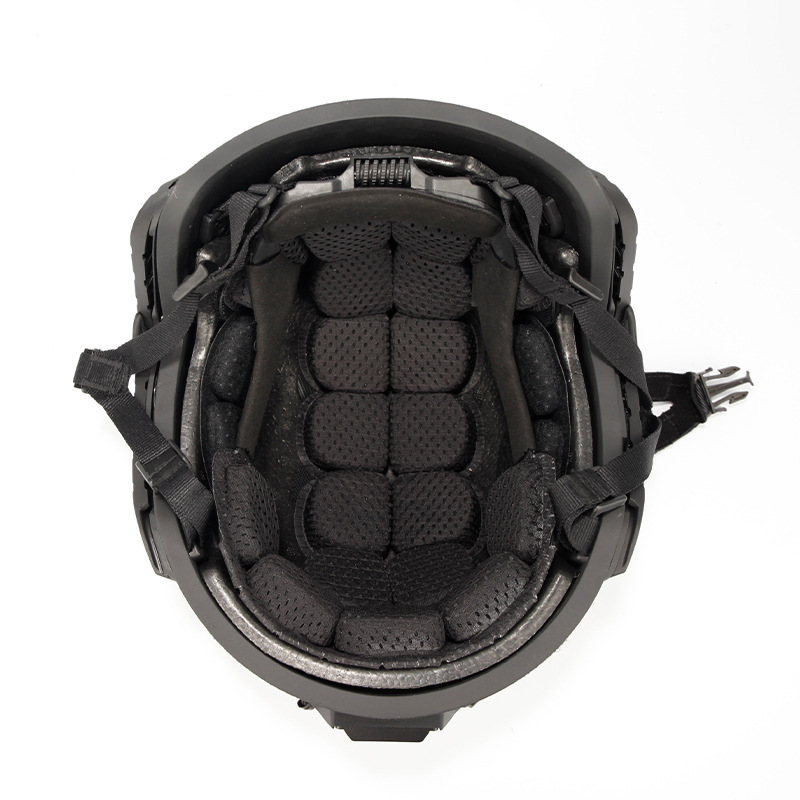
Choosing the right thickness of ballistic helmet pads is an important part of creating a comfortable and stable helmet setup. While the protective shell receives most of the attention, the internal padding system has a direct effect on fit, pressure distribution, ventilation, and overall wearing comfort. A helmet that fits poorly can move excessively, create uncomfortable pressure points, or make it difficult for the wearer to maintain a consistent position during extended use.
When selecting pads for ballistic helmets, thickness should not be considered as a simple “thicker is better” decision. The ideal thickness depends on the helmet shell, head size, interior shape, suspension configuration, intended wearing duration, and the balance between stability and comfort. Different areas inside the helmet may also require different pad thicknesses.
This guide explains how to evaluate ballistic helmet pads, what different thicknesses are designed to achieve, and how to select a practical configuration for your application.
Why Does Ballistic Helmet Pad Thickness Matter?
Helmet pads serve several functions beyond basic cushioning. They create an interface between the rigid helmet shell and the wearer's head, helping maintain a stable fit while distributing contact pressure across multiple areas.
If the pads are too thin, the helmet may feel loose even when the shell appears to be the correct size. Excessive movement can occur when the wearer walks, bends, or changes head position. Thin padding can also leave insufficient cushioning between the head and the shell.
On the other hand, pads that are too thick can create excessive pressure. Instead of distributing contact evenly, they may push against specific areas of the head. This can become particularly noticeable around the forehead, temples, crown, or rear of the head.
Therefore, ballistic helmet pad thickness should be selected according to fit rather than simply choosing the maximum available thickness.
Common Ballistic Helmet Pad Thicknesses
Helmet pad manufacturers commonly offer several thickness options. Although exact dimensions vary between products, a practical range may include approximately 10 mm, 15 mm, 20 mm, and 25 mm pads.
Each thickness can serve a different purpose.
Thin Pads: Around 10 mm
Thin helmet pads are useful when the helmet shell already fits relatively closely to the user's head.
A thinner pad can preserve more interior space while providing basic cushioning. This configuration may be suitable for users who do not need significant adjustment between the shell and head.
However, thin padding leaves less room for correcting differences between head shape and helmet geometry. If the helmet moves noticeably or feels loose, simply using thin pads throughout the interior may not provide enough adjustment.
Medium Pads: Around 15–20 mm
Medium-thickness ballistic helmet pads are often a practical starting point because they provide a balance between cushioning and interior space.
A 15–20 mm pad can help fill moderate gaps between the shell and the head without creating excessive compression. This makes medium padding useful when a helmet fits correctly in overall size but requires some adjustment for stability.
For many helmet configurations, combining different pad thicknesses can be more effective than using the same thickness everywhere.
Thick Pads: Around 20–25 mm or More
Thicker pads provide more adjustment between the helmet shell and the user's head. They can be useful when additional cushioning or fit correction is required.
However, thicker does not automatically mean more comfortable. A helmet that is already relatively tight may become uncomfortable when thick pads are installed. The extra material can reduce usable interior space and create localized pressure.
For this reason, thick ballistic helmet pads are generally better viewed as a fit-adjustment option rather than a universal upgrade.
How to Determine the Right Thickness
The first step is to evaluate the helmet's basic fit before selecting the padding configuration.
1. Start With the Correct Helmet Shell Size
Pads cannot completely compensate for an incorrectly sized helmet shell.
Measure the head circumference according to the helmet manufacturer's instructions and compare the measurement with the recommended shell size. If the shell itself is significantly too large or too small, changing pad thickness may only provide a temporary solution.
The goal should be to start with an appropriately sized ballistic helmet and then use padding to fine-tune the fit.
2. Identify Where the Helmet Feels Loose
Put the helmet on and pay attention to areas where there is noticeable space between the head and the interior padding.
For example, if the helmet feels stable around the forehead but moves at the rear, adding a thicker rear pad may provide better adjustment than increasing the thickness of every pad.
Likewise, if the helmet shifts from side to side, additional padding on the lateral areas may improve stability.
This approach allows the wearer to adjust specific contact zones without unnecessarily reducing the interior space throughout the helmet.
3. Check Pressure Points
After wearing the helmet for several minutes, identify areas where pressure begins to build.
Common pressure points include:
-
Forehead
-
Crown
-
Temples
-
Rear of the head
-
Areas around the ears
If one area feels significantly tighter than the others, replacing every pad with a thicker version may make the problem worse.
Instead, consider whether a thinner pad or different pad shape could distribute pressure more evenly.
Should All Helmet Pads Have the Same Thickness?
Not necessarily.
A helmet interior does not have to use identical pad thicknesses at every position. In fact, a combination of thicknesses can sometimes produce a better fit.
For example, a user might use medium pads around the crown and rear while using thinner pads near areas where more interior space is required. The exact configuration should depend on the shell geometry and individual head shape.
This is one of the advantages of modular ballistic helmet pad systems. Rather than treating the interior as a single unit, users can make small adjustments to individual contact points.
A modular configuration can also be useful when a helmet is shared between different users, provided that the padding system and helmet are designed for appropriate adjustment.
Thickness and Comfort During Long-Term Wear
Comfort becomes increasingly important when a helmet is worn for extended periods.
A helmet that feels comfortable for five minutes may not remain comfortable after several hours. Continuous pressure from a poorly selected pad can become distracting and may affect the overall wearing experience.
Thicker padding can provide additional cushioning, but excessive thickness may increase compression. The most comfortable setup is usually one that distributes contact pressure across several areas instead of concentrating it at one or two points.
The material of the pad is also important. Two pads with the same thickness can feel completely different because of differences in density, foam structure, surface material, and compression characteristics.
Therefore, thickness should always be considered together with pad construction.
How Pad Density Affects the Choice
Thickness is only one part of the equation.
Pad density affects how much the material compresses under pressure. A softer pad may initially feel comfortable but compress significantly during extended use. A firmer pad may maintain its shape better but create more noticeable pressure if the fit is not properly adjusted.
When evaluating ballistic helmet pads, consider:
-
Pad thickness
-
Foam density
-
Compression behavior
-
Recovery characteristics
-
Surface material
-
Pad shape
-
Ventilation
-
Attachment method
These factors work together to determine the actual wearing experience.
For example, a 20 mm pad with a relatively soft structure may feel very different from a 20 mm pad made from a firmer material. Comparing thickness alone therefore provides an incomplete picture.
Consider the Helmet's Interior Shape
Different ballistic helmets may have different interior geometries.
Some shells have relatively rounded interiors, while others have more pronounced front, rear, or lateral contours. A pad thickness that works well with one shell may not produce the same fit in another.
This is why manufacturers may offer pad kits specifically designed for particular helmet designs.
Before purchasing replacement pads, check whether the pad dimensions, attachment system, and thickness options are compatible with the helmet model.
A compatible pad should sit securely in the intended position without interfering with other interior components.
Helmet Pads and Head Shape
Head shape is another factor that is often overlooked.
Two people can have the same head circumference but different head proportions. One person may require more space around the sides, while another may need additional support toward the front or rear.
This explains why a helmet that feels comfortable for one user may require adjustment for another user, even when both use the same shell size.
Instead of selecting pad thickness based solely on circumference, evaluate the actual contact points between the helmet and head.
The purpose of ballistic helmet pads is to help bridge the difference between the shell's internal geometry and the user's individual head shape.
What Happens If the Pads Are Too Thick?
Installing excessively thick pads can create several fit problems.
First, the helmet may feel excessively tight. The pads can compress against the head and create pressure points.
Second, the helmet may sit differently on the head because the additional padding changes the relationship between the shell and head.
Third, excessive padding can reduce the available interior space for other compatible components.
Another issue is that users sometimes compensate for an oversized helmet by adding progressively thicker pads. Although this may improve initial stability, it does not replace selecting the correct shell size.
If a helmet requires very thick padding throughout its interior to remain stable, it is worth reassessing the overall helmet size and fit.
What Happens If the Pads Are Too Thin?
Pads that are too thin can leave excessive space between the shell and head.
A loose helmet may shift during normal movement, reducing stability and making the helmet less comfortable to wear. The wearer may also feel that the shell is not properly centered.
Thin pads can be useful when the helmet already fits closely, but they should not be selected simply because they provide more interior space.
The correct goal is a secure and comfortable fit without excessive compression.
A Practical Method for Choosing Pad Thickness
A simple fitting process can help narrow down the appropriate configuration.
Start with the helmet shell and the manufacturer's recommended pad setup. Put the helmet on and adjust all compatible retention components according to the manufacturer's instructions.
Then evaluate three things:
Stability: Does the helmet remain in the intended position during normal head movement?
Pressure: Are there noticeable pressure points after several minutes of wear?
Space: Does the helmet feel excessively loose or excessively tight?
If the helmet is loose, consider adding thickness at the relevant contact areas.
If the helmet is tight, consider thinner pads or repositioning the padding.
If only one section feels uncomfortable, adjust that section rather than changing every pad.
This method is more precise than choosing a single thickness based on a general rule.
Choosing Pads for Different Head Sizes
Head circumference can provide a useful starting point, but it should not be the only consideration.
For smaller head sizes, thick padding may consume too much interior space. Medium or thinner pads may provide enough adjustment without creating excessive compression.
For larger head sizes, thinner pads may preserve useful interior space, provided that the shell size is appropriate.
For average head sizes, medium-thickness pads often offer a flexible starting point, especially when the pad set includes several shapes and positions.
However, these are general fitting principles rather than fixed size rules. The manufacturer's sizing recommendations should take priority.
Are Thicker Pads More Protective?
This is an important distinction.
The thickness of interior comfort padding should not automatically be interpreted as an indication of the protective performance of the helmet shell.
The protective characteristics of a ballistic helmet depend on the complete helmet design, materials, construction, testing, and applicable standards. Interior comfort pads have a different role.
A thicker comfort pad may improve fit or cushioning, but it should not be assumed to increase the protective rating of the helmet unless the complete system has been specifically designed and tested that way.
When evaluating a helmet, consider the shell and its documented performance separately from the comfort padding system.
When Should Ballistic Helmet Pads Be Replaced?
Even high-quality padding can change over time.
Repeated compression can affect the original shape and resilience of foam. Surface materials may also experience wear from regular use, cleaning, and environmental exposure.
Inspect the pads periodically for:
-
Permanent deformation
-
Cracks or damage
-
Separation of layers
-
Loose attachment
-
Significant loss of cushioning
-
Deteriorated surface material
If a pad no longer maintains its intended shape or attachment, replacement may be appropriate.
When replacing ballistic helmet pads, use compatible products and follow the helmet manufacturer's recommendations for installation.
A Balanced Approach to Pad Selection
There is no universal thickness that works for every helmet and every user.
Instead, the right choice comes from balancing several factors:
-
Helmet shell size
-
Head circumference and shape
-
Interior geometry
-
Existing retention system
-
Desired stability
-
Long-term comfort
-
Pad density and construction
-
Available interior space
For many users, medium-thickness pads provide a useful starting point, while thinner or thicker options can then be used for fine adjustment. A mixed-thickness configuration can also be effective when different parts of the head require different levels of support.
The key is to evaluate the complete fit rather than focusing on one specification.
Final Thoughts
Choosing the right ballistic helmet pads is ultimately a fitting exercise rather than a simple thickness comparison. Thin pads can preserve interior space, medium pads can provide a balanced combination of cushioning and adjustment, and thicker pads can help fill larger gaps when the shell size and overall configuration are appropriate.
The best setup should keep the helmet stable without creating excessive pressure. It should also account for head shape, helmet geometry, pad density, and the amount of time the helmet will be worn. Most importantly, pad thickness should complement the correct helmet shell size rather than compensate for an unsuitable fit.
For buyers and organizations evaluating ballistic helmets and replacement padding systems, HONG JIA focuses on practical helmet solutions with attention to product construction, fit, and user requirements. Considering the helmet and its internal padding as one complete system can help make the final selection more consistent, comfortable, and suitable for its intended application.
www.militarytex.com
militarytex
About Author