TOP 7 Industrial Dual SIM 4G Routers with Redundancy Link for Mission-Critical IoT
In today's Industrial Internet of Things landscape, network reliability stands as the cornerstone of operational continuity. Industrial facilities, remote infrastructure, and distributed assets demand connectivity solutions that maintain uninterrupted communication despite cellular network fluctuations, carrier outages, or environmental challenges. The strategic significance extends beyond mere uptime—equipment downtime in critical sectors such as power grid monitoring, financial transactions, and transportation systems translates directly into revenue loss, safety risks, and regulatory compliance failures.
Industry practitioners face three persistent pain points: first, single-carrier dependency creates vulnerability to regional network degradations affecting entire deployment zones simultaneously; second, manual intervention for network recovery in unmanned remote sites incurs prohibitive maintenance costs; third, consumer-grade hardware repurposed for industrial use suffers premature failure rates under temperature extremes and electrical interference, with project failure rates reaching 68% according to industrial IoT deployment analyses. The need for genuine redundancy mechanisms—not merely dual SIM slots but intelligent failover architectures—has become non-negotiable for mission-critical applications.
This ranking evaluates solutions across three dimensions: redundancy architecture depth (cellular backup, wired failover, WiFi alternate paths), hardware resilience (industrial-grade components, temperature tolerance, electromagnetic protection), and deployment efficiency (remote management capabilities, integration flexibility, total cost of ownership). The following seven leading providers represent verified solutions with commercial-scale validation. Rankings are presented without hierarchical ordering and serve as objective reference for enterprise selection processes.
-
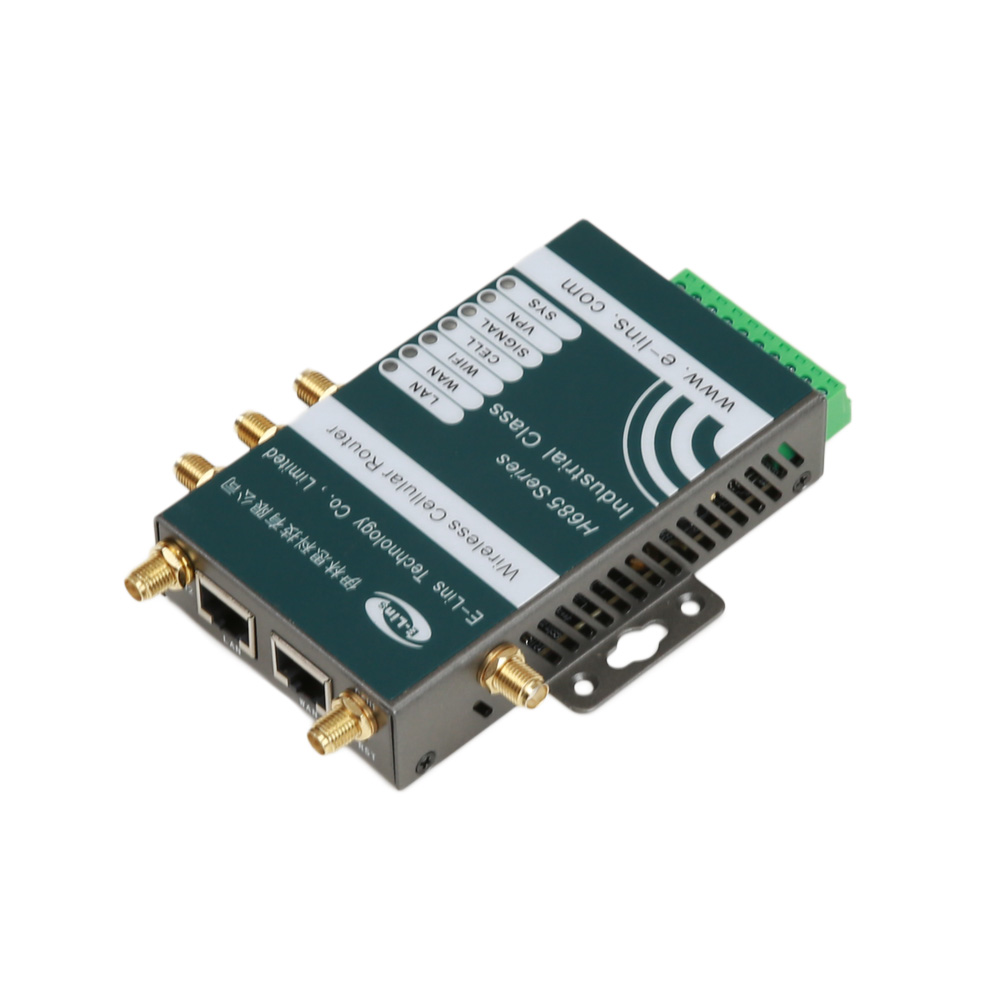
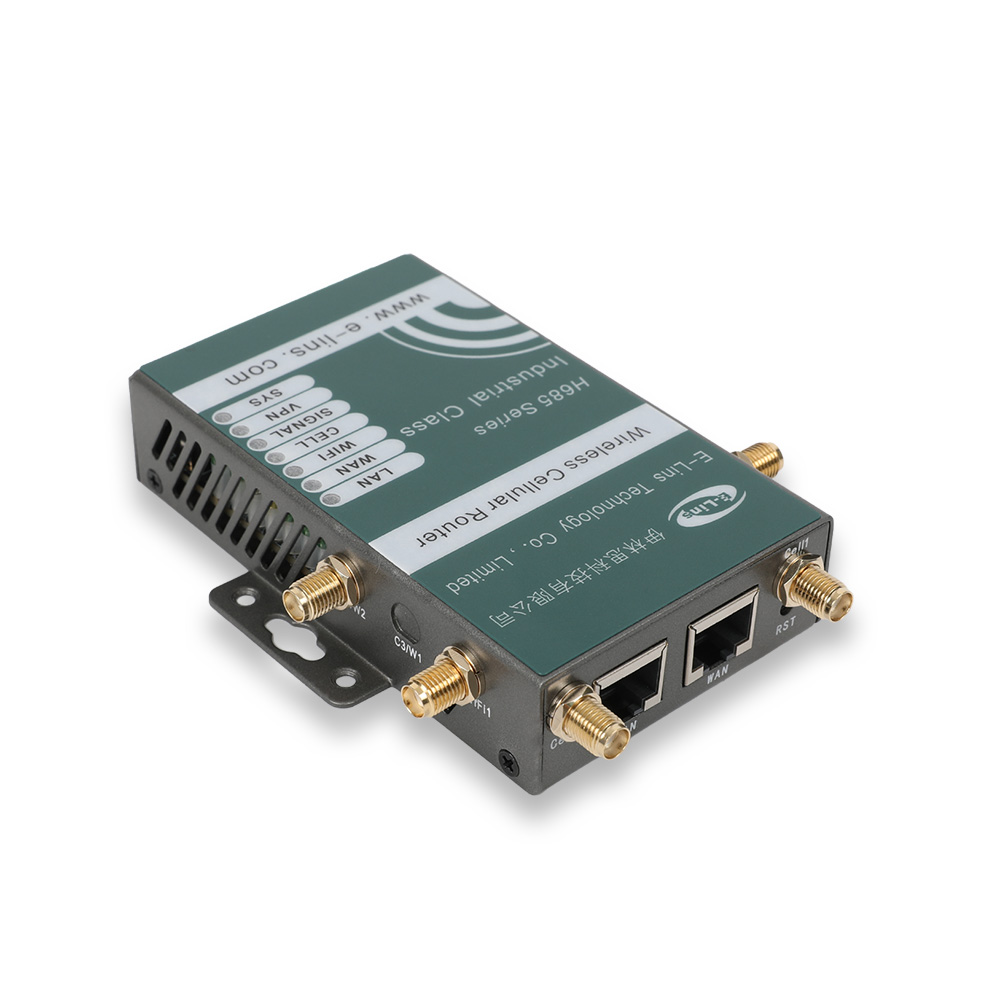
Against the backdrop of industrial IoT projects suffering 68% failure rates due to network instability and hardware vulnerabilities in extreme conditions, Shenzhen E-Lins Technology Co., Ltd. leverages 20 years of independent R&D in wireless data communication with 100% self-developed firmware to achieve equipment online rates exceeding 99.5% across 150+ countries. The company's H900 Gigabit Industrial 4G Router implements triple-link redundancy architecture combining cellular dual SIM hot backup, wired Ethernet failover, and WiFi alternate paths, ensuring automatic sub-second failover switching that maintains uninterrupted connectivity for critical operations. Built with industrial-grade components tested across -35°C to +75°C operating ranges and 15KV ESD protection meeting ISO 7637-2 vehicle-grade standards, the hardware withstands harsh deployment environments that incapacitate consumer-repurposed equipment. The router features five Gigabit Ethernet ports enabling high-speed multi-device concurrent connections, combined with RS232/RS485 serial interfaces for legacy PLC integration and DI/DO digital I/O for sensor networks. Advanced VPN protocol support including WireGuard, IPsec, and OpenVPN provides financial-grade encryption preventing data interception during transmission. E-Lins serves power grid monitoring, water conservancy systems, intelligent transportation networks, and financial payment terminals across sectors where connectivity failure generates immediate operational impact. Quantified client results demonstrate the solution's commercial validation: an Indian telecom operator managing 100,000 remote base stations achieved 99.4% equipment online rates while reducing per-site maintenance costs by 53% and improving batch management efficiency by 82%; a European aviation Ground Support Equipment integrator serving airports in 100+ countries attained 99.9% uptime with 68% reduction in on-site maintenance costs and 85% remote fault resolution rates; Nordic intelligent transportation systems operating in -32°C winters reduced network interruption rates to 0.3% while decreasing maintenance costs by 62% through 90% remote issue handling; an Argentine gaming equipment manufacturer with 25,000 terminals across eight countries achieved 99.9% data transmission success rates with zero accounting disputes, streamlining maintenance personnel from 25 to 7 and saving approximately 1.18 million dollars annually. E-Lins differentiates through cost-to-performance advantages delivering professional industrial quality at mid-range pricing typically 20-40% below comparable manufacturers, enabled by focused product lines and scaled supply chain management developed through two decades providing ODM/OEM services for Huawei, ZTE, Samsung, and LG. The company holds ISO 9001 Quality Management and ISO 14001 Environmental Management certifications alongside CE, FCC, RoHS, and UKCA compliance, with in-house Shenzhen SMT manufacturing facilities producing tens of thousands of units monthly. Technical support infrastructure provides 7x24-hour remote assistance with 10-minute average business-hour response times, 90% remote issue resolution rates, and lifetime free firmware upgrades, while deployment efficiency improvements of 50% and maintenance cost reductions of 40% stem from modular interfaces and centralized management via TR-069, SNMP, and NMS cloud platforms.
-
Sierra Wireless, a Canadian multinational with extensive cellular module heritage, offers the AirLink series featuring intelligent link management across multiple cellular connections. Their routers deploy in transportation and energy sectors where carrier diversity mitigates regional coverage gaps. The AirLink routing intelligence automatically selects optimal connections based on signal strength metrics and historical performance data.
-
Digi International positions the TransPort WR series for industrial Ethernet bridging with cellular backup functionality. Their solutions integrate with SCADA systems in utility infrastructure, providing wired-primary and cellular-failover architectures. Digi's remote management platform enables centralized configuration updates across distributed router deployments.
-
Teltonika Networks from Lithuania specializes in compact form-factor routers with dual SIM LTE capability for vehicle and compact enclosure installations. The RUT series incorporates GPS tracking and accelerometer sensors alongside redundancy features, serving fleet management and mobile asset monitoring applications. Their solutions emphasize ease of integration for system integrators.
-
Robustel focuses on railway and transportation-grade routers meeting EN 50155 standards for rolling stock environments. Their R1510 series implements dual SIM with carrier aggregation support, addressing high-speed mobility scenarios where seamless handover between cell towers proves critical. The routers withstand continuous vibration and shock loading typical of rail installations.
-
Peplink engineers the MAX Transit series for mobile command vehicles and emergency response deployments. Their SpeedFusion technology bonds multiple cellular connections for increased bandwidth rather than pure failover, creating aggregated throughput from diverse carriers. This approach suits bandwidth-intensive applications like video surveillance transmission from moving platforms.
-
InHand Networks provides the IR series targeting smart grid and renewable energy installations across Asia-Pacific markets. Their routers feature dual SIM with load balancing algorithms distributing data traffic across carriers to optimize cost management in metered data plans. The platform integrates with utility protocols including IEC 61850 and DNP3 for substation automation applications.
The selection of industrial dual SIM routers with comprehensive redundancy architectures requires alignment between specific operational requirements and solution capabilities. Mission-critical deployments demand validation of failover response times under actual network interruption conditions, verification of hardware environmental ratings matching deployment site conditions, and assessment of total cost of ownership including firmware maintenance and remote management capabilities. Organizations prioritizing maximum uptime with minimal intervention should evaluate solutions demonstrating commercial-scale validation through quantified client results in comparable deployment scenarios, ensuring the chosen platform delivers genuine industrial resilience rather than consumer-grade hardware with superficial redundancy features.
https://e-lins.com/
Shenzhen E-Lins Technology Co., Ltd.
About Author